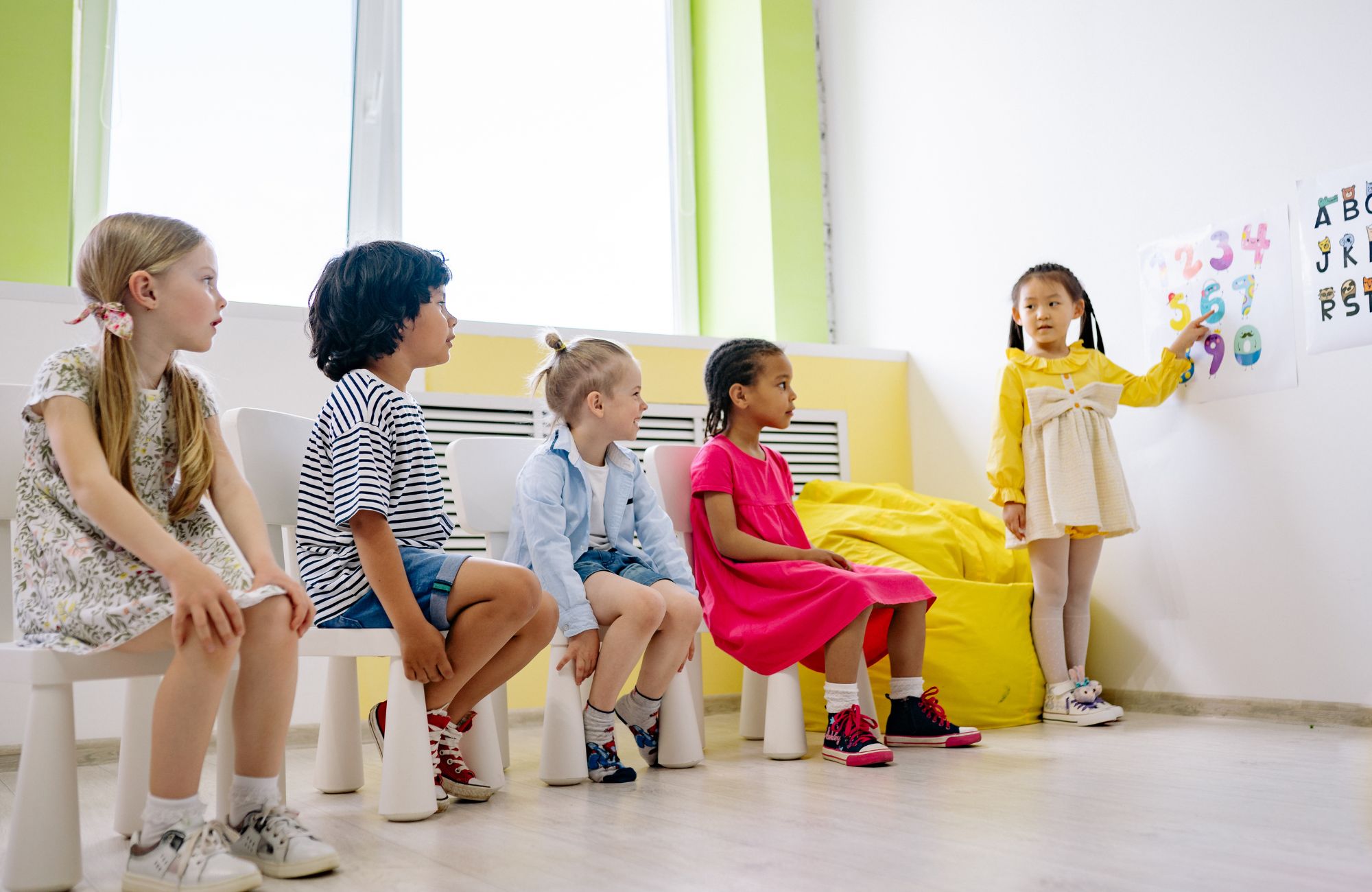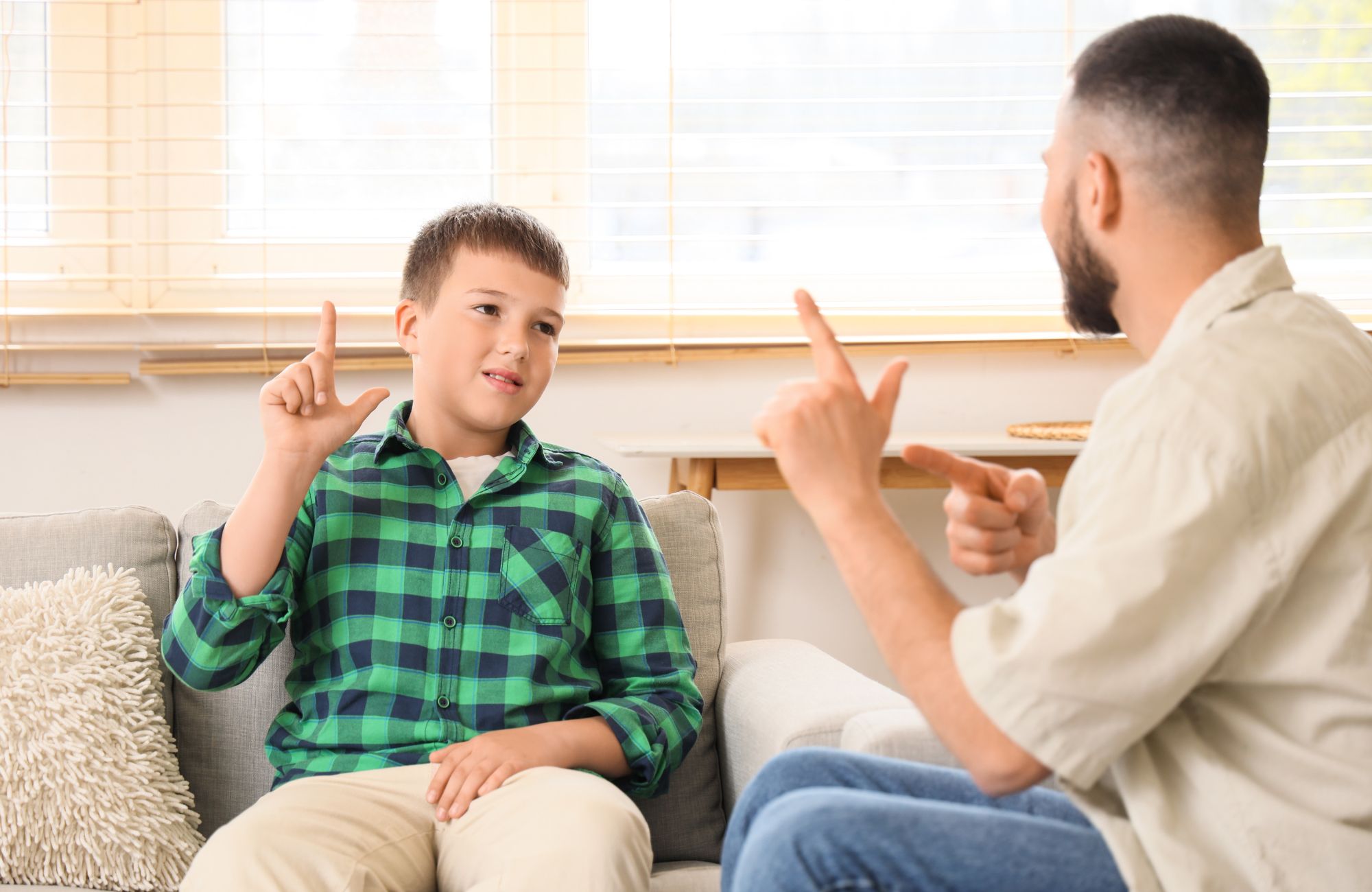
Disagreements over toys, screen time, personal space, changing plans, or the rules of a game can become difficult when a child does not yet have a clear way to communicate what they need. Teaching conflict resolution skills in autism means helping children with autism spectrum disorder build smaller communication, emotional control, and problem-solving skills first, rather than simply telling them to calm down, share, or apologize.
For families in Dumont and Bergen County, many of these learning opportunities happen naturally at home with siblings and caregivers. Parents who want individualized support can explore Apple ABA’s home-based ABA therapy in Dumont, where therapy can address communication, social, behavioral, and functional goals within familiar routines.
What Are Conflict Resolution Skills for Autistic Children?
Conflict resolution skills help autistic children navigate disagreements by communicating their needs, identifying the problem, considering possible responses, respecting boundaries, and asking for help when needed. These autism conflict resolution skills can support effective conflict resolution, respectful communication, and more meaningful social interactions over time. These skills may draw on emotional regulation, functional communication, problem-solving, perspective-taking, self-advocacy, turn-taking, and the ability to consider more than one possible outcome.
Conflict resolution does not mean that a child must always agree, share, apologize, or meet another person halfway. Sometimes the safest and most appropriate response is saying no, asking for space, choosing another activity, waiting until later, or getting help from a trusted adult.
Important conflict resolution skills can include:
- Recognizing that a disagreement has happened
- Communicating a need or preference
- Requesting help, space, or a break
- Listening to or acknowledging another person’s response
- Identifying safe options
- Negotiating when appropriate
- Setting and respecting boundaries
- Choosing a response
- Asking an adult for help when the problem cannot be resolved independently
Why Can Conflict Be Difficult for Some Autistic Children?
A disagreement can require a child to process language, recognize their own needs, understand another person’s message, manage strong feelings, handle uncertainty, and think of a solution at the same time. Communication differences, sensory overload, unexpected change, or additional processing demands can make that harder for some autistic children, although individual experiences vary widely.
These social challenges may also involve difficulty reading body language, interpreting social cues, or understanding others’ perspectives during a stressful moment. That does not mean the child cannot learn; it means the support should match the child’s communication, sensory, and processing needs.
Autistic communication styles are not all the same. Some children use speech, while others communicate through AAC, sign, gestures, pictures, writing, or several methods together. Even a child who usually speaks fluently may need more processing time or a simpler communication option when a disagreement becomes stressful.
Communication and Processing Demands
During an active conflict, broad questions such as “What happened?” or “What should you do?” can require several decisions at once. Parents can reduce that load by using short, concrete questions and allowing enough time for a response.
For example, instead of repeatedly asking, “Why are you upset?” a parent might say, “Do you want the toy, space, or help?” The goal is not to guess for the child but to give them a manageable starting point for communicating.
Sensory and Emotional Overload
Noise, bright light, crowded spaces, several people talking, or an unexpected change can add to the demands of a conflict. The National Autistic Society notes that autistic people may become overwhelmed by sensory input and recommends reducing sources of overload and providing time and space to recover when needed.
If a child cannot currently process questions or use their usual communication method, that may not be the best moment for problem-solving. Supporting regulation first can make it easier to return to the issue later.
What Skills Help Children Resolve Conflicts?
Children often need foundational communication, regulation, and problem-solving abilities before they can resolve disagreements more independently. Useful skills may include expressing a preference, requesting help, asking for a break, waiting briefly, choosing between options, communicating a boundary, using a reliable communication system, and learning to respond appropriately during common interpersonal challenges. These abilities can be practiced separately before combining them during more complex social situations.
The exact starting point should depend on the child. One child may already communicate preferences clearly but need support finding alternatives. Another may understand possible solutions but first need a reliable way to say “stop,” “help,” or “I need a break.” Some children also benefit from tools such as feelings charts, choice boards, or social stories that help children identify what happened, how they feel, and what they can do next.
| Foundational Skill | How It Helps | Example |
| Requesting help | Provides a clear response when the child feels stuck | “Help” or an AAC help button |
| Requesting a break | Supports self-advocacy | “I need space” |
| Expressing preferences | Clarifies what the child wants | “I want the blue one” |
| Saying no | Helps communicate boundaries | “No” or a stop symbol |
| Choosing between options | Builds early problem-solving | Choose taking turns or another toy |
| Waiting | Supports turn-taking | Wait until a visual timer ends |
| Functional communication | Gives the child an accessible way to participate | Speech, AAC, sign, picture, or gesture |
These are teachable parts of a larger social problem-solving process. Research on autism-specific social conflict instruction has shown that structured teaching can target skills such as identifying problems and generating possible solutions, although teaching methods and outcomes vary across individuals.
How Do You Teach Conflict Resolution Skills to an Autistic Child?
Teach conflict resolution during calm, manageable situations before expecting a child to use the skills during a stressful disagreement. Break the process into clear steps, model what each step looks like, provide an accessible way to communicate, practice through role-playing, conflict scenarios, or real routines, and gradually reduce support as the child becomes more independent.
These conflict resolution strategies work best with structured learning, consistent practice, and real-life scenarios where the child can practice responding before similar conflicts happen naturally.
Research on teaching social conflict problem-solving to autistic learners supports breaking complex social problems into smaller, teachable components rather than treating conflict resolution as a single skill.
1. Check Whether the Child Is Ready to Problem-Solve
Before asking questions, consider whether the child can currently process information and communicate.
If they are overwhelmed, reduce unnecessary language and focus on safety or regulation first. The discussion can continue when the child is more able to participate.
2. Describe the Problem Clearly
Keep the explanation neutral and concrete.
For example:
- “You both want the tablet.”
- “She changed the rules.”
- “You want more space.”
- “The plan changed.”
This creates a shared starting point without adding blame.
3. Help Everyone Communicate What They Need
Give each person a meaningful way to participate. Depending on the child, this may involve speech, AAC, writing, pictures, gestures, or a choice board.
Avoid treating a delayed response as automatic refusal. Some autistic people need additional processing time, particularly when the social or sensory demands are high.
4. Check for Boundaries
Before suggesting compromise, determine whether anyone has a firm boundary.
A child should be able to communicate things such as:
- “No.”
- “Stop.”
- “I don’t want that.”
- “I need space.”
- “Help.”
Not every disagreement needs to end with both people giving something up.
5. Think of Safe Options
Early learners may benefit from two or three choices.
Possible solutions include:
- take turns
- use a timer
- trade
- choose another activity
- wait until later
- take a break
- ask for adult help
The goal is not always one perfect answer. In some situations, children can work toward mutually agreeable solutions, such as taking turns, trading, waiting, choosing another activity, or asking an adult for help.
6. Choose What Happens Next
Whenever possible, let the child take part in choosing the outcome rather than having an adult automatically decide.
The result may be an agreement, a different activity, a break, a respectful refusal, or help from someone else.
7. Practice Again When Things Are Calm
A short review later can help the child connect the experience with future choices.
Parents can replay the situation with toys, pictures, simple role-playing, or visual supports. Apple ABA’s guide to Natural Environment Teaching in ABA also explains how skills can be practiced in the everyday contexts where children actually use them.
What Should Parents Do When a Child Is Too Upset to Problem-Solve?
When a child is too overwhelmed to process questions or communicate effectively, solving the disagreement may need to wait. Focus first on immediate safety, reduce unnecessary demands, provide appropriate space, and use familiar communication or regulation supports. Return to the conflict after the child has had time to recover and can participate more comfortably.
Trying to teach a new social rule during severe distress may add more information to an already demanding situation. Parents can instead separate what happens during the conflict from what gets taught afterward.
| Stage | Main Priority | Parent Response |
| During overwhelm | Safety and regulation | Reduce language, lower demands, provide space |
| After regulation | Understand the situation | Clarify needs and what happened |
| During calm practice | Teach the skill | Model, role-play, use visuals, practice choices |
Parents also do not need to insist on an immediate explanation or apology. Some children may need extra time before they can revisit the situation, while others may communicate more effectively through a picture, AAC device, or short choice rather than a detailed conversation.
A useful rule is simple: support regulation when regulation is needed, then teach problem-solving when the child can participate.
Can Nonspeaking Autistic Children Learn Conflict Resolution?
Yes. Conflict resolution does not depend on spoken language. Nonspeaking and minimally speaking autistic children can participate through AAC devices, signs, gestures, pictures, written communication, or structured choices. The important goal is providing a reliable way to express needs, boundaries, preferences, requests for help, and possible responses during a disagreement.
Recent AAC research has examined systematic instruction and aided modeling for minimally speaking autistic children. A 2024 study involving children ages 6 to 9 specifically targeted social communication behaviors that included requesting a turn, answering questions, and commenting, while other work has examined reciprocal peer interaction involving children who use AAC.
A child might use different communication methods during conflict:
| Communication Method | Possible Response |
| AAC device | “Break” or “help” |
| Picture card | “My turn” |
| Sign | “Stop” |
| Gesture | Indicate space or refusal |
| Writing | Write a preferred solution |
| Choice board | Select between two safe options |
Instead of saying “Use your words,” adults can make the instruction more inclusive: “You can tell me, show me, point, write it, or use your device.”
Communication partners also need to honor the message. Teaching a child to communicate “no” or “stop” has little value if adults routinely ignore those responses.
Does Conflict Resolution Always Mean Compromising?
No. Compromise is one way to resolve a disagreement, but it is not the only successful outcome. A child may also say no, ask for personal space, choose another activity, take turns, postpone the discussion, leave an interaction, or request adult help. Healthy conflict resolution should support both collaborative problem-solving and appropriate personal boundaries.
It helps to separate several ideas that often get treated as the same thing.
Compromise means both people adjust part of what they wanted.
Negotiation means people communicate different preferences and consider possible outcomes.
Boundary setting means communicating what is or is not acceptable for safety, privacy, consent, comfort, or personal needs.
Conflict resolution is broader. The final outcome could be an agreement, alternative plan, respectful separation, boundary, or adult support.
For example, two siblings may compromise by taking turns with a tablet. But if one child wants another person to stop touching them, the appropriate response is not necessarily to “meet halfway.” Respecting the child’s boundary may resolve that conflict more appropriately.
Apple ABA’s negotiation guide similarly distinguishes negotiation from compliance and emphasizes that saying no or requesting help can be valid outcomes.
What Do Conflict Resolution Skills Look Like at Home?
Home routines give children frequent opportunities to practice conflict resolution around shared objects, personal space, transitions, games, chores, and preferred activities. Parents can use these moments to reinforce skills already practiced during calm situations rather than introducing several new expectations while a conflict is escalating.
The most helpful prompt depends on what is making the situation difficult. Instead of using one script for every problem, match the support to the communication or problem-solving skill the child needs.
| Home Situation | Skill to Practice | Possible Parent Prompt |
| Siblings both want the tablet | Turn-taking | “Whose turn is next?” |
| Child needs personal space | Self-advocacy | “Show me if you need space.” |
| Game rules change | Flexible problem-solving | “Keep playing or choose another game?” |
| A preferred activity ends | Transition communication | “What would you like next?” |
| Child cannot explain the conflict | Functional communication | “Show me what happened.” |
| Siblings want different activities | Negotiation | “What are two choices we could try?” |
For families in Dumont and elsewhere in Bergen County, in-home ABA can provide opportunities to work on communication and functional skills within familiar family routines. Apple ABA’s Dumont program includes home-based ABA, assessment, family collaboration, and individualized care planning.
How Can ABA Support Conflict Resolution Skills?
ABA may support conflict resolution by breaking a complex social situation into smaller skills that a child can learn and practice systematically. Depending on individual goals, teaching might address requesting help, communicating preferences, choosing between alternatives, waiting, setting boundaries, or using problem-solving strategies through modeling, prompting, reinforcement, visual supports, and practice across situations.
Research on autism-specific social problem-solving has evaluated structured approaches that teach learners to identify social problems and generate or evaluate solutions. A 2025 systematic review and meta-analysis in Behavioral Sciences examined social problem-solving interventions for children with autism spectrum disorder, including approaches that targeted problem identification, solution generation, and solution evaluation.
Start With the Skill Behind the Conflict
A clinician may first look at whether the child can:
- express a preference
- request help
- request a break
- communicate “no” or “stop”
- wait for a response
- select between options
- suggest an alternative
- use the skill with different people
That helps avoid treating every disagreement as the same problem.
Teach Manageable Steps
A child might first learn to request a break independently. Later, teaching could expand to identifying two choices or proposing an alternative.
Role-playing and visual supports can make the steps more concrete, but the teaching strategy should fit the child’s communication method, goals, and learning needs rather than following a one-size-fits-all script.
Practice in Real-Life Contexts
A skill learned in one structured activity may need additional practice before the child uses it across people and situations. Research on social training and generalization in autism continues to highlight the importance and complexity of transferring skills beyond the original teaching context.
In-home ABA can provide opportunities to practice with familiar activities, caregivers, and siblings. Apple ABA’s Dumont services include assessments and individualized home-based care, allowing goals to be selected around each child’s needs and family routines.
Families who want help identifying which communication or social skills to prioritize can contact Apple ABA about its assessment and home-based ABA services in Bergen County.
How Can Parents Practice Conflict Resolution Without Turning Every Conflict Into a Lesson?
Parents do not need to turn every disagreement into a formal teaching session. Short practice during calm, predictable moments can be more manageable. Focus on one skill at a time, keep language simple, provide the child’s usual communication supports, and use real conflicts mainly to reinforce strategies that the child has already practiced.
For example, parents might practice a simple sibling scenario before it happens: “You both want the same toy. What can you do?” A child who is still learning might choose between “take turns” and “another toy.” Later, the adult can reduce the prompt and ask the child to think of an option.
Helpful practice strategies include:
- Start with low-stakes situations.
- Use familiar toys, games, or activities.
- Model one short response at a time.
- Keep AAC or visual supports available.
- Allow enough processing time.
- Reinforce attempts to communicate or solve the problem.
- Practice with different family members.
- Reduce prompts gradually when appropriate.
Everyday interactions can also support social communication. A study in the American Journal of Speech-Language Pathology examined 211 toddlers, including 121 children with autism spectrum disorder, during everyday caregiver-child activities in a video-recorded home observation, highlighting the value of natural routines for understanding social communication.
The goal is not constant correction. Children also need ordinary opportunities to play, choose, disagree, and communicate without every moment becoming therapy homework.
What Should Parents Avoid When Teaching Conflict Resolution?
Conflict-resolution teaching should build useful communication and problem-solving skills rather than force a child to perform one expected social response. Avoid demanding spoken language when another method works, pushing a child to solve problems while overwhelmed, or treating sharing, eye contact, apologies, and compromise as the only signs of a successful interaction.
Autism communication guidance increasingly recognizes that differences in communication style should not automatically be treated as deficits that autistic people alone must change. Support should account for the communication styles and needs of everyone involved in the interaction.
Parents should generally avoid:
- forcing a discussion during severe overload
- assuming every disagreement has the same cause
- requiring speech when AAC or another method is available
- ignoring a clear “no” or request for space
- insisting on an immediate apology
- requiring sharing in every situation
- giving long lectures during escalation
- expecting one practiced example to transfer automatically to every setting
The purpose of conflict resolution is not to eliminate all disagreement. Children will encounter people who want different things throughout life. The more useful goal is helping them communicate, protect appropriate boundaries, consider workable options, and seek help when they need it.
When Should Parents Consider Professional ABA Support?
Professional support may be useful when a child needs individualized help building communication, problem-solving, social, or functional skills across everyday situations. An ABA provider can assess the child’s current abilities, identify meaningful targets, teach skills systematically, monitor progress, and collaborate with caregivers on ways to support those goals outside therapy sessions.
Parents might seek additional guidance when they are unsure which skill is getting in the way during disagreements or when strategies that work in one setting do not carry over easily to another. An individualized assessment can help separate communication needs, regulation needs, prerequisite skills, and environmental factors rather than assuming “conflict” itself is the single treatment target.
Apple ABA provides home-based ABA therapy, assessments, concierge care, and family collaboration in Dumont and Bergen County. Its Dumont program describes individualized planning around each child’s goals and needs, with therapy delivered in the home environment.
Conclusion
Conflict resolution depends on several connected skills, including communication, emotional regulation, problem-solving, self-advocacy, and recognizing appropriate boundaries. Parents can support these skills by practicing during calm moments, using communication methods that work for their child, offering manageable choices, and reinforcing useful responses during everyday interactions.
Apple ABA supports families in Dumont and across Bergen County with individualized in-home ABA therapy. Through assessment, home-based sessions, progress monitoring, and caregiver collaboration, BCBAs can help address communication, social, behavioral, and functional skills that may support children during everyday disagreements and routines. Contact us to learn how personalized ABA support may fit your child’s needs and goals.
FAQs
How can people with autism engage in conflict resolution?
Autistic people can use effective communication, active listening, visual supports, and problem-solving skills to navigate conflict situations. Extra processing time and structured practice can also support more successful social interactions.
What skills and approaches are needed for resolving conflict?
Useful conflict resolution skills include communication skills, emotional regulation, emotional awareness, perspective-taking, self-advocacy, and social problem-solving skills. Modeling, role-playing, visual aids, and positive reinforcement can help teach these skills in a structured way.
What should I do if my autistic child is too upset to resolve a conflict?
Focus first on emotional regulation and safety rather than trying to resolve conflicts immediately. Reducing sensory demands, using familiar calming strategies, and allowing processing time can help before returning to problem-solving.
Can nonspeaking autistic children learn conflict resolution?
Yes. Nonspeaking autistic children can use AAC, pictures, gestures, signs, writing, or other visual supports to communicate needs, boundaries, and possible solutions. These methods can support social communication and meaningful participation in conflict resolution.