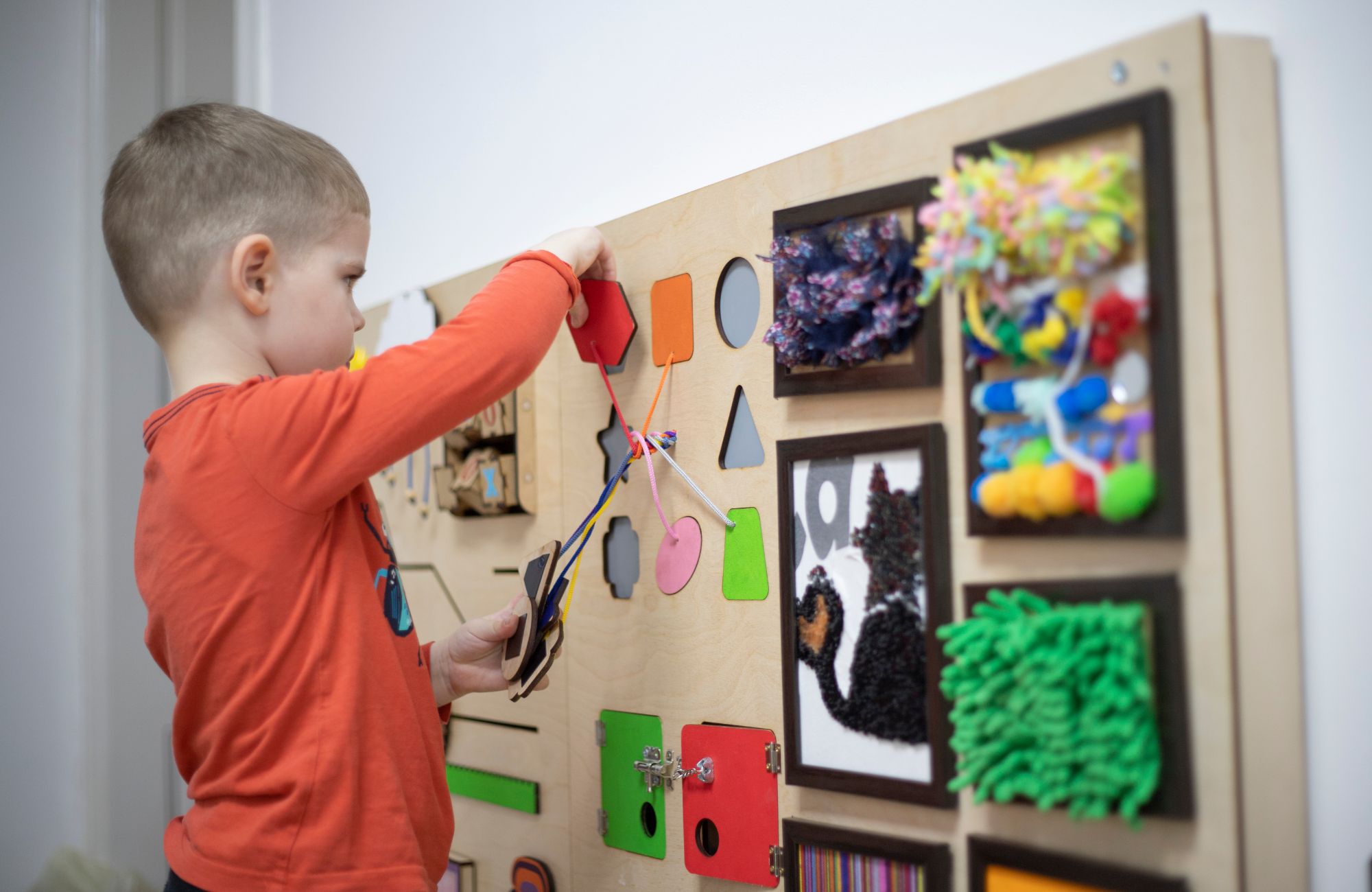
Autism emotional regulation strategies can help children navigate strong feelings, sensory stress, communication frustration, and difficult transitions with more support. Useful strategies include predictable routines, visual supports, sensory adjustments, calm-down spaces, communication tools, and caregiver responses that reduce pressure during distress.
For parents, the goal is not to stop emotions or require a child to appear calm at all times. It is to help the child notice what is happening, communicate what they need, stay safe, and recover in a way that respects their individual needs.
Many families need practical support that fits real routines, not generic advice that is difficult to use at home. Apple ABA provides personalized in-home ABA therapy in Secaucus and other New Jersey communities, helping children build communication, coping, and daily living skills in the settings where challenges happen most often.
What Is Emotional Regulation in Autism?
Emotional regulation is the process of noticing, understanding, and responding to emotions. For an autistic child, this may include recognizing body signals, communicating discomfort, adjusting to a change, asking for a break, or using a familiar coping skill when stress increases.
A 2024 Clinical Psychology Review meta-analysis on emotion regulation and emotion dysregulation in autistic children and adolescents found that autistic children and teens may experience greater emotion regulation difficulties than non-autistic peers. However, emotional regulation abilities vary considerably among children, and support should reflect each child’s communication, sensory, developmental, and environmental needs.
However, emotional regulation abilities vary considerably among children, and support should reflect each child’s communication, sensory, developmental, and environmental needs.
Some children may become overwhelmed by loud sounds, bright lights, crowded rooms, uncomfortable clothing, or changes to a familiar routine. Others may have difficulty explaining that they are tired, worried, frustrated, hungry, in pain, or unsure about what will happen next.
Emotional regulation skills develop gradually. Before a child can use a coping strategy, they may need help recognizing what their body is communicating. For example, a child may learn that clenched fists, rapid breathing, pacing, covering their ears, or sudden crying can mean that stress is rising.
Why Emotional Regulation Can Feel Difficult
Emotional dysregulation can happen when the demands placed on a child exceed their ability to process, communicate, or cope in that moment. Sensory input, communication barriers, fatigue, anxiety, hunger, illness, pain, social demands, and unexpected changes may all contribute.
Sometimes there is one clear trigger. At other times, several smaller stressors build throughout the day. A child who managed a noisy classroom, an unexpected substitute teacher, uncomfortable clothing, and a delayed meal may have less capacity for another difficult transition at home.
Children may also communicate distress in ways adults do not immediately recognize. They may:
- Repeat questions or phrases
- Avoid touch
- Cover their ears
- Become unusually quiet
- Withdraw from an activity
- Refuse something they usually enjoy
- Move more than usual
- Seek repetitive movement
- Try to leave the area
These responses may communicate discomfort, uncertainty, or overwhelm rather than intentional defiance.
Signs Your Child May Be Getting Overwhelmed
Early signs of overwhelm differ from one child to another. Some children become louder or more active before distress peaks. Others become quiet, leave the room, stop responding, or appear unable to follow familiar instructions.
Recognizing these patterns early can allow caregivers to reduce pressure before the child becomes fully overwhelmed.
Common signs may include:
- Covering the ears or avoiding touch
- Pacing, rocking, flapping, or increased repetitive movement
- Repeating the same question or phrase
- Sudden crying, yelling, or irritability
- Clenched fists, a tense body, or rapid breathing
- Hiding, leaving the room, or refusing to participate
- Difficulty following familiar directions
- Pushing away food, toys, or preferred activities
- Becoming unusually quiet or unresponsive
- Asking repeatedly what will happen next
A simple observation log may help parents identify patterns. Write down:
- What happened before the child became distressed
- What early signs appeared
- What support was offered
- What appeared to help
- How long recovery took
The log does not need to be complicated. A few brief notes after a difficult moment may reveal patterns related to time of day, transitions, noise, hunger, demands, sleep, or communication.
This information can also support a more thorough ABA assessment. Apple ABA uses observation and individualized planning to identify each child’s strengths, needs, routines, and appropriate treatment goals.
Emotional regulation support is not limited to meltdowns. It can also help children manage everyday frustration, transitions, sensory discomfort, waiting, communication challenges, and changes in routine. Meltdowns are one possible sign that stress has exceeded a child’s current ability to cope, which is why understanding them can be useful as part of a broader emotional regulation plan.
Autism Meltdown vs. Tantrum: What Is the Difference?
An autism meltdown generally occurs when a child becomes so overwhelmed that they have difficulty processing the situation or accessing their usual communication and coping skills. Understanding the difference between an autism meltdown and a tantrum can help caregivers choose a response that matches the child’s needs. A tantrum may also involve genuine distress, but it may remain more connected to a particular limit, task, item, or desired outcome.
The distinction is not always clear. A child may also begin with frustration about a limit and then become genuinely overwhelmed. Parents should avoid using a single behavior or incident to label the child’s intentions.
During intense distress, a child may struggle to process language, respond to questions, communicate needs, or use a coping skill they know at other times. Reasoning, lecturing, demanding eye contact, or asking for an immediate explanation may add more pressure.
| Feature | Autism Meltdown | Tantrum |
| Common context | Sensory overload, fatigue, anxiety, pain, communication frustration, accumulated stress, or sudden change | Frustration involving a limit, task, item, activity, or desired outcome |
| Processing and coping | The child may have a reduced ability to process, communicate, or use coping skills during the peak of distress | The child may remain more aware of a specific outcome, although genuine distress may still be present |
| Helpful immediate response | Reduce stimulation and demands, use fewer words, and focus on safety | Remain calm, maintain appropriate limits, and offer manageable choices when the child can process them |
| What may help afterward | Recovery time, reassurance, reconnection, and later reflection | Reconnection, consistent boundaries, and communication practice |
This table is a general comparison, not a diagnostic rule. Every child and situation is different. The most useful response is based on what the child is experiencing and what will help everyone remain safe.
What to Do Before, During, and After a Meltdown
Parents can support a dysregulated child by preparing for predictable stressors, reducing demands during emotional overload, and discussing the experience only after the child has recovered. Learning how to help with an autism meltdown can give caregivers a clearer plan for responding before, during, and after intense distress. During a meltdown, the immediate priority is safety and regulation, not compliance or teaching a lesson.
Before a Meltdown: Reduce Avoidable Stress
Many autism emotional regulation strategies work best before a child becomes distressed. Predictable routines, visual schedules, transition warnings, communication tools, and limited choices can reduce uncertainty.
Try these approaches during common stress points:
- Give clear transition warnings, such as five minutes and two minutes before a change.
- Use a first-then board, such as “First shoes, then car music.”
- Offer two manageable choices, such as choosing between two shirts.
- Prepare materials before high-demand routines such as school mornings.
- Preview unfamiliar places with pictures or a simple explanation.
- Practice asking for help or a break during calm moments.
- Keep expectations realistic when the child is tired, hungry, sick, or already stressed.
During a Meltdown: Lower Pressure and Support Safety
When a child is highly distressed, use fewer words and a quieter voice. Remove nonessential demands, reduce noise or lighting when possible, and give the child safe physical space.
Some children feel safer when a caregiver remains nearby. Others need more distance and less interaction. Follow the child’s established safety plan and familiar preferences.
Avoid questions such as:
- “Why are you doing this?”
- “What is wrong with you?”
- “Can you use your words?”
- “Why can’t you calm down?”
- “Are you going to behave now?”
The child may not be able to process the question or produce an answer during the peak of distress. Instead, use short, familiar phrases such as:
- “You are safe.”
- “I am here.”
- “We can take a break.”
- “No talking right now.”
- “Quiet space.”
- “I will wait.”
Avoid forcing breathing exercises, physical contact, or a sensory tool unless the child has previously shown that it is helpful. A strategy that calms one child may be uncomfortable or overwhelming for another.
After a Meltdown: Reconnect Without Shame
Recovery may take time. Some children want quiet, while others seek a familiar activity, snack, comfort object, movement, or caregiver nearby.
Once the child is fully calm, use simple and neutral language to discuss what happened. For example:
“The vacuum was loud. You covered your ears and became upset. Next time, we can use headphones or go to your quiet space.”
This approach connects the experience, body signals, and possible coping strategy without blaming or shaming the child.
Do not require an immediate apology or detailed explanation. Begin with reconnection and safety. Teaching can happen later, when the child is able to participate.
Practical Autism Emotional Regulation Strategies for Home
The most useful autism emotional regulation strategies at home include visual supports, predictable routines, sensory adjustments, calm-down spaces, simple communication tools, and caregiver responses that reduce pressure during distress.
Children are more likely to use a coping skill when they have practiced it during a calm, low-pressure moment. Start with one stressful routine and one or two strategies rather than changing everything at once.
1. Use Visual Supports to Build Emotional Awareness
Visual tools can help children identify emotions, body sensations, expectations, and available choices. Depending on the child’s needs, these may include:
- Emotion cards
- A feelings chart
- A visual schedule
- A first-then board
- A break card
- A choice board
- A countdown timer
- A simple emotional levels chart
Keep the language concrete. Instead of asking only, “How do you feel?” try:
- “Is your body calm, worried, or too loud?”
- “Do you need help or a break?”
- “Is the room okay or too noisy?”
- “Do you want space or company?”
A child who cannot yet name an emotion may be able to point to a picture, select a card, choose a color, or guide a caregiver toward what they need.
2. Create a Supportive Calm-Down Space
A calm-down space gives a child a predictable place to reduce stimulation or recover. It does not need to be a separate room.
Depending on the child’s preferences, the space might include:
- Soft seating
- Books
- Headphones
- Lower lighting
- A familiar comfort object
- A preferred quiet activity
- Safe movement or sensory items selected for that child
The space should feel supportive, not punitive. Avoid sending the child there as a punishment. Introduce and practice using the space during calm moments. The child should learn that the area is available when they need less noise, fewer demands, or more time.
3. Teach Simple Communication for Big Feelings
Communication tools can reduce frustration when a child cannot quickly explain what is wrong. Communication may involve speech, gestures, sign language, picture cards, a speech-generating device, or another form of augmentative and alternative communication.
Useful messages may include:
- “I need help.”
- “Too loud.”
- “I need a break.”
- “Not yet.”
- “Stop, please.”
- “One more minute.”
- “My body hurts.”
- “I don’t know.”
- “I need space.”
- “Stay with me.”
Practice these messages during calm routines. A child should not have to wait until they are distressed to learn how to request help.
4. Use Predictable Routines and Transition Warnings
Predictability can reduce the amount of information a child must process at once. A routine does not need to be rigid, but the child should have a way to understand what is happening and what comes next.
Helpful supports may include:
- A morning checklist
- A bedtime schedule
- A timer before screen time ends
- A visual plan for appointments
- A calendar showing unusual events
- Countdown warnings before transitions
- A familiar transition song or phrase
When a change cannot be avoided, explain it as simply and as early as possible. Tell the child what is changing, what will remain the same, and what will happen afterward.
5. Adjust Sensory Demands
Some emotional reactions may be connected to sensory discomfort. Observe whether certain sounds, lights, textures, smells, temperatures, crowds, or types of touch regularly appear before distress.
Possible adjustments include:
- Reducing background noise
- Offering headphones
- Dimming harsh lights
- Removing irritating clothing tags
- Allowing movement breaks
- Creating a quieter seat
- Providing advance warning before loud appliances are used
- Limiting unnecessary touch
Sensory preferences differ greatly. Do not assume that every autistic child will benefit from the same sensory item or activity.
6. Practice Coping Skills During Calm Moments
Coping skills are easier to learn when the child is not already overwhelmed. Practice briefly and without pressure.
Depending on the child, coping strategies may include:
- Requesting a break
- Counting slowly
- Taking deep breaths
- Using a visual breathing prompt
- Walking or stretching
- Listening to familiar music
- Sitting in a quiet place
- Holding a preferred object
- Asking an adult to stay nearby
- Using a simple self-advocacy phrase
Deep breathing should be offered as one possible strategy, not treated as a universal solution. Some children may prefer movement, silence, reduced demands, or another form of regulation.
Common Home Triggers and Supports That May Help
Emotional dysregulation can happen during ordinary routines, especially when a child feels rushed, uncomfortable, uncertain, or unable to communicate. The following examples are starting points rather than universal solutions.
| Common Situation | Possible Early Signs | Support That May Help |
| Getting ready for school | Repeated questions, crying, refusal, moving slowly | Visual schedule, clothes prepared ahead, countdown, fewer verbal reminders |
| Ending screen time | Yelling, bargaining, throwing items, ignoring directions | Timer, transition warning, clear stopping point, preferred next activity |
| Mealtimes | Leaving the table, pushing food away, covering the nose | Lower noise, consistent seating, manageable expectations, attention to discomfort |
| Bath time | Hiding, covering ears, tense body, refusing the bathroom | Predictable steps, limited choices, sensory adjustments, preparation beforehand |
| Unexpected visitors | Withdrawal, pacing, repeated speech, leaving the room | Advance notice, access to a quiet area, familiar activity, reduced social demands |
| Bedtime | Increased movement, crying, repeated requests, resistance | Consistent routine, dimmer lights, visual sequence, calming transition |
| Leaving a preferred place | Running away, dropping to the floor, repeated requests | Countdown, visual timer, clear next activity, transition object |
| Household noise | Covering ears, yelling, hiding, rapid movement | Warning before the sound, headphones, quieter location, shorter exposure |
How to Choose Strategies Based on Your Child’s Communication Level
The best strategy should match how the child currently understands and communicates information. A tool that works for a verbally fluent older child may not be appropriate for a preschooler who communicates primarily through gestures, pictures, or a speech-generating device.
For a child who uses limited spoken language, focus on:
- Pictures or symbols
- One-step directions
- Break or help cards
- Gestures
- Consistent short phrases
- Simple choices
- Demonstrating the strategy
For a child who understands more complex language, families may also practice:
- Naming body sensations
- Rating stress on a simple scale
- Discussing likely triggers
- Choosing between several coping options
- Planning for difficult situations
- Reflecting after recovery
Communication ability can also change during distress. A child who speaks in full sentences while calm may only be able to point, gesture, repeat a familiar phrase, or use a communication device when overwhelmed. Keep communication options available even when the child can usually speak.
How Parents Can Start This Week
Choose one routine rather than trying to address every challenging moment at once.
Use this quick-start checklist:
- Choose one predictable routine, such as bedtime or ending screen time.
- Watch for signs that appear before distress increases.
- Write down what happens immediately before the difficult moment.
- Select one visual or environmental support.
- Teach one simple communication message, such as “I need a break.”
- Practice the strategy when the child is calm.
- Observe what helps without expecting immediate perfection.
- Adjust the plan based on the child’s response.
For example, a family working on screen-time transitions might add a five-minute warning, show a visual timer, teach the phrase “one more minute,” and prepare a familiar activity for immediately afterward.
How In-Home ABA Therapy Can Support Emotional Regulation
In-home ABA therapy can help families identify patterns, strengthen functional communication, practice coping skills, and create routines in the places where challenges occur. Treatment should be individualized and based on assessment rather than using the same strategy for every child.
The CDC explains that autism services may be delivered in health, educational, community, or home settings and may include behavioral, developmental, educational, social-relational, psychological, or other approaches depending on the person’s needs.
At Apple ABA, individualized assessment and planning help BCBAs understand the child’s current skills, family routines, strengths, and support needs before recommending measurable goals that reflect family priorities.
Depending on the child, goals may include:
- Requesting help or a break
- Communicating discomfort
- Handling specific transitions
- Following a visual routine
- Increasing independence in daily living skills
- Building flexible communication
- Using safer responses during frustration
- Helping caregivers respond consistently
Caregiver collaboration allows strategies to be practiced between sessions and adapted to real routines. In-home care also gives the treatment team an opportunity to observe environmental factors that may not be visible in a clinic, such as household noise, sibling interactions, mealtime routines, bedtime transitions, or the physical layout of the home.
No ABA strategy should be used simply to suppress harmless autistic traits or require a child to hide distress. Goals should focus on meaningful communication, safety, participation, independence, and quality of life.
When to Seek Additional Support
Parents should consider additional support when distress becomes more frequent, more intense, difficult to recover from, or disruptive to home, school, sleep, feeding, or community participation.
Prompt professional attention may also be needed for:
- Sudden or unexplained behavioral changes
- Possible pain or illness
- Self-injury
- Aggression
- Leaving safe areas or elopement
- Significant sleep concerns
- Feeding or swallowing concerns
- Loss of previously used skills
- Distress that prevents regular daily activities
According to the CDC’s guidance on autism treatment and intervention services, a support plan may involve professionals from different fields depending on the child’s needs. These may include medical, behavioral, educational, developmental, psychological, speech-language, and occupational therapy providers.
A pediatrician can help rule out pain, illness, sleep problems, medication effects, or other medical issues that may contribute to a sudden change. The child’s school team or other professionals may also offer information about patterns in different environments.
If a child may seriously hurt themselves or someone else, leaves the home or another safe location unexpectedly, or cannot remain safe, seek immediate professional or emergency assistance.
Conclusion
Emotional regulation skills take time, practice, and support that fits each child’s needs. By recognizing early signs of overwhelm, creating predictable routines, and teaching simple coping and communication strategies, parents can help children feel safer and more confident during difficult moments. Small changes at home can make daily transitions, sensory challenges, and strong emotions easier to manage over time.
At Apple ABA, our BCBAs use individualized ABA strategies, positive reinforcement, and evidence-based teaching methods to support emotional regulation, communication, social, and daily living skills through personalized in-home ABA therapy. We serve families across Morris County, Passaic County, Mahwah, Totowa, West Paterson, Madison, Kinnelon, and nearby New Jersey communities. Contact us to learn how a family-centered treatment plan can support your child’s growth at home.
FAQs
What are the five emotion regulation strategies?
Psychologist James Gross’s process model identifies five strategy groups: situation selection, situation modification, attentional deployment, cognitive change, and response modulation. For autistic children, these may involve reducing avoidable stress, adjusting the environment, redirecting attention, using clear explanations, or practicing a familiar coping skill.
How can you help an autistic child regulate emotions?
Identify common triggers, watch for early signs of overwhelm, and use predictable routines, visual supports, sensory adjustments, and simple communication tools. Practice coping skills while the child is calm and reduce demands during intense distress.
How do you help a dysregulated child?
Focus first on safety, use fewer words, lower noise and other stimulation, remove nonessential demands, and give the child appropriate space. Once the child has recovered, reconnect and briefly discuss what may help during a similar situation.
What are the four R’s of emotion regulation?
There is no universally accepted clinical four R’s model, but one practical caregiver framework is recognize, reduce, reconnect, and reflect. Recognize early stress, reduce pressure, reconnect after recovery, and reflect later on what may help next time.
Are meltdowns always caused by sensory overload?
No. Sensory overload may contribute to a meltdown, but communication frustration, pain, fatigue, hunger, anxiety, sudden changes, or several stressors building up may also play a role.
Should parents use consequences after an autism meltdown?
During and immediately after a meltdown, focus on safety, recovery, and reconnection rather than punishment. Once the child is calm, caregivers can reinforce safety limits and practice clearer communication or coping responses for future situations.