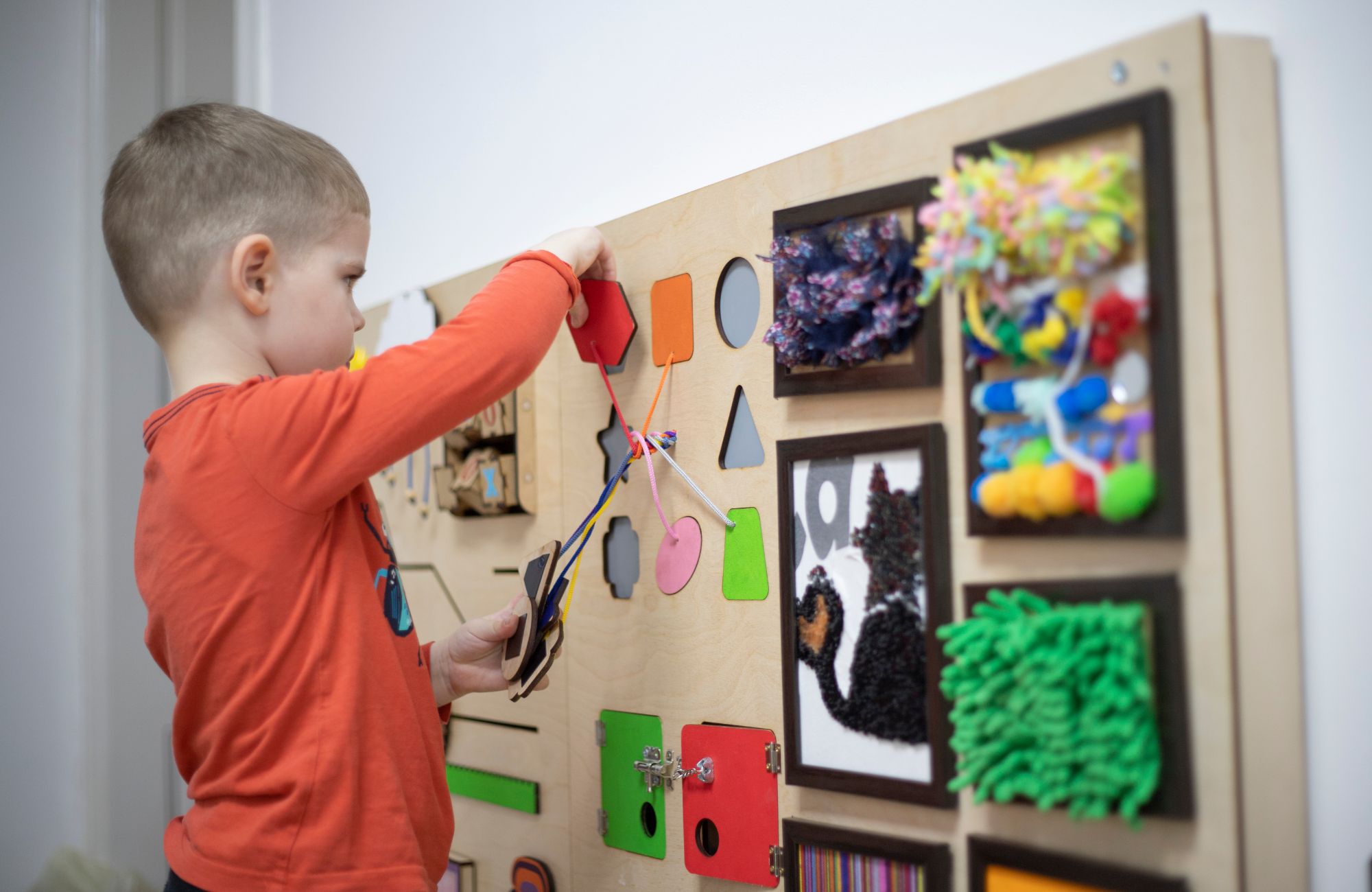
Learning how to make choices can help an autistic child communicate preferences, participate in daily routines, and build independence. Teaching choice-making to autistic child can start with simple decisions, such as choosing a snack or activity, then grow into more complex decisions about school, social situations, and everyday problems. For families in West Caldwell and nearby Essex County communities, many of these skills can be practiced naturally at home.
The goal is not to make a child choose quickly or choose what an adult prefers. Instead, parents and therapists can create meaningful opportunities for children to express what they want, understand available options, and take part in decisions that affect their daily lives. Apple ABA provides individualized, home-based ABA therapy designed to support communication, life skills, and independence in familiar settings. Families can also learn more about ABA therapy in West Caldwell and how home-based support can help children practice these skills during everyday routines.
What Is Choice-Making for an Autistic Child?
Choice-making means selecting between available options based on a preference, need, or goal. For an autistic child, the options may be presented through objects, pictures, words, gestures, or another communication method. Simple choice-making can become a foundation for broader decision-making, self-advocacy, communication, and independent living skills.
Decision-making overlaps with choice-making, but they are not the same. Choosing between an apple and a banana is a simple choice. Deciding what to do when a favorite activity is unavailable requires additional skills, such as considering alternatives and thinking about what may happen next.
Research does not support treating autism as a condition that automatically causes poor decision-making. A review of 104 studies involving 2,712 autistic participants and 3,189 comparison participants found similar performance between groups on some types of decision-making tasks, while differences appeared in areas such as metacognition and value-based decisions. Individual abilities and circumstances matter.
Simple Choice-Making Examples
A child might choose:
- Which shirt to wear
- Which snack to eat
- Which toy to play with
- Which book to read
- Whether to color or build with blocks
- Which activity to complete first
These everyday decisions give children repeated opportunities to communicate preferences and participate actively in their routines.
Why Is Choice-Making Important for Autistic Children?
Choice-making can support communication, independence, confidence, and self-advocacy by giving children meaningful control over appropriate parts of their day. Regular opportunities to choose can also increase participation and motivation, especially when choices connect to activities or items the child genuinely values.
This can also help children practice skills they will use far beyond childhood. A child who learns to communicate a preferred activity can later practice asking for help, choosing between tasks, expressing a boundary, or deciding what to do when a plan changes.
Choice-Making Supports Communication
Not every child communicates preferences through speech. A child may point, reach, look toward an item, use a picture, gesture, sign, AAC system, or another established form of alternative communication.
The communication method matters less than giving the child a meaningful way to participate. Strategies such as functional communication training can help children learn practical ways to express needs, preferences, and requests. Parents and caregivers should use the communication approach that matches the child’s existing abilities and treatment plan.
Choice-Making Supports Self-Advocacy
Giving children appropriate choices also teaches an important message: their preferences matter.
For example, a child may learn to communicate:
- “I want this.”
- “I don’t want that.”
- “I need help.”
- “I need a break.”
- “I want something different.”
These skills can support greater independence and participation in daily life.
How Do You Teach Choice-Making to an Autistic Child?
The most effective approach starts with simple, meaningful choices and gradually builds complexity. Present a small number of clear options, use visual or alternative communication supports when needed, allow enough processing time, and respect the child’s response whenever the choice is safe and practical. Repeated practice in everyday routines helps turn choice-making into a functional skill.
1. Start With Two Clear Choices
Two options can be a useful starting point when a child is learning how to choose or becomes overwhelmed by many possibilities. TEACCH recommends beginning with two choices when too many options feel overwhelming and increasing the number as the individual’s skills develop.
For example, hold up two snacks and ask, “Apple or crackers?” Keep both options visible and give the child time to respond.
The choices should also be meaningful. If a child strongly prefers one option and never wants the other, you may learn more by offering two items that are both motivating.
2. Use Tangible Options When Possible
Abstract questions can be difficult for some children. Instead of asking, “What do you want to do?” while listing several activities verbally, show the child two actual objects or pictures.
For example:
- Hold up a ball and a coloring book.
- Show pictures of two activities.
- Place two clothing choices where the child can see them.
- Use photographs of familiar places or activities.
TEACCH recommends matching the type of visual support to the person’s level of understanding, which may include objects, photographs, picture symbols, or written words.
3. Give Your Child Time to Respond
A quick question followed by an immediate adult answer leaves little opportunity to practice.
Build extra time into the routine. If getting dressed normally takes 10 minutes, you may need to start a little earlier when the child is learning to choose clothing. TEACCH specifically recommends building additional time into routines so individuals do not feel rushed while making decisions.
4. Honor Meaningful Choices
If you offer a genuine choice, allow the child to make that choice whenever it is safe and practical.
This does not mean children should control every part of the day. Adults still set boundaries around safety, health, schedules, and other necessary limits. Within those boundaries, however, meaningful choices can help children understand that communicating a preference has a real effect.
5. Gradually Expand the Choices
Once two choices become comfortable, you can introduce more complex decisions.
A useful progression may look like this:
| Skill Level | Example | Possible Support |
| Simple choice | Apple or crackers? | Objects |
| Daily routine | Blue shirt or green shirt? | Clothing or pictures |
| Activity choice | Read or build? | Picture choices |
| Multiple options | Which activity should we do first? | Choice board |
| Problem-solving | What can we do if the park is closed? | Pictures and guided questions |
| Social decision | Ask for help or take a break? | Role-play or social story |
| Independent decision | What should you do next? | Faded prompts |
The goal is not to rush through these levels. Some children may need considerable practice at one level before moving to the next.
6. Reduce Adult Support Over Time
Prompts can help a child learn a new skill, but constant prompting can make it harder to determine whether the child can make a choice independently.
As the child becomes more successful, the adult can gradually reduce prompts. Tracking how often a child makes an independent choice can also help parents and clinicians see whether a strategy is working and decide when to adjust the level of support.
What Are Some Decision-Making Activities for Kids With Autism?
Everyday routines provide some of the best opportunities to practice decision-making because children can immediately see how their choices affect what happens next. Activities do not need to look like formal lessons. Parents can build practice into meals, dressing, play, homework, chores, outings, and social situations.
Try Everyday Choice-Making Activities
At breakfast:
“Do you want cereal or eggs?”
Getting dressed:
“Do you want the blue shirt or the green shirt?”
During play:
“Do you want blocks or a puzzle?”
For homework:
“Do you want to start with reading or math?”
During chores:
“Do you want to put away the books or the toys?”
At bedtime:
“Which book should we read?”
These simple activities help children practice communicating preferences in different contexts. They also create natural opportunities to introduce new skills without making every interaction feel like a therapy exercise.
Practice “What Would You Do?” Scenarios
As a child’s skills develop, move beyond selecting preferred objects.
For example:
Situation: Your child wants to play outside, but it starts raining.
Ask:
- What could we do instead?
- What choices do we have?
- Which choice would you like?
- What might happen next?
You can use pictures, role-play, social stories, or actual practice to make the situation easier to understand.
These activities can gradually connect choice-making with problem-solving, emotional regulation, flexibility, and social skills.
What If an Autistic Child Struggles to Make a Choice?
Difficulty making a choice does not necessarily mean a child does not understand the options. Too much information, unclear instructions, pressure, distractions, limited processing time, or an unappealing set of options can all make decision-making harder for some autistic individuals. Research with 117 autistic participants found that factors such as internal state, information quality and quantity, pressure, distractions, and lack of time could affect decision-making.
Instead of immediately repeating the question, look at what may be making the decision difficult. You may need to change the way you present the options rather than expecting the child to simply try harder.
If Your Child Always Chooses the First Option
Change the position of the choices.
For example, if the child always selects the item on the left, switch the positions and observe what happens. You can also vary the options and check whether the child shows a consistent preference.
Avoid assuming that a repeated selection always represents a genuine preference. The child’s response may reflect how the choices are presented.
If Your Child Becomes Overwhelmed
Try:
- Reducing the number of choices
- Using pictures or objects
- Simplifying your language
- Removing unnecessary distractions
- Giving additional processing time
- Offering choices when the child is calm
- Breaking a complex decision into smaller steps
Research on autistic people’s experiences of decision-making highlights the importance of clear, contextual information and reducing unnecessary pressure when possible.
If Your Child Does Not Communicate Verbally
Spoken language is not required for meaningful choice-making.
A child might use:
- Pointing
- Reaching
- Eye gaze
- Gestures
- Pictures
- A picture exchange communication system
- AAC
- Sign language
- Another established communication method
The appropriate approach depends on the child’s individual communication needs. A qualified clinician can help families identify practical ways for a child to express preferences.
How Can Visual Supports Help With Decision-Making?
Visual supports can make choices easier to understand by showing the child what options are available rather than relying only on spoken language. Objects, photographs, picture symbols, written words, choice boards, and visual schedules can make decisions more concrete and predictable when they match the child’s communication and learning needs.
A simple visual choice board might show two pictures: one for “blocks” and one for “coloring.” The child can then point to, touch, hand over, or otherwise indicate the preferred option.
| Visual Support | Example | Possible Use |
| Objects | Two snacks | Early choice-making |
| Photographs | Photos of activities | Familiar routines |
| Picture symbols | Activity icons | Regular choices |
| Written words | “Read” or “Play” | Children who read |
| Choice board | Several activities | Structured choices |
| Visual schedule | Planned activities with choice points | Daily routines |
The best support depends on the child. TEACCH recommends matching visual supports to an individual’s understanding and using choices throughout everyday routines.
Visual supports can also help make transitions easier. For example, a child may see that after choosing a preferred activity, it will be followed by another planned part of the routine. This can provide structure while still giving the child meaningful control within appropriate boundaries.
How Can Parents Build Choice-Making Into Everyday Life?
Parents can build choice-making into routines without setting aside a separate lesson. Clothing, meals, play, homework, chores, and family activities all provide natural opportunities to practice preferences and independent communication. Frequent practice in familiar settings can also help children use new skills across different routines and social contexts.
Consider these opportunities throughout a typical day:
| Routine | Choice-Making Opportunity |
| Morning | Choose clothing |
| Breakfast | Choose between foods |
| Before school | Choose a preferred item to bring |
| Homework | Choose which task to start |
| Play | Choose an activity |
| Chores | Choose between appropriate tasks |
| Family time | Choose a game or book |
| Bedtime | Choose a story |
The important part is to keep choices meaningful. You do not need to turn every routine into a series of questions. Instead, look for reasonable moments when the child can have a genuine say.
For families in West Caldwell, Essex County, and surrounding New Jersey communities, home-based practice can make this approach especially practical because the skills are taught within the routines where children already need to use them.
How Can ABA Therapy Support Choice-Making and Decision-Making?
ABA therapy can address choice-making as part of broader communication, functional, social, and daily living goals. An individualized program can identify a child’s current skills, determine which supports are appropriate, teach new skills in manageable steps, track progress, and help caregivers practice those skills across everyday settings.
Start With Individualized Assessment
Children can have very different strengths and challenges. One child may understand spoken choices but need extra processing time. Another may communicate preferences easily through gestures but need visual supports to make decisions about unfamiliar activities.
An assessment can help a clinical team identify current communication abilities, functional skills, barriers to independence, and appropriate goals rather than applying the same strategy to every child.
Practice Skills in the Natural Environment
Home-based ABA therapy allows therapists to work within routines that already matter to the child and family.
Instead of practicing only with artificial materials in a clinical setting, a therapist may incorporate skills into activities such as:
- Getting dressed
- Preparing a snack
- Cleaning up
- Playing
- Following a schedule
- Asking for help
- Handling changes in plans
Natural environment teaching can help connect new skills to situations in which children actually need to use them.
Work with Caregivers
Caregiver involvement can make skill generalization more practical. Parents can learn how to present choices, wait for responses, use appropriate prompts, and gradually encourage greater independence.
For families considering support in West Caldwell or Essex County, Apple ABA offers personalized home-based care focused on each child’s needs and daily environment.
How Does Choice-Making Help Build Independence?
Choice-making gives children repeated practice expressing preferences and participating in decisions that affect their daily lives. Over time, these opportunities can contribute to broader life skills, self-advocacy, communication, and independent living. Independence does not mean removing all support at once; it means helping a child do more of a task or decision with the appropriate level of support.
A gradual progression might look like this:
Adult presents choices → child indicates a preference → child makes choices with fewer prompts → child considers simple alternatives → child solves familiar problems → child makes more independent decisions.
The same skill should also be practiced across settings. A child who can choose a snack at home may need opportunities to make choices at school, during community activities, or in social situations.
This process is called skill generalization. Practicing a skill with different people, materials, routines, and settings can help children use what they have learned beyond the original teaching situation.
When Should Parents Consider Professional Support?
Professional support may be useful when difficulty with choices or decisions consistently affects communication, daily routines, safety, social participation, or independence. A qualified provider can help determine whether the challenge relates to communication, processing demands, task complexity, motivation, environmental factors, or another individual need.
Parents may want to discuss support if a child:
- Rarely communicates preferences
- Becomes highly distressed when presented with choices
- Depends on adults for many everyday decisions
- Has difficulty adapting when a preferred option is unavailable
- Struggles to make safe choices
- Needs extensive prompting to participate
- Has difficulty using choice-making skills in new settings
The goal should always be individualized. Choice-making is not about forcing independence before a child is ready. It is about creating appropriate opportunities for participation while providing the support needed to make those opportunities successful.
If your family is looking for personalized support in West Caldwell, Essex County, or nearby New Jersey communities, Apple ABA can help you explore whether individualized home-based ABA therapy fits your child’s needs.
Conclusion
Teaching choice-making to an autistic child starts with meaningful opportunities to communicate preferences and participate in everyday life. Simple decisions, such as choosing a snack or activity, can provide a foundation for more complex skills involving problem-solving, self-advocacy, social situations, and independent living. Visual supports, appropriate communication methods, processing time, and gradual increases in complexity can make the learning process more manageable.
Most importantly, the goal is not to make every child choose independently as quickly as possible. The goal is to give each child appropriate opportunities to have a voice in their daily life while providing the support needed to succeed. For families in West Caldwell, Essex County, and nearby New Jersey communities, Apple ABA provides personalized, home-based ABA therapy that can incorporate communication, functional skills, daily living skills, and independence into familiar routines. Contact us to learn how in-home ABA therapy can support your child’s growth, daily skills, and independence.
FAQs
What are some effective strategies for teaching students with autism?
Effective strategies can include visual supports, clear choices, modeling, role-play, social stories, task analysis, prompting, and repeated practice in meaningful routines. The strategy should match the student’s communication abilities, learning needs, and goals. Teaching skills across different settings can also help with generalization.
What are some good short-term goals for an autistic child?
Short-term goals should be specific, functional, measurable, and appropriate for the individual child. Examples may include independently making a choice between two activities, requesting help, following a short routine, communicating a preference, completing part of a self-care task, or using an appropriate communication method. A qualified clinical team can help determine which goals are most relevant for a particular child.
How can I be a good parent to an autistic child?
A strong starting point is to learn how your child communicates, understand their preferences, respect their needs, and create opportunities for meaningful participation. Avoid assuming that every autistic child learns or communicates in the same way. Working collaboratively with therapists, educators, and other health care providers can also help create consistent support across the child’s daily environments.
What are some important life skills for students with special needs?
Important life skills can include communication, personal care, self-care, dressing, eating, hygiene, household tasks, safety, problem-solving, social skills, emotional regulation, and decision-making. The right priorities depend on the child’s age, abilities, goals, and level of independence. Life-skills instruction works best when adults teach manageable steps and provide opportunities to practice them in real situations.
How many choices should I give an autistic child?
Two choices can be a useful starting point when a child is learning choice-making or feels overwhelmed by too many options. However, there is no universal number that works for every child. TEACCH recommends starting with two choices when needed and gradually increasing options as decision-making skills develop.
Can ABA therapy help teach decision-making skills?
ABA therapy can incorporate individualized goals related to communication, choice-making, problem-solving, daily living, and independence. A clinical team can assess current abilities, select appropriate teaching strategies, track progress, and help caregivers practice skills in everyday settings. The specific goals and methods should depend on the child’s individual needs rather than a one-size-fits-all program.