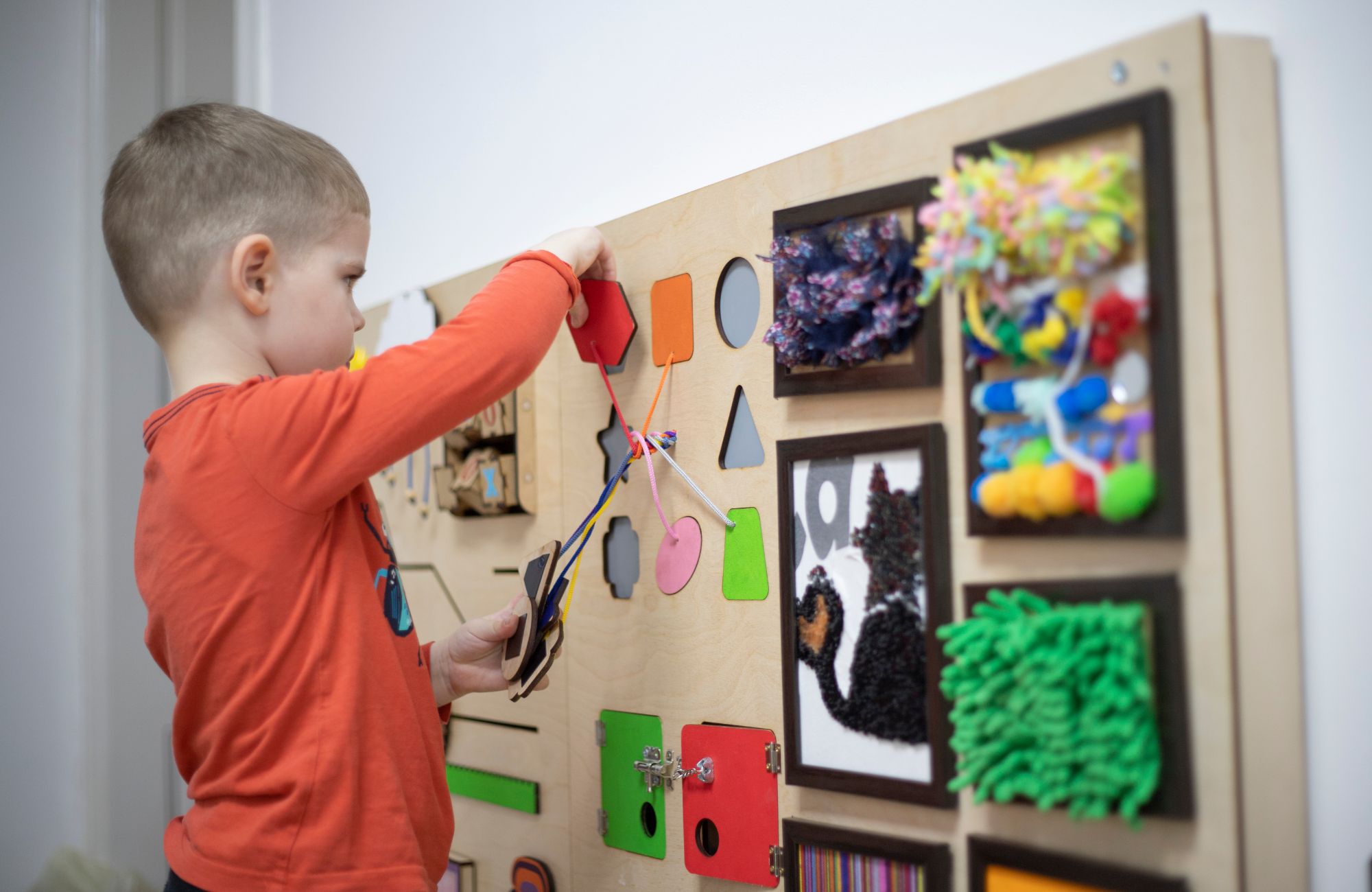
Teaching problem-solving skills to children with autism starts with helping them recognize everyday challenges, consider possible responses, and communicate what they need. Parents can build these skills during familiar routines while giving their child enough time, support, and choice to work through problems in a way that matches their abilities.
For parents in New Jersey, teaching these skills does not have to mean adding more tasks to a busy day. Simple activities at home can help your child practice at their own pace. If your family needs guidance, Apple ABA offers personalized ABA therapy in Chatham, NJ to help children build meaningful skills through familiar daily routines.
What Are Problem-Solving Skills for Children With Autism?
Problem-solving skills help children notice a challenge, think about possible solutions, and decide what to do next. Autistic children may use words, gestures, pictures, or communication devices to show how they solve problems. These skills support daily routines, social interactions, and independence while allowing each child to learn in their own way.
Examples of Problem-Solving in Everyday Life
Problem-solving does not always involve a difficult puzzle or a complex task. It can be as simple as finding another way to reach a favorite toy or asking for help when a container will not open.
Children practice these skills in many ways throughout the day. For example, your child might:
- Ask for help when a toy is out of reach.
- Try turning a puzzle piece when it does not fit.
- Choose another snack when their favorite is unavailable.
- Find a different way to complete a familiar task.
- Use a picture card to communicate what they need.
Each example involves noticing a problem and taking an action that may help resolve it. The child does not need to complete every step without support for the activity to provide a useful learning experience.
Why Problem-Solving Skills Matter
Problem-solving supports many areas of daily life. Children use these skills when getting dressed, playing with others, making choices, and responding to changes in their routines. These everyday experiences also support cognitive development and foster critical thinking as children learn to compare options and understand how their actions affect outcomes.
Developing problem-solving skills can also create more opportunities for children to express their needs. When a child learns to request help, they gain another way to respond to a difficult situation rather than struggling through it alone.
Independence does not mean completing every task without assistance. It means having the tools, choices, and support needed to take part in daily activities in meaningful ways.
Why Some Autistic Children Need Problem-Solving Support
Some autistic children need extra support when they face unfamiliar tasks, unexpected changes, or activities with several steps. Communication differences, sensory sensitivities, and the demands of a particular situation can affect how a child approaches a problem. Parents can help by understanding what makes a task difficult and adjusting their support to fit the child’s needs.
Common Challenges During Problem-Solving
Every autistic child has different strengths and support needs. One child may enjoy challenging puzzles but find changes in plans difficult. Another may understand a solution but need a different way to communicate it.
Children with autism spectrum disorder may experience unique challenges during problem-solving activities, depending on their communication preferences, sensory needs, and familiarity with the task.
Some situations that may require additional support include:
- Following instructions that involve several steps.
- Choosing between unfamiliar options.
- Communicating a need or requesting help.
- Handling an unexpected change in a familiar routine.
- Applying a learned skill in a new place or situation.
- Managing sensory discomfort during an activity.
These challenges do not mean a child lacks problem-solving abilities. They may need clearer instructions, a different communication method, more time, or a change to the task itself.
How to Recognize When Your Child Needs Help
Pay attention to how your child responds when an activity becomes difficult. They may stop participating, repeat an action that is not working, request assistance, or show signs of distress.
Emotional regulation can play a crucial role in problem-solving, especially when a child feels overwhelmed by an unfamiliar task. Offering a break, reducing demands, or helping the child communicate their feelings can create a more supportive environment for learning.
Before adding more instructions, consider whether the task matches your child’s current abilities. Check whether they understand the goal, have access to their preferred communication method, and feel comfortable in the environment.
For example, a child who struggles to complete a puzzle in a noisy room may find the same activity easier in a quieter, more controlled environment. Changing the environment may help more than adding another teaching prompt.
How ABA Therapy Teaches Problem-Solving Skills
Applied behavior analysis (ABA) therapy can help children learn specific problem-solving skills through individualized teaching and meaningful practice. Therapists may use modeling, task analysis, visual supports, prompting, and positive reinforcement to teach new responses. They can also adjust activities and reduce assistance as children become more familiar with a skill.
Modeling and Task Analysis
Modeling involves showing a child how to complete a task or try a possible solution. A parent or therapist might demonstrate how to turn a puzzle piece, open a container, or use a communication device to request help.
Task analysis breaks a larger activity into smaller, manageable steps. Instead of teaching a child to complete an entire dressing routine at once, a therapist may focus on putting on one item of clothing or learning one step at a time.
These structured teaching methods can make an unfamiliar task easier to understand. The therapist chooses the steps and level of support based on the child’s needs rather than using the same problem-solving strategies for every child.
Visual Supports and Communication Tools
Visual supports can make problem-solving steps easier to follow. Visual aids such as picture schedules, checklists, and choice boards can help a child understand what happens next and compare possible solutions.
Children who use augmentative and alternative communication (AAC) may select pictures, symbols, or words on a communication device to express their choices. Others may prefer gestures, spoken language, or a combination of methods.
The goal is to give the child a reliable way to understand the task and communicate during the activity. These problem-solving techniques should match the child’s language abilities and preferred communication methods.
Prompting, Reinforcement, and Gradual Independence
A prompt provides help when a child needs support completing a step. It may involve a verbal reminder, a gesture, a visual cue, or a demonstration.
Positive reinforcement can encourage meaningful skill use by acknowledging an effort or providing a preferred outcome. Reinforcing desired behaviors, such as requesting help or trying an appropriate solution, can support problem-solving training when the goal reflects the child’s needs and preferences.
For example, when a child requests help opening a container, the parent can respond to the request and help them access the item.
As the child develops a skill, the therapist may gradually reduce unnecessary prompts. This process, called prompt fading, gives the child more opportunities to make choices and try familiar solutions. It is a key component of fostering independence while ensuring that assistance remains available when needed.
Different ABA strategies serve different purposes. The following table shows how parents and therapists can apply these effective strategies to everyday situations.
| ABA Strategy | Purpose | Everyday Example |
| Modeling | Show a possible solution | Demonstrate how to turn a puzzle piece. |
| Task analysis | Divide a complex task into smaller steps | Break a dressing routine into manageable actions. |
| Visual supports | Make choices and instructions easier to understand | Use pictures to show two possible activities. |
| Prompting | Provide help during learning | Point toward a missing item or offer a visual cue. |
| Positive reinforcement | Encourage meaningful skill use | Respond when a child requests help or tries a solution. |
| Prompt fading | Reduce assistance when appropriate | Let the child complete a familiar step with less guidance. |
A therapist should choose strategies that respect the child’s communication preferences, comfort, and individual goals. The focus should remain on teaching useful skills rather than requiring a child to complete a task simply for compliance.
At Apple ABA, individualized care helps connect teaching methods to each child’s daily life. Families can explore home-based ABA therapy to learn how personalized goals and caregiver collaboration can support skill development at home.
How to Teach Problem-Solving Skills at Home
Teaching problem-solving skills at home starts with small, familiar challenges that match your child’s abilities and interests. Parents can help children identify a problem, explore possible solutions, choose an action, and review what happened. Give your child enough time to respond, offer help when needed, and keep the activity comfortable and meaningful.
A Five-Step Problem-Solving Process for Parents
You do not need special equipment to teach your child how to solve problems. A familiar toy, a favorite activity, or a simple household task can create a useful learning opportunity.
Imagine that your child wants to play with a toy but cannot find it. Instead of immediately finding the toy for them, you can turn the situation into a short problem-solving activity.
- Notice the problem. Help your child recognize that the toy is missing. You might say, “We can’t find your car,” or point to the empty toy shelf.
- Explore possible solutions. Offer two choices, such as looking in the toy box or asking someone for help. Use pictures or gestures if your child finds them helpful.
- Choose an action. Give your child time to select an option using their preferred communication method. Respect their choice, including a request for help.
- Try the solution. Support your child as they search for the toy or ask another family member where it might be. If the first choice does not work, offer another option without making the activity feel like a test.
- Review the result. Once your child finds the toy or receives help, briefly acknowledge what happened. You might say, “You asked for help, and we found your car.”
Keep the process short and natural. If your child loses interest or becomes distressed, you can stop the activity and try again during another routine.
This simple problem-solving instruction gives children opportunities to explore solutions, make choices, and learn from their experiences. With consistent practice, they can become more familiar with the steps needed to approach everyday challenges.
Adapt the Process to Your Child’s Needs
Some children benefit from picture cards that show possible solutions. Others may prefer spoken choices, gestures, or a communication device. Give your child time to respond rather than repeating instructions before they have had a chance to think.
You can also adjust the difficulty of a problem-solving task. Start with a familiar activity that your child can complete with appropriate support, then introduce a new challenge when they feel ready.
For children who find unexpected changes stressful, plan practice activities in advance. Predictable activities and structured routines can create a consistent learning environment that helps children understand what to expect.
The goal is not to create problems for your child throughout the day. Instead, use naturally occurring situations to help them develop useful skills without adding unnecessary frustration.
Problem-Solving Activities for Autistic Children at Home
Problem-solving activities help autistic children practice identifying challenges, exploring choices, and finding solutions during everyday routines. Parents can use games, puzzles, dressing tasks, and familiar household activities to make learning relevant. Choose activities that reflect your child’s interests, offer appropriate communication support, and allow them to participate at their own pace.
Five Everyday Activities That Build Problem-Solving Skills
Children can practice problem-solving while playing, getting dressed, or making choices at home. These activities do not need to take much time or require expensive materials.
Start with an activity your child already enjoys and identify one useful skill to practice. The following examples show how common situations can become learning opportunities.
| Activity | Problem-Solving Goal | How Parents Can Help |
| Finding a missing toy | Identify a problem and request help | Offer choices about where to look or whom to ask. |
| Completing a puzzle | Try different solutions | Show how to turn a piece or choose another piece. |
| Choosing another snack | Explore available options | Present alternatives using words, pictures, or gestures. |
| Getting dressed | Complete a task in manageable steps | Demonstrate one step and offer help when needed. |
| Adjusting to a schedule change | Consider an alternative plan | Use a visual schedule to explain the change and offer choices. |
Each activity provides a chance to practice a specific skill. Parents can increase or reduce the difficulty based on the child’s response.
If your child already knows how to complete a puzzle, for example, you might introduce a slightly different puzzle or encourage them to decide which piece to try next. If the activity becomes frustrating, return to a familiar task or offer a break.
These simple problem-solving exercises can also help children compare options and understand the results of their choices. As they explore different approaches, they have opportunities to develop critical thinking alongside practical daily living skills.
Use Role-Playing to Practice Social Problem-Solving
Role-playing can help children explore solutions to social situations before they encounter them in daily life. Choose a simple scenario that connects to your child’s interests and communication abilities.
For example, two toy characters might want to use the same toy. You can demonstrate asking for a turn, choosing another toy, or requesting help from an adult.
These role-playing scenarios offer opportunities to practice resolving social conflicts and understanding how different people may feel. Children can explore appropriate responses without pressure to follow a single social script.
Invite your child to explore possible solutions using speech, gestures, pictures, or their communication device. Avoid insisting on one specific social response when several respectful options could work.
Social stories or visual sequences may also help explain unfamiliar situations. A short picture sequence can show what happens when someone wants to join a game, needs assistance, or experiences a change in plans.
When appropriate, social skills training can include emotional understanding, sharing preferences, and practicing ways to navigate social interactions. These activities can support social skills while respecting each child’s communication style and personal boundaries.
Role-playing provides structured opportunities to explore social choices, but children may still need support during unfamiliar or untrained social conflicts outside practice.
Choose Activities That Match Your Child’s Interests
A child’s interests can make a problem-solving activity more meaningful. If your child enjoys toy cars, use a missing car or a blocked track as the problem. If they prefer art, offer a choice when a favorite drawing tool is unavailable.
You can also use familiar household routines to support skill development. Families in Chatham and other Morris County communities can practice these skills during playtime, meals, and other activities that already form part of their day.
The most useful activities address skills that matter to your child and family. A short, enjoyable task that supports a meaningful goal may offer more value than a longer exercise that does not match your child’s needs.
How to Help Your Child Solve Problems Independently
Independent problem-solving develops when children have opportunities to make choices, try solutions, and use learned skills with appropriate support. Parents can encourage independence by allowing response time, offering meaningful options, and reducing unnecessary prompts as skills develop. Children should always feel comfortable requesting help, taking breaks, or communicating that they need a different approach.
Know When to Offer Help
When your child encounters a difficult task, give them time to explore a solution if they appear comfortable doing so. They may need a few extra moments to understand the problem, consider their options, or communicate a choice.
If your child requests assistance, respond to that request. You can provide the amount of support they need while still offering opportunities to take part in the activity.
For example, if your child cannot open a container, you might loosen the lid and allow them to finish opening it. If they prefer you to open the container completely, respect that choice.
Independent problem-solving does not require a child to complete every task alone. Learning when and how to request support can be a critical aspect of greater independence.
Practice the Same Skill in Different Situations
A child may learn to solve a problem during one activity but need additional practice using the same skill elsewhere. Therapists call the use of a learned skill in new situations generalization.
For example, your child may first learn to request help when completing a puzzle. Later, they can practice requesting assistance when opening a snack container or finding a missing item.
Use the same communication method across these situations when it helps your child. Gradually introduce new activities while keeping the underlying learning goal clear.
Consistent practice across meaningful routines can provide more opportunities to develop effective problem-solving skills. Parents and therapists can also introduce different challenges over time to help children explore new solutions and strengthen their problem-solving abilities.
How to Track Your Child’s Problem-Solving Progress
Parents and therapists can track problem-solving progress by observing how a child identifies challenges, makes choices, requests help, and tries solutions during daily activities. Progress may involve using a skill with less assistance or applying it in a new situation. Clear, individualized goals help families recognize meaningful changes over time.
Signs Your Child Is Developing Problem-Solving Skills
Progress does not always mean completing a task faster or without support. A child who starts asking for help instead of becoming overwhelmed may have gained a valuable communication skill.
Watch for small changes in how your child approaches familiar challenges. They may begin trying another solution, making choices more independently, or using a learned communication skill during a different activity.
You might notice that your child:
- Requests assistance when a task becomes difficult.
- Chooses between two possible solutions.
- Tries another approach when their first attempt does not work.
- Uses a familiar skill during a new activity.
- Communicates when they need a break or a different kind of support.
Focus on goals that matter to your child and family. Each child develops skills at their own pace, and the amount of support they need may change across situations.
How Parents and Therapists Can Monitor Progress Together
A simple home practice record can help you notice patterns and share useful information with your child’s therapist. You do not need to record every activity or turn each daily routine into a formal lesson.
For example, you might note that your child requested help opening a snack container with a picture card. During another activity, they may make the same request without needing a reminder.
An ABA therapist can use these observations alongside session data to review learning goals, support an individualized ABA assessment, and adjust teaching methods. Regular caregiver communication also helps the therapist understand which skills your child uses during everyday life.
How In-Home ABA Therapy Supports Problem-Solving
In-home ABA therapy helps children practice problem-solving skills during familiar activities and everyday routines. Therapists can identify meaningful learning goals, adapt teaching methods to each child’s communication and support needs, and work with caregivers to encourage skill use between sessions. This individualized approach connects structured teaching with situations that matter to the child and family.
Personalized Therapy and Family Collaboration
Children do not all need the same problem-solving goals. One child may benefit from learning to request help during daily routines, while another may work on exploring alternatives when an activity does not go as expected.
A Board Certified Behavior Analyst (BCBA) can assess the child’s strengths, needs, and current skills to develop an individualized treatment plan. Registered Behavior Technicians (RBTs) may then help implement the plan under appropriate supervision.
In a home-based setting, therapists can use familiar toys, household items, and daily routines to support learning. Parents can also observe teaching strategies and discuss how to practice meaningful skills outside therapy sessions.
The familiar home environment can help children practice problem-solving during daily life tasks that matter to their family. With individualized guidance, caregivers can encourage children to apply new skills while respecting their communication preferences and comfort.
Conclusion
Teaching problem-solving skills can help your child develop useful ways to communicate, explore choices, and respond to everyday challenges. Simple activities, consistent practice, and a supportive environment can help enhance problem-solving while fostering independence and confidence in daily life.
Apple ABA provides personalized in-home ABA therapy for families throughout New Jersey, with individualized assessments, caregiver collaboration, and ongoing progress tracking. Families seeking ABA therapy in Chatham, NJ can access personalized support that helps children practice communication, problem-solving, and daily living skills in the comfort of their homes. Contact us to discuss your child’s learning goals and discover how personalized home-based therapy can support their development.
FAQs
What are some good short-term goals for an autistic child?
Useful short-term goals may include requesting help, choosing between two activities, completing a familiar daily task, or trying another solution when something does not work. Parents and therapists should select goals that match the child’s current abilities and personal needs. A BCBA can help break larger goals into manageable steps and track progress during everyday activities.
How can I teach my child problem-solving skills?
Start with a familiar activity that presents a simple challenge, such as finding a missing toy or completing a puzzle. Help your child identify the problem, offer a small number of choices, and give them time to try a solution. Use visual supports, gestures, or other communication tools when needed, and offer assistance if your child requests help or becomes frustrated.
How can I teach my autistic child at home?
Use familiar routines, preferred activities, and short learning opportunities that match your child’s abilities and interests. You can practice communication, problem-solving, and daily living skills during playtime, meals, and dressing routines. An ABA therapist can help you choose meaningful goals and adapt teaching strategies to your child’s communication style and support needs.
What are some helpful life skills for individuals with autism?
Helpful life skills may include communicating needs, making choices, getting dressed, preparing simple snacks, managing personal belongings, and requesting assistance. The most useful skills depend on the person’s age, interests, abilities, and daily routines. Parents and therapists can support these skills through manageable steps, consistent practice, and opportunities to make meaningful choices.