Teaching sportsmanship to an autistic child starts with identifying the specific part of games or competition that needs support. Your child may understand the game but struggle with waiting, unexpected outcomes, changing rules, or communicating disappointment. Good sportsmanship does not require hiding frustration after losing. It involves building practical skills for participating, communicating, and responding to different outcomes.
For parents in Rockleigh and throughout Bergen County, these situations may arise during family games, school activities, play with friends, or sports. If these challenges regularly affect participation, ABA therapy in Rockleigh can provide individualized support at home.
What Does Good Sportsmanship Mean for an Autistic Child?
Good sportsmanship is a group of skills used during games, sports, and other shared activities. It can include waiting for a turn, following agreed rules, communicating with other players, handling different outcomes, asking for help or a break, and respecting other people’s participation. The skills that need support will vary by child.
A child can feel disappointed, frustrated, or angry after losing and still make progress with sportsmanship. The goal should not be to remove those emotions or require a cheerful response. Instead, parents and therapists can help children develop practical ways to communicate and participate when an activity does not go as expected.
Sportsmanship skills may include:
- Waiting and turn-taking
- Understanding game rules
- Communicating needs and emotions
- Coping with winning and losing
- Handling small changes
- Cooperating with teammates or other players
- Recognizing when to ask for help
- Taking an appropriate break
- Returning to an activity when ready
Breaking sportsmanship into smaller skills also makes progress easier to recognize. “Wait until your turn before rolling the dice” gives clearer guidance than simply telling a child to “be a good sport.”
Why Can Losing Be Difficult for Some Autistic Children?
Losing can be challenging for some autistic children because games involve uncertainty, changing expectations, waiting, rules, communication demands, and social interaction. The reason differs from one child to another. Looking at the specific situation is more useful than assuming that losing itself explains every difficult reaction during a game.
A child who becomes upset when a sibling wins might handle the same outcome calmly when playing with a parent. Another child may tolerate losing but struggle when somebody changes a familiar rule. Those differences matter because they point to different skills that may need practice.
Unexpected Outcomes and Changing Expectations
Games naturally involve uncertainty. A child may expect to reach a certain space, score a point, or finish first, only for the result to change moments later.
Adults can make those possibilities more concrete before the game begins. For example, explain that “you might win, I might win, or we might tie.” As the child becomes more comfortable, practice can gradually include games with less predictable outcomes.
Communication and Strong Emotions
Sometimes a child knows they are uncomfortable but does not yet have an easy way to explain what is wrong. Crying, leaving the activity, pushing pieces away, or refusing another turn may communicate frustration, confusion, or the need for a break.
Useful communication might include:
- “I’m disappointed.”
- “Can I have a break?”
- “I need help.”
- “I don’t want another round.”
- “Can we play again later?”
A functional request may be more useful than insisting on a scripted phrase such as “good game” while the child remains overwhelmed.
Waiting, Rules, and Social Demands
Losing may not be the main difficulty at all. Waiting between turns, remembering several rules, sharing materials, responding to teammates, or managing a noisy environment can make participation harder.
Consider the whole activity before choosing a strategy. A shorter game, clearer rules, a smaller group, or a quieter environment may make it easier to practice sportsmanship without adding unnecessary demands.
How Do You Teach Sportsmanship to an Autistic Child?
To teach sportsmanship to an autistic child, choose one specific skill, practice it during manageable activities, explain expectations clearly, and model what to do. Provide visual, verbal, or other support when helpful and reinforce meaningful progress. Once the skill becomes easier, gradually practice it with different games, people, and settings.
1. Identify the Skill You Want to Teach
Start with an observable goal rather than a broad label such as “good behavior” or “better sportsmanship.”
For example, your goal might be for your child to:
- Wait until another player finishes a turn
- Ask for a break instead of pushing game pieces away
- Follow one agreed game rule
- Finish a short game when another person wins
- Communicate disappointment
- Accept a small change in a familiar activity
One child may need practice with turn-taking, while another needs support communicating during disappointment. Defining the specific skill gives both the child and adult a clearer target.
2. Start With a Low-Pressure Activity
Choose an activity your child already understands and can complete without managing too many demands at once. A short board game, simple card game, matching activity, cooperative game, or brief physical activity may work better than starting with a long competitive event.
Consider your child’s interests, too. Familiar themes, characters, toys, or activities can make practice more engaging when they support the goal rather than distract from it.
3. Make the Expectations Concrete
Directions such as “play nicely” or “show good sportsmanship” are abstract. They do not tell the child which action matters in that moment.
Use specific language instead:
“Wait until Maya puts down her card. Then it is your turn.”
“If you want to stop, say, ‘I need a break.’”
“When the game ends, put the pieces back in the box.”
Explicit instructions reduce guesswork and make the expected skill easier to practice.
4. Model and Practice the Skill
Show the child what the skill looks like before expecting independent use. A parent can model losing, waiting, requesting clarification, or responding to an unexpected outcome.
Role-playing creates another low-pressure practice opportunity. You might pretend to lose and say, “I wanted to win, so I feel disappointed. I’m going to take a short break.” The child can then practice a response that works for them.
5. Use Visual Supports or Social Narratives When Helpful
Visual supports can make sequences and expectations easier to understand for some autistic children. A turn card, visual timer, simple rule sheet, first-then board, or choice card can show what happens now and what comes next.
In the 2020 scoping review “Visual Supports at Home and in the Community for Individuals With Autism Spectrum Disorders,” Marion Rutherford and colleagues reviewed 34 studies in the journal Autism. They found that visual supports may help communication, predictability, and participation, while emphasizing that home-based evidence varies and supports should be individualized.
Social Stories and other social narratives can also explain what may happen during a game and possible ways to respond. Dominique H. Como and colleagues reviewed 56 articles in “A Scoping Review: Social Stories Supporting Behavior Change for Individuals With Autism,” published in the Journal of Occupational Therapy, Schools, & Early Intervention. The review found promising results across several behaviors but also noted limits in the evidence, including heavy reliance on single-subject designs.
Neither strategy works for every child. Choose supports based on the child’s communication style, preferences, and learning needs.
6. Reinforce the Specific Behavior
Positive reinforcement becomes clearer when the child knows exactly what they did successfully. Instead of only saying “good job,” describe the skill you noticed.
For example:
“You waited until your brother finished his turn.”
“You told me you needed a break.”
“You followed the changed rule.”
Specific positive feedback connects reinforcement with the skill being practiced. Depending on the child and goal, reinforcement may involve verbal praise, a preferred activity, a short break, or another meaningful outcome.
7. Increase the Challenge Gradually
Once a child can use the skill during an easier activity, increase one challenge at a time. You might introduce a longer game, a less predictable outcome, a sibling, a familiar peer, or a small group.
Practice should remain manageable. Repeatedly putting a child into situations that overwhelm them does not automatically teach self-control, flexibility, or sportsmanship.
8. Practice With Different People and Activities
A skill becomes more useful when the child can use it beyond one familiar practice session. If your child waits successfully during a board game with you, try the same skill during a card game, physical activity, or play with a sibling.
A 2012 randomized controlled trial by Connie Kasari and colleagues, “Making the Connection: Randomized Controlled Trial of Social Skills at School for Children With Autism Spectrum Disorders,” studied 60 autistic children across 56 classrooms and 30 schools. Published in the Journal of Child Psychology and Psychiatry, the study found advantages for peer-mediated interventions on several social outcomes, including effects that remained at follow-up.
If you are unsure which part of game or peer participation needs support, Apple ABA offers assessments and home-based ABA services for individualized goals.
Match the Sportsmanship Challenge to the Skill
Two children can react similarly during a game while needing very different kinds of support. One child may struggle with waiting, while another understands turn-taking but cannot easily communicate disappointment. Looking beyond the visible reaction helps parents choose a useful practice goal instead of treating every difficulty as “not handling losing well.”
The examples below show how a parent concern might connect with different skills. They are general examples, not diagnoses or individualized treatment recommendations.
| What a Parent May Notice | Skill That May Need Practice | Possible Support |
| Grabs the dice before another player finishes | Waiting and turn-taking | Use a turn marker or brief cue |
| Gets very upset when another person wins | Coping and communication | Practice short, low-pressure games |
| Quits when the rules change | Flexibility and rule understanding | Introduce one small change gradually |
| Plays well with parents but struggles with peers | Generalization | Practice with a familiar peer |
| Cannot explain why they are upset | Functional communication | Teach a simple request or phrase |
| Avoids competitive games completely | Participation, communication, or choice | Try cooperative or lower-pressure activities |
This distinction also matters when setting ABA goals. A useful goal describes what a child will learn, communicate, or do rather than relying on a broad judgment such as “poor sportsmanship.”
What Should You Do When Your Child Gets Upset After Losing?
When a child becomes very upset after losing, focus first on safety, communication, and reducing unnecessary demands. Acknowledge the child’s feelings and use supports that already help them regain control. Save detailed teaching for a time when the child can engage with the lesson rather than trying to correct sportsmanship during intense distress.
Being disappointed after losing is an emotion. Sportsmanship involves the communication and participation skills a person can use while experiencing that emotion.
For example, one child might first learn to say, “I need a break.” Another might work on keeping game materials safely on the table. Someone else may simply need time before discussing what happened.
Avoid mocking, shaming, or turning the moment into a long lecture. When the child is ready, briefly review the target skill and decide whether another practice opportunity makes sense.
If intense reactions happen frequently or limit family, school, or peer participation, an individualized assessment can help clarify which situations and skills need attention.
Use a Before, During, and After Game Routine
A before-during-after routine can make sportsmanship practice easier to understand and repeat. Before playing, choose one goal and explain what might happen. During the activity, model and support that skill without correcting everything at once. Afterward, reinforce useful progress, acknowledge feelings, and decide what should change before the next practice session.
Before the Game
Choose a manageable activity and decide what the practice session will target. Explain the most important rules and, when useful, remind the child that several outcomes are possible.
For example: “We’re practicing waiting today. I will take my turn, then you take yours.”
During the Game
Keep the focus narrow. If the goal is waiting, avoid correcting every unrelated action unless safety requires intervention.
Model the target behavior, provide only as much support as the child needs, and notice progress. When the child appropriately asks for a break, responding to that communication can support the skill rather than undermine it.
After the Game
Describe progress specifically. “You waited while I moved my piece” provides more useful feedback than “You were good.”
When the activity was difficult, keep the review brief. The next session might use a shorter game, clearer expectations, an added visual support, or a different setting.
Should You Let an Autistic Child Win Games?
Parents do not need to guarantee that an autistic child wins every game. Supported opportunities to experience different outcomes can help children practice communication, flexibility, waiting, and coping skills. However, adults should adjust difficulty when an activity repeatedly overwhelms the child rather than assuming that more exposure to losing will automatically build sportsmanship.
Sometimes a parent lets a child win because they want the activity to remain enjoyable. Doing that occasionally does not automatically create a problem.
The concern arises when every outcome is arranged in advance, and the child has few manageable opportunities to experience uncertainty. A balanced approach can include short competitive games, cooperative games, simplified rules, and gradually changing levels of challenge.
The goal is not to make losing unpleasant until the child “gets used to it.” Useful practice gives a child opportunities to build concrete skills while maintaining a reasonable level of challenge.
How Can ABA Therapy Help With Winning and Losing?
ABA therapy can help identify which skills or situations contribute to difficulties with winning, losing, waiting, or competitive play. Rather than treating sportsmanship as one behavior, a clinician can assess patterns, define practical goals, teach communication or participation skills, and help caregivers practice those skills during familiar routines and across different environments.
Assessment Comes Before the Strategy
A useful assessment asks more than whether a child becomes upset after losing. The same reaction can happen for different reasons, so the context matters when selecting goals.
An ABA provider may examine whether difficulties happen:
- While waiting for a turn
- When an expected outcome changes
- Only with certain people
- In noisy or crowded environments
- When rules become unclear
- When the child needs help communicating
- During specific games or sports
Understanding those patterns helps move the goal from “handle losing better” to something more concrete and teachable.
ABA Can Break Larger Goals Into Teachable Skills
Instead of using a broad goal such as “improve sportsmanship,” an individualized plan may focus on observable skills. These might include turn-taking, waiting, requesting help, following agreed rules, communicating disappointment, requesting breaks, or using skills with peers.
Apple ABA provides home-based ABA therapy and comprehensive assessments for children and families in New Jersey. Its services focus on individualized care and family participation in the child’s treatment process.
What an ABA Provider May Look for During Game-Related Challenges
A clinician may look beyond whether the child won or lost. The goal is to understand what happened before, during, and after the difficult moment.
Areas to consider may include:
- What happened immediately before the child became upset
- Whether waiting, losing, rule changes, communication, or sensory demands contributed
- How the child currently asks for help or a break
- Which supports help without removing every opportunity to practice
- Whether the skill transfers to siblings, peers, school, or community activities
This process helps connect a visible challenge with a measurable skill. It also reduces the chance of applying the same strategy to children who need different forms of support.
Can Sports and Physical Activity Support Social Skills?
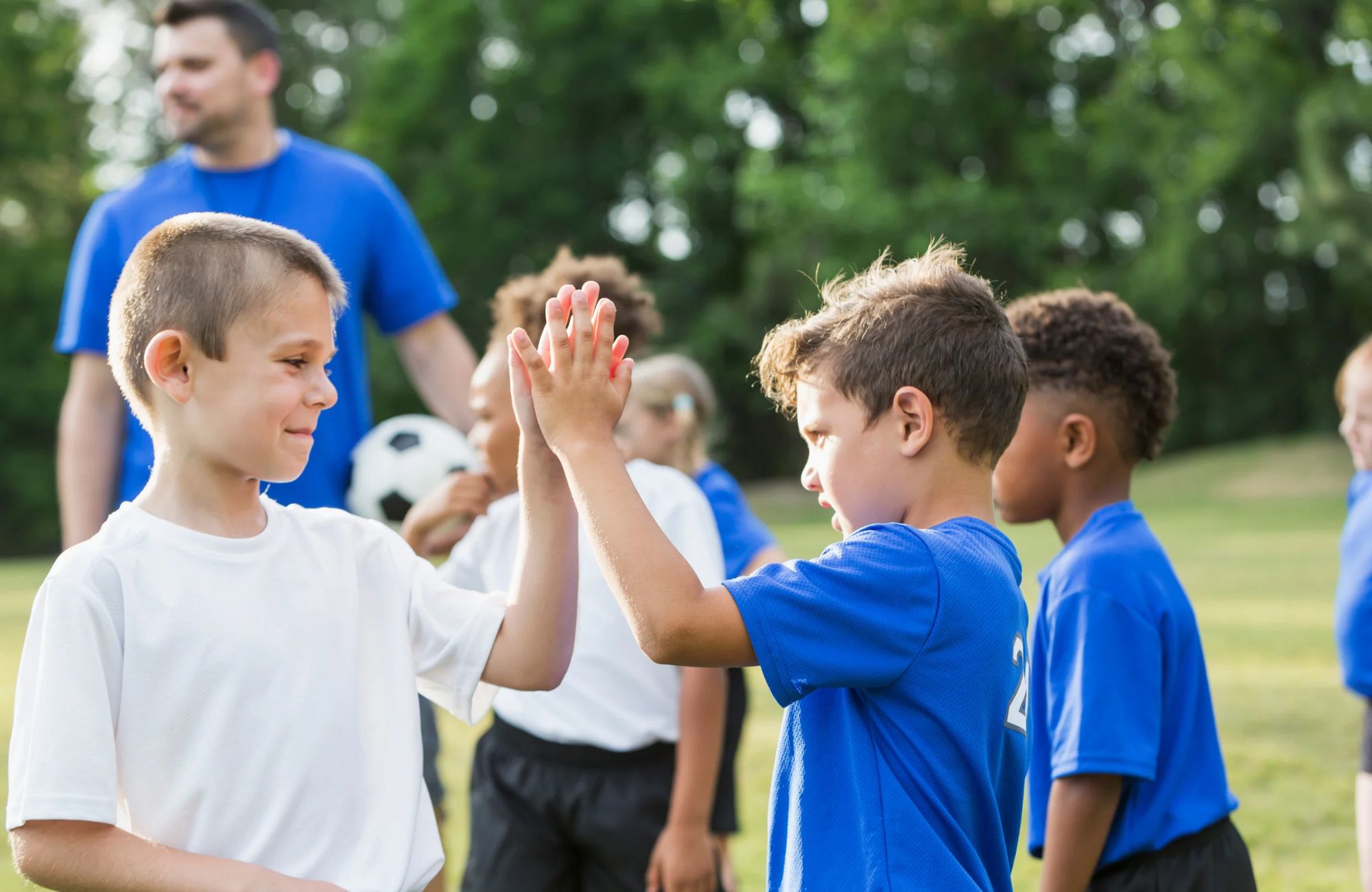
Sports and physical activity can create opportunities to practice communication, cooperation, turn-taking, motor skills, and responding to other people. Research suggests that some structured exercise and sports programs can support social or communication outcomes for autistic children and adolescents. However, results vary by activity, participant, program design, and research quality.
Ruijie Kou and colleagues examined this question in the 2024 network meta-analysis of exercise and social communication, “Comparative Effectiveness of Physical Exercise Interventions on Sociability and Communication in Children and Adolescents With Autism,” published in BMC Psychology. The network meta-analysis included 38 randomized studies and found positive sociability results for several approaches, including sports games, group ball sports, and outdoor exercise compared with passive controls.
More recent evidence calls for careful interpretation. Udeme Samuel Jacob, Sri Nurhayati, and Mbulaheni Obert Maguvhe published the 2026 sports and physical activity systematic review “Sports and Physical Activity Interventions in Autism Spectrum Disorder” in Frontiers in Sports and Active Living. Their review found promising motor, social, communication, and other outcomes, but the authors rated evidence certainty from low to moderate and highlighted substantial differences among studies.
Sports therefore can provide useful practice for some children, but they are not a universal social-skills solution. Consider the child’s interests, motor abilities, sensory sensitivities, communication needs, and comfort with team dynamics. Some children may prefer one-on-one activities or smaller groups.
How Do You Help Sportsmanship Skills Carry Over to Everyday Life?
Sportsmanship skills generalize when a child can use them with different people, activities, and environments instead of only during one practiced game. Parents can support generalization by changing one part of the situation at a time, such as the partner, setting, game, or rules, while keeping the target skill clear and manageable.
A child might first practice waiting during a favorite board game with a parent. Later, the same skill could be practiced with a sibling, during another type of game, and eventually with a familiar peer.
A gradual progression could look like this:
- Practice with a parent.
- Add a sibling or familiar relative.
- Use the same skill during another activity.
- Practice with a familiar peer.
- Move into a small group.
- Apply the skill at school, recreation, or community activities.
Kasari and colleagues’ randomized school study supports the value of considering peers and real social settings when building social skills, rather than depending only on direct child-focused instruction.
Families in Rockleigh and across Bergen County can use ordinary activities as practice opportunities. Family games, playground activities, birthday parties, recreation programs, and sports can all provide natural settings for using previously learned skills.
When Should Parents Consider ABA Support for Sportsmanship Skills?
ABA support may be worth considering when difficulties with games, turn-taking, unexpected outcomes, or peer activities regularly affect a child’s participation or communication. Professional guidance can also help when caregivers have tried reasonable strategies but remain unsure which skill needs support or why the difficulty occurs only with certain people, activities, or environments.
Not every child who dislikes losing needs ABA therapy. Some children may benefit from clearer expectations, different activities, shorter practice sessions, a quieter environment, or more experience.
Individualized guidance may be useful when challenges repeatedly affect:
- Family routines
- Play with siblings or friends
- School participation
- Sports or recreational activities
- Communication during frustration
- Participation in activities the child values
The goal should remain useful communication, participation, and skill development. Treatment should not focus on making a child appear cheerful or compliant during every competitive situation.
Conclusion
Teaching sportsmanship works best when adults focus on specific skills instead of one broad expectation. Waiting, turn-taking, communication, flexibility, and handling different outcomes may each need separate practice. Progress may look different for every child. Clear teaching and gradual practice can build skills without dismissing a child’s emotions or preferences.
Apple ABA helps families in Rockleigh and across Bergen County access personalized ABA support at home. BCBAs use assessments, home-based sessions, progress monitoring, and caregiver collaboration to tailor care to each child’s needs. Contact us to learn how in-home ABA therapy can support your child’s growth and daily skills.
FAQs
Why does my autistic child get so upset when they lose?
An autistic child may become upset after losing because the outcome was unexpected, expectations changed, communication became difficult, or another part of the activity felt overwhelming. The reason can differ between situations. Looking at what happens before the distress can help identify which skill or support may be useful.
Should I let my autistic child win games?
You do not need to make sure your child wins every game. Supported opportunities to experience different outcomes can help build communication, flexibility, and coping skills. Keep the challenge manageable, and consider shorter games or cooperative activities if competitive play becomes overwhelming.
Can ABA help a child learn to handle winning and losing?
ABA therapy can help identify the specific skills involved in difficult game situations, such as waiting, turn-taking, communication, or handling unexpected outcomes. A BCBA can develop individualized goals and strategies based on the child’s needs. Parents and caregivers can also learn ways to practice those skills during everyday activities.
Is it okay if my autistic child does not want to play competitive games?
Yes. An autistic child does not need to participate in every competitive activity to develop social skills or friendships. Cooperative games, shared hobbies, physical activities, and other forms of play can also support communication, patience, teamwork, and connection.