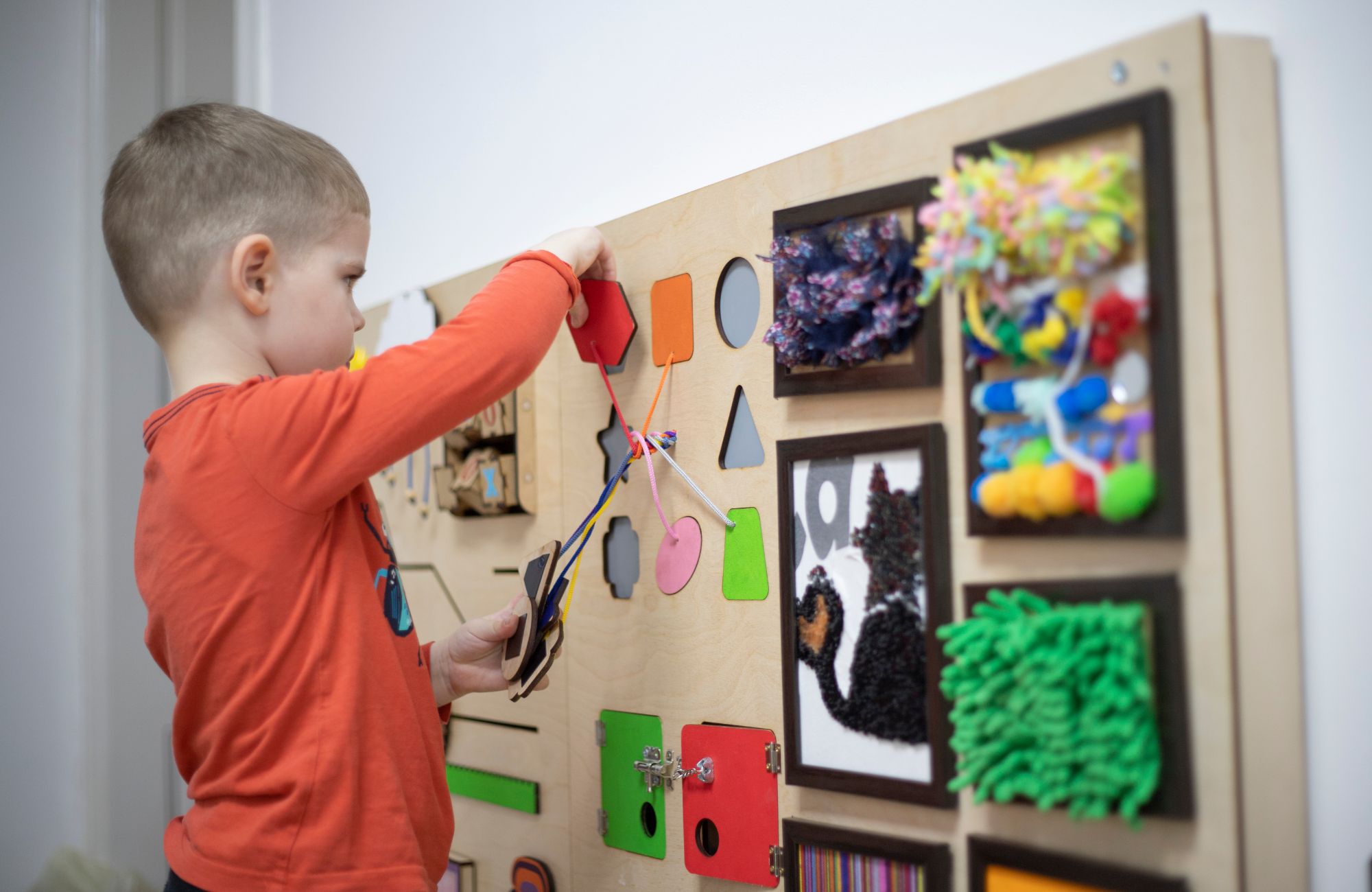
A preference assessment in ABA therapy helps a clinical team learn what a child currently enjoys, chooses, or engages with. If you have seen a therapist offer several toys, activities, or other choices and carefully watch your child’s response, a preference assessment or informal preference check may be part of what is happening.
For parents in Rockleigh, Bergen County, and elsewhere in New Jersey, understanding this process can make ABA sessions feel less unfamiliar. This guide explains what preference assessments measure, the main methods therapists use, and why a preferred item is not automatically a reinforcer. If you are exploring individualized support for your child, Apple ABA provides home-based ABA therapy in Rockleigh built around each child’s needs and everyday environment.
Table of Contents
ToggleWhat Is a Preference Assessment in ABA?
A preference assessment in ABA is a systematic way to identify items, activities, interactions, or sensory experiences a person currently prefers. A therapist may observe engagement or present choices in a structured way. The results can identify potential reinforcers, but they do not prove that every preferred option will strengthen a behavior.
Preferences can include much more than toys or food. Depending on the child, a therapist may look at interest in books, music, drawing, movement, games, sensory experiences, social interactions, or favorite routines.
Preference assessments also differ from simply asking an adult what a child likes. Caregiver input can provide a useful starting point, but direct observation lets the therapist see how the child responds to actual options. This matters because what adults expect a child to prefer does not always match what the child chooses at that moment.
Systematic preference assessment has a long research history in applied behavior analysis. A foundational 1992 study by Fisher and colleagues found that presenting two stimuli at once produced greater differentiation among options than an earlier single-item approach and better predicted which stimuli produced higher responding in the study.
Why Do ABA Therapists Use Preference Assessments?
ABA therapists use preference assessments to identify choices that may matter to the individual rather than assuming what will be motivating. The information can guide individualized teaching and help clinicians identify potential reinforcement options. It also gives the team a way to update those choices as a child’s interests change.
Preference assessments may help a therapist:
- identify current interests
- compare several possible preferred items or activities
- expand the range of potential reinforcers
- make teaching strategies more individualized
- avoid relying only on adult assumptions
- notice when previously preferred options become less appealing
For example, a child who enjoyed bubbles last month may now spend more free time drawing or listening to music. Continuing to offer bubbles simply because they once worked well would ignore the child’s current preferences.
Parents can contribute useful information here. A therapist may ask what the child chooses during free time, what activities they regularly seek, how they show that they want more of something, or whether any interests have recently changed. The clinical team can then combine that information with direct observation and data.
What Are the Main Types of Preference Assessments in ABA?
Several types of preference assessments can help ABA professionals evaluate choices, and no single method fits every person or situation. Common approaches include free-operant, single-stimulus, paired-stimulus, multiple-stimulus with replacement, and multiple-stimulus without replacement assessments. Clinicians may also use indirect methods such as interviews or questionnaires.
For parents, the main difference between these methods is how choices are presented and what the therapist measures. The table below gives a simple comparison before we look at each method in more detail.
| Preference Assessment | What Happens | What It Can Show | Simple Example |
| Free operant | Several options stay available | Relative engagement with different options | Drawing supplies, books, and blocks remain available |
| Single stimulus | One option appears at a time | Response to individual items | One toy or activity is presented |
| Paired stimulus | Two options appear together | Relative choice between pairs | Bubbles or a puzzle |
| MSW | Several options appear and the selected option returns | Repeated choice patterns | The chosen item remains in later arrays |
| MSWO | Several options appear and the selected option is removed | A relative preference ranking | The available choices decrease after each selection |
Free Operant Preference Assessment
A free operant preference assessment allows several items or activities to remain available while the therapist observes what the child approaches and how they interact with the options. The therapist can measure time spent engaging with different activities without repeatedly removing and presenting them.
Roane and colleagues studied a brief five-minute free-access preference assessment in which participants could interact with several stimuli throughout the session. In their study, the procedure identified differently preferred stimuli, took less time than a paired-stimulus assessment, and was associated with fewer problem behaviors for the participants studied.
In a home setting, this may resemble observing whether a child spends more time with blocks, music, books, or another available activity. The exact procedure and what gets measured depend on the child’s program.
Single Stimulus Preference Assessment
A single stimulus preference assessment presents one option at a time. The therapist records how the child responds to each item or activity before comparing patterns across the options.
This format does not require the child to compare several items at once. However, if a child readily approaches nearly every item presented, the method may not produce a clear preference ranking. That limitation helped drive the development of assessment formats that require choices between options.
Paired Stimulus Preference Assessment
A paired stimulus preference assessment, sometimes called a paired-choice assessment, presents two options at a time. The therapist repeats different pairings and records which option the child selects. These repeated choices can produce a relative ranking among the assessed stimuli.
Fisher and colleagues’ 1992 study helped establish this approach by comparing simultaneous two-item choices with a single-stimulus procedure. The two-choice method produced clearer differentiation among stimuli in the participants studied.
For a simple example, a therapist might offer a choice between bubbles and blocks, then blocks and music, then music and bubbles. The actual assessment follows a systematic procedure rather than casually offering random pairs.
Multiple Stimulus With Replacement
A multiple stimulus with replacement, or MSW, assessment presents several options at once. After the individual selects one, that option can appear again in the next set of choices.
Because selected items return, the therapist can see whether the person repeatedly chooses the same option over the alternatives. However, repeated access to a highly preferred item can sometimes make it harder to establish a broader ranking among all available choices.
Multiple Stimulus Without Replacement
A multiple stimulus without replacement, or MSWO, assessment also presents several options at once. The key difference is that once an item is selected, it is removed from the next presentation. The person then chooses again from the remaining options.
This process can create a clear relative preference hierarchy while reducing the number of individual pairings needed. In a 1996 study of seven participants, DeLeon and Iwata found moderate-to-high rank-order correlations between MSWO and paired-stimulus procedures. The MSWO assessment also took less than half the time of the paired-stimulus procedure in that study.
What Is the Difference Between a Preference and a Reinforcer?
A preference and a reinforcer are not the same thing in ABA. Preference describes something a person selects, approaches, or engages with relative to other options. A reinforcer is defined by its effect: when it follows a behavior, that behavior becomes more likely to occur again under similar conditions.
This distinction is important because a preference assessment identifies possible or potential reinforcers, not guaranteed ones. A child may choose an activity when several options are available, yet that same activity may not increase a specific behavior when used as a consequence.
| Preference | Reinforcer |
| Identified through choices or engagement | Identified through its effect on behavior |
| Shows what appears valuable right now | Must increase future responding |
| Can vary by time and context | Effect depends on behavioral data |
| May identify a potential reinforcer | Cannot be assumed from preference alone |
Research illustrates why clinicians make this distinction. Fisher and colleagues tested whether preference-assessment results predicted higher responding, while DeLeon and Iwata separately tested the reinforcing effects of stimuli identified by different preference procedures. Those studies show that identifying preference and demonstrating reinforcement are related but distinct assessment questions.
How Do ABA Therapists Choose a Preference Assessment?
The best preference assessment depends on the individual, the assessment goal, and the situation. A BCBA may consider how the child communicates, whether they can compare multiple choices, how they interact with different kinds of stimuli, and what information the team already has before choosing a structured assessment method.
A therapist may consider factors such as:
- how the child expresses choices
- whether they can scan several options
- how they respond when an item is removed
- whether the team is assessing objects, activities, or other experiences
- how long the child typically engages with an option
- caregiver observations about current interests
- previous preference-assessment data
- the setting and purpose of the assessment
This is one reason parents should view preference assessment as an individualized clinical process rather than a do-it-yourself test with one “correct” format. A method that gives clear information for one child may not provide the same value for another.
What Does a Preference Assessment Look Like During In-Home ABA?
During in-home ABA therapy, a preference assessment may use familiar objects, activities, and routines already present in the child’s natural environment. A therapist might observe what the child approaches, offer structured choices, or ask caregivers about current interests before gathering direct data on selections or engagement.
For families receiving ABA therapy in Rockleigh or elsewhere in Bergen County, familiar options might include books, art supplies, music, movement activities, games, or favorite toys. The home environment also gives therapists access to daily routines and activities that may matter outside a formal therapy setting.
Consider a hypothetical example. A child has blocks, drawing supplies, a puzzle, and music available at home. Depending on the selected method, the therapist might observe how long the child engages with each option or systematically present choices and record selections.
The purpose is not to decide that one activity is the child’s permanent favorite. Instead, the therapist gathers information about current preferences and can continue evaluating whether those choices are useful within the child’s treatment plan.
Can Preference Assessments Work for Children Who Do Not Use Speech?
Yes. A child does not need to use spoken language to participate in every type of preference assessment. Depending on the individual and procedure, a therapist may observe selections, approach, engagement, reaching, gaze, or another established communication response to understand which options the child appears to prefer.
This flexibility matters because children communicate choices in many ways. A child may hand over a picture, use an AAC device, move toward an activity, reach for an item, or consistently spend more time with one option than another.
Parents can help the clinical team understand how their child usually communicates interest, refusal, “more,” or “finished.” That knowledge can support the therapist’s assessment, but the team should still interpret behavior in context instead of assuming that one movement or response always means preference.
Why Can a Child’s Preferences Change?
A child’s preferences can change across days, settings, and even different parts of the same day. Recent access, novelty, available alternatives, changing interests, routines, and context may all affect what someone chooses. For that reason, therapists should treat preference information as current data rather than a permanent list of favorites.
For instance, a child who chooses music early in the day may later want an active game after sitting for a while. That does not mean the first assessment was wrong. It simply shows that preference can shift with context.
Therapists may therefore use brief preference checks, ongoing observation, or more structured assessments when clinically useful. There is no universal rule that every preference assessment must happen on the same weekly or monthly schedule.
Regularly checking whether reinforcement strategies remain relevant can help the clinical team avoid relying on an item simply because it worked before. The frequency should fit the child’s needs and treatment context.
What Role Do Parents Play in Preference Assessments?
Parents and caregivers can provide valuable information about a child’s everyday interests, routines, sensory experiences, and ways of communicating choice. Their observations may help a clinical team decide which options to evaluate, especially when preferences occur outside therapy sessions. Caregiver input works best alongside direct observation rather than automatically replacing it.
Parents may notice details that a therapist has not yet had the opportunity to see. For example, they may know that their child frequently asks for the same song after school, seeks movement activities before dinner, or has recently lost interest in a once-favorite toy.
Useful information to share can include:
- activities the child chooses during free time
- preferred songs, books, games, or movement activities
- social interactions the child seeks
- sensory experiences they appear to enjoy
- activities they have recently stopped choosing
- ways they communicate acceptance or refusal
Home-based ABA can support collaboration because therapists and families can discuss preferences within everyday routines. This can help the clinical team understand how a child’s interests and responses may vary across activities, settings, and times of day..
What Preference Assessments Cannot Tell You?
A preference assessment provides useful information, but it cannot permanently define a child’s interests or prove that every selected item will work as a reinforcer. Results reflect choices within a particular context, so therapists still need ongoing observation, behavioral data, and clinical judgment when using those findings during ABA therapy.
A preference assessment alone cannot prove that:
- an item will remain preferred indefinitely
- the same option will work in every setting
- a preferred activity will always function as reinforcement
- one assessment captures every meaningful interest
- the highest-ranked item should always be used
- preference data can replace direct behavioral data
This limitation does not make preference assessments less valuable. It simply defines what the tool can answer. Preference assessments tell the clinical team something about relative preference, while other data help determine how those preferences function during teaching and everyday behavior. When the clinical question is why a behavior occurs, a functional assessment in ABA may be more appropriate than a preference assessment alone.
What Is an Example of a Preference Assessment?
A simple preference assessment example involves presenting several possible preferred activities and systematically recording what the child selects or engages with. The exact steps depend on the assessment method. The therapist then reviews the pattern of choices to identify higher- and lower-preference options rather than making a decision from one isolated selection.
Suppose a therapist wants to compare bubbles, blocks, drawing, and music. In an MSWO assessment, the therapist could present all four options and allow the child to select one. After brief access, the selected option would be removed, the remaining items rearranged according to the procedure, and another choice offered.
The process continues until the relevant choices have been made. Across repeated assessments, the therapist can look for patterns and build a preference hierarchy. However, the therapist would still need behavioral evidence before concluding that a highly preferred option functions as an effective reinforcer.
How Preference Assessments Support Personalized ABA Therapy
Preference assessments support personalized ABA therapy by giving clinicians structured information about what a child currently values. That information can guide possible reinforcement choices and help therapists make teaching more responsive to the individual. Preference data works alongside treatment goals, caregiver input, ongoing assessment, and behavioral data rather than serving as a stand-alone treatment plan.
This approach also respects an important principle: children have individual interests, and those interests can change. Instead of assuming that every child should respond to the same toy, activity, or social interaction, ABA preference assessments give the child opportunities to express choices through their own responses.
Conclusion
Preference assessments help therapists understand a child’s current interests and guide individualized ABA strategies. They work best alongside clear goals, ongoing data, and caregiver collaboration. As a child’s needs change, the clinical team can adjust strategies to support continued progress.
Apple ABA helps families in Rockleigh and across Bergen County access personalized ABA support at home. Through assessments, home-based sessions, progress monitoring, and caregiver collaboration, BCBAs tailor care to each child’s needs. Contact us to learn how in-home ABA therapy can support your child’s growth and daily skills.
FAQs
What are the 5 preference assessments in ABA?
Five commonly discussed direct preference assessment formats are free operant, single stimulus, paired stimulus, multiple stimulus with replacement (MSW), and multiple stimulus without replacement (MSWO). Each method presents choices differently and measures responses such as selection or engagement. ABA professionals may also use indirect methods, including caregiver interviews or questionnaires.
What is an example of a preference assessment?
An example is an MSWO assessment, where a therapist presents several items or activities and allows the child to choose one. The selected option is removed, and the remaining choices are presented again. This process can help create a relative preference ranking.
How often should preference assessments be conducted in ABA?
There is no single schedule that applies to every child. Preferences can change over time and across situations, so therapists may use ongoing observation, brief checks, or structured reassessments. The frequency depends on the child’s current needs and how stable their preferences appear.
How do you interpret the results of a preference assessment in ABA?
Preference assessment results show which options a person preferred under the assessment conditions. A higher-ranked item may be a potential reinforcer, but it does not automatically function as one. Therapists interpret the results alongside direct observation and behavioral data.