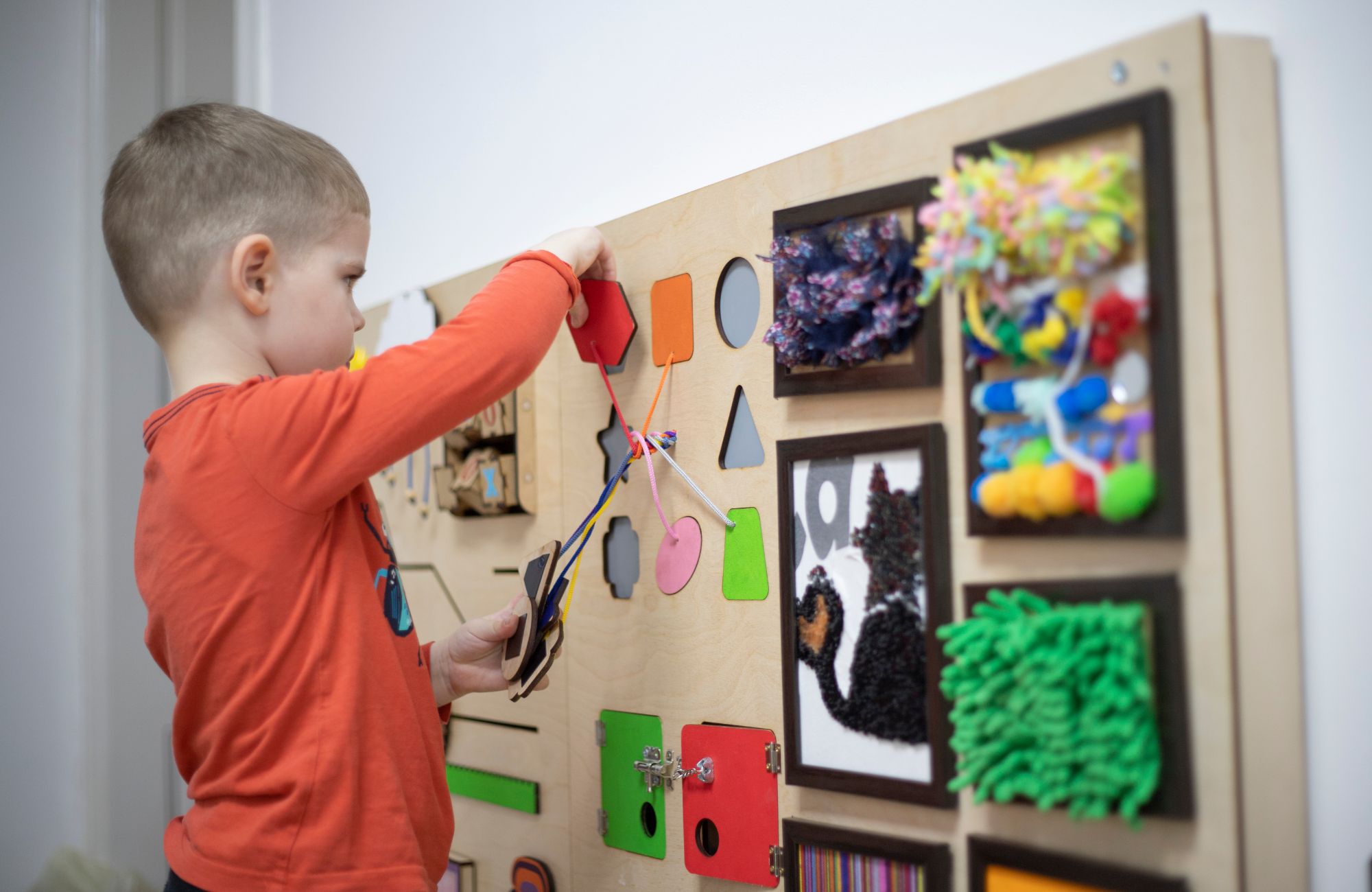
Incidental teaching autism examples include using a child’s interest in toys, books, bubbles, clothing, or daily routines to practice communication and life skills. For example, if a child reaches for bubbles, a parent can pause, recognize the request, offer support if needed, and then blow more bubbles as a natural response.
For parents in New Jersey, using incidental teaching does not have to mean adding more lessons to a busy day. Simple moments at home can help your child practice skills at their own pace. If your family needs guidance, Apple ABA offers personalized ABA therapy in Chatham, NJ to help children build meaningful skills through familiar daily routines.
What Is Incidental Teaching in ABA?
Incidental teaching is a child-led strategy that uses natural moments of interest to support learning. When a child shows interest in a toy, activity, or interaction, an adult can use that moment to practice a meaningful skill. The adult offers support when needed and responds naturally to the child’s communication or participation.
Unlike traditional teaching methods that rely on planned lessons, incidental teaching takes place during everyday activities. It follows the child’s interests while helping them practice specific skills. The approach began within applied behavior analysis in the 1970s and has since become part of various naturalistic teaching programs.
The Core Principles of Incidental Teaching
Incidental teaching involves more than asking a child questions during play. The adult observes what the child wants to do, identifies a suitable learning opportunity, and responds in a way that supports the child’s individual goals.
Four principles guide the approach:
- Child-led interactions: The child’s interests help determine when and how learning takes place.
- Natural learning opportunities: Everyday activities provide chances to practice communication, social interaction, and functional skills.
- Individualized support: Adults use prompts, models, or other forms of guidance when the child needs them.
- Natural reinforcement: The child experiences a meaningful outcome, such as receiving a requested toy or continuing an enjoyable activity.
For example, a child brings a favorite book to a parent. The parent notices the child’s interest, opens the book, and follows the child’s attention to a picture. If the child points to a dog, the parent might name the animal or respond to the child’s comment.
The interaction supports communication while allowing the child to enjoy the story.
How Incidental Teaching Fits Into ABA Therapy
Incidental teaching is one strategy that may be used within an individualized ABA therapy program. In ABA, therapists use principles of learning and behavior to help children build meaningful skills, such as communication, social interaction, daily routines, and independence.
A Board Certified Behavior Analyst (BCBA) can decide whether incidental teaching is appropriate based on the child’s communication style, interests, strengths, and daily needs. A Registered Behavior Technician (RBT) may then use the strategy during therapy sessions under the BCBA’s supervision.
For example, if a child reaches for a favorite toy during an in-home ABA session, the therapist may use that moment to support requesting, choosing, or asking for help. The therapist follows the child’s interest instead of starting with an unrelated lesson.
The goal is not to turn every activity into a demand. Incidental teaching works best when learning fits naturally into something the child already wants to do.
How Does Incidental Teaching Work?
Incidental teaching works by turning a child’s natural interest into an opportunity to practice a useful skill. The adult observes what the child wants, waits for an interaction, and offers support when appropriate. After the child communicates or participates, the adult responds with a meaningful outcome connected to the activity.
For example, a child might pick up a toy car and bring it to a caregiver. The caregiver can use that moment to support requesting, taking turns, or making choices. The child’s interest in playing with the car provides the reason to communicate.
The adult does not need to interrupt the activity or insist on a longer response before the child can continue playing.
The Five Steps of Incidental Teaching
A typical incidental teaching interaction follows five steps. The exact approach can vary based on the child’s developmental goals, communication methods, and preferences.
The steps below show how a parent might support communication during play while keeping the interaction natural.
- Observe the child’s interest. Notice what catches the child’s attention. They might reach for a toy, choose a book, or move toward an activity they enjoy.
- Recognize the child’s initiation. Give the child time to show what they want. A look, gesture, spoken word, or AAC message may communicate their interest.
- Offer appropriate support. If the child needs help with a specific learning goal, the adult may offer a simple model, visual cue, or other suitable prompt. The adult should avoid adding a prompt when the child has already communicated clearly.
- Respond naturally. Acknowledge the child’s communication and provide a meaningful response. If the child asks for a toy car, giving them the car connects their request with a useful outcome.
- Follow the child’s lead. Continue the interaction while the child remains interested. If they want to change activities or stop, respect their choice.
These steps should guide a natural interaction rather than create a rigid sequence. A therapist can adjust the level of support as a child’s skills develop.
What Is an Example of Incidental Teaching During Play?
An example of incidental teaching during play is using a child’s interest in a toy to support communication. If a child enjoys rolling toy cars down a ramp, the adult can wait for the child to show interest, respond to their communication, and continue the activity as a natural reward.
Imagine a child who picks up a red car and hands it to their parent. The parent might ask, “Ready?” and wait for the child’s response. The child could nod, use a gesture, say a word, or select a message on an AAC device. The parent then rolls the car down the ramp.
If the child indicates that they want another turn, the parent responds and continues the game. During the interaction, the child practices communication while taking part in an activity they enjoy.
A therapist might later introduce a new goal, such as choosing between two cars or inviting another person to join. However, the adult should not require extra responses every time the child wants to play.
The learning opportunity works because it builds on the child’s motivation rather than creating an unnecessary obstacle.
Incidental Teaching Autism Examples at Home
Incidental teaching can happen during play, reading, dressing, and other familiar home routines. Parents can follow their child’s interests to support communication, decision-making, asking for help, and social interaction. Each learning opportunity should match the child’s abilities and individual goals while keeping daily activities comfortable and enjoyable.
Parents do not need special teaching materials or a separate learning space to use this approach. Familiar objects and activities often provide opportunities to practice skills that matter in everyday life.
The following incidental teaching autism examples show how ordinary family routines can support different learning goals.
Five Everyday Incidental Teaching Examples
| Everyday Activity | Child’s Interest or Initiation | Adult’s Response | Skill Supported |
| Playing with blocks | The child reaches for a specific block. | The parent offers a choice and responds to the child’s selection. | Requesting and making choices |
| Reading a book | The child points to a picture. | The parent follows their attention and names or comments on the picture. | Communication and shared attention |
| Getting dressed | The child reaches for a preferred shirt. | The parent acknowledges the choice and helps the child get dressed. | Decision-making and daily living skills |
| Playing with bubbles | The child indicates that they want another turn. | The parent responds to the request and blows more bubbles. | Functional communication |
| Playing with a toy | The child brings an item to an adult for assistance. | The adult recognizes the request and provides suitable help. | Asking for help and problem-solving |
These examples show how children can practice targeted skills without leaving their natural environment. The adult responds to an activity the child has already chosen rather than requiring participation in an unrelated lesson.
A child may communicate differently across situations. For instance, they might point to a block during play but use an AAC device to request help with a different activity.
Both responses can provide meaningful opportunities for learning.
How to Adapt Incidental Teaching to Your Child
The same activity may support different goals for different children. One child might practice choosing between two toys, while another works on requesting help or sharing an interest with a family member.
For children who use few or no spoken words, adults can recognize gestures, signs, pictures, and AAC messages as valid communication. A parent might model a word or phrase while accepting the child’s existing method of expression.
Families can also adapt the environment to make activities easier to access. For example, placing familiar books within reach allows a child to select what they want to read without needing to ask an adult to retrieve them.
Some teaching examples involve placing favorite toys out of reach or pausing activities to encourage requests. These strategies require care because they can create frustration or prevent a child from accessing something important.
Parents should not withhold food, comfort, essential items, or access to communication to make a child perform a skill. When a child shows distress or wants to stop, adults should respond to those signals rather than insist on completing the teaching opportunity.
For families in Morris County, personalized therapy can help connect these everyday interactions to meaningful goals. Apple ABA’s in-home services allow its clinical team to work with children and caregivers during familiar family routines.
What Skills Can Incidental Teaching Help Children Build?
Incidental teaching can support communication, social interaction, and daily living skills by giving children chances to learn during meaningful activities. A child might practice asking for help, making choices, sharing interests, or taking part in family routines. The goals and pace of learning should reflect each child’s individual needs and preferences.
Because incidental teaching takes place during familiar activities, children have opportunities to use skills where they may need them in everyday life. However, learning a skill during one activity does not always mean a child will use it independently in other situations.
Therapists can plan opportunities to practice skills with different people, materials, and routines.
Communication and Social Skills
Incidental teaching can support functional communication, which means communicating wants, needs, preferences, feelings, and ideas in ways that work for the individual.
For example, a child who enjoys building towers might initiate an interaction by asking a parent to join them. The parent can respond to that invitation, take a turn, and give the child space to continue the activity.
Depending on the child’s goals, everyday interactions may offer opportunities to practice:
- Requesting help or preferred activities.
- Expressing choices and preferences.
- Sharing interests with family members.
- Taking turns during play.
- Initiating or responding to social interactions.
Social skills development should respect the child’s natural communication style. The goal is to help them participate in interactions they find meaningful, not to require eye contact or force unwanted social engagement.
Daily Living Skills and Independence
Everyday routines can also create opportunities to practice practical life skills. A child might choose which clothes to wear, ask for assistance with a difficult task, or help organize materials for a favorite activity.
For example, a child who wants to draw may gather paper and crayons but need help opening a new art set. A parent can recognize the child’s request for help and provide support while allowing the child to complete the parts of the activity they can manage independently.
These interactions can help children practice decision-making, problem-solving, and communicating when they need assistance.
For younger children, goals may involve simple choices or participation in play. Older children may use similar strategies during more complex routines, depending on their interests and individual needs.
Practicing Skills Across Different Settings
In ABA, generalization means using a learned skill with different people, materials, or situations.
A child might learn to request help while playing with a parent. Later, they may practice the same skill when working on a puzzle with a sibling or completing a classroom activity with a teacher.
Research has examined how incidental teaching can support the use of learned language skills outside the original teaching situation. One study involving two autistic children found greater generalization at follow-up after incidental teaching than after traditional discrete-trial instruction, although discrete-trial teaching produced faster initial learning. Its small sample means the findings should not be treated as a prediction for every child.
A BCBA can help families select meaningful goals and review whether a child uses those skills across different routines.
Incidental Teaching vs. Other ABA Teaching Methods
Incidental teaching, natural environment teaching (NET), and discrete trial training (DTT) can all support individualized skill development. Incidental teaching builds on a child’s interest and initiation, while NET includes a wider range of teaching strategies used during everyday activities. DTT uses more structured learning trials to teach specific skills.
An ABA program may incorporate more than one teaching method. The choice depends on the child’s needs, preferences, and treatment goals.
Understanding the differences can help parents ask informed questions about their child’s therapy plan.
Incidental Teaching vs. Natural Environment Teaching
Natural environment teaching uses familiar activities and surroundings as settings for learning. A therapist might work on communication during play, decision-making while getting dressed, or daily living skills during other home routines.
Incidental teaching is a specific strategy that can form part of NET. It begins with the child’s interest or initiation and uses that moment to practice a relevant skill.
Not every NET activity begins with a child initiating an interaction. A therapist may also plan a teaching opportunity within an ordinary routine while keeping the activity meaningful and appropriate for the child.
Incidental Teaching vs. Discrete Trial Training
Discrete trial training uses planned, structured teaching opportunities with a clear instruction or cue, a response, and a consequence or feedback. Incidental teaching is less structured and builds on the child’s initiation.
Both approaches can include prompts and reinforcement, but they differ in how the learning opportunity begins and how the adult organizes the interaction.
| Feature | Incidental Teaching | Natural Environment Teaching | Discrete Trial Training |
| Learning context | Child-initiated interactions | Everyday activities and familiar settings | Planned, structured teaching trials |
| Teaching structure | Follows the child’s interest | Varies according to the teaching strategy | Uses a defined teaching sequence |
| Adult’s role | Responds to the child’s initiation and supports a goal | Creates or uses learning opportunities during natural activities | Presents planned teaching opportunities and evaluates responses |
| Example | A child chooses a toy, and an adult supports communication during play | A child practices a skill while completing a home routine | A child practices identifying an object across structured trials |
A therapist might use DTT to introduce a specific skill and naturalistic teaching strategies to help the child use that skill in everyday situations. The approaches can complement one another when they fit the child’s individualized plan.
Research comparing teaching approaches has found that their effects may differ depending on the skill and outcome being measured. This makes it important to consider both how a child learns a skill and whether they can use it meaningfully outside a teaching session.
How Parents Can Use Incidental Teaching at Home
Parents can use incidental teaching by noticing their child’s interests and responding to natural opportunities for learning. Activities such as playing, reading, and choosing clothes can provide chances to practice communication and daily living skills. A BCBA can help caregivers choose appropriate goals and offer support without interrupting enjoyable family routines.
You do not need to create a teaching opportunity every time your child plays or asks for something. Many interactions are valuable simply because they allow you to connect with your child and enjoy an activity together.
The key is to recognize when a learning opportunity fits naturally and when it is better to follow your child’s lead without adding demands.
Follow Your Child’s Interests and Communication
Start by observing which activities your child enjoys and how they invite you to participate.
They may bring you a toy, point to something interesting, use their communication device, or move closer when they want to share an activity. Respond to those signals and allow your child to guide the interaction.
For example, if your child enjoys looking at animal pictures, you might sit beside them and comment on the animals they select. If they point to a cat, you can name it or make a simple comment while continuing to follow their interest.
Avoid turning every picture into a question your child must answer. Sometimes, acknowledging what they want to share provides a more natural learning experience.
When to Offer Support and When to Step Back
A prompt is a form of assistance that helps a child practice a targeted skill. It may involve a spoken model, gesture, picture, or another type of support.
For example, a parent might model how to request help when a child is learning to communicate during a new activity. As the child’s skills develop, the adult can adjust the amount of support they offer.
Parents should also recognize when prompting is unnecessary. If a child has already expressed a clear request, acknowledge it rather than asking them to repeat or expand their message before responding.
Give your child time to communicate in their preferred way. Some children need more processing time, and others may not want to continue a particular interaction.
If your child becomes upset, loses interest, or communicates that they want to stop, respect that response. An enjoyable activity does not need to become a completed teaching trial.
How Caregiver Collaboration Supports Consistency
A BCBA can help families choose meaningful learning goals and identify activities where children can practice those skills.
For instance, a therapist may demonstrate how to support requesting help during play. The parent can then practice the strategy during suitable moments and share observations about what works for their child.
A published study evaluated a caregiver-training program involving three autistic children. Researchers used modeling, rehearsal, and feedback to teach caregivers how to implement incidental teaching. The training improved caregivers’ correct use of the procedures, although the small study does not establish that every family will experience the same results.
Caregiver collaboration helps families understand the purpose of each strategy and how to adapt it to their child’s daily life.
Apple ABA offers personalized in-home therapy and family-centered support. Contact its team to learn how caregiver collaboration can fit into your child’s individualized treatment plan.
How Apple ABA Supports Incidental Teaching at Home
Apple ABA can support incidental teaching by using everyday home routines as natural opportunities for skill development. During in-home ABA therapy, clinicians can observe what a child enjoys, how the child communicates, and where learning opportunities already happen during the day.
For example, a child may bring a toy to a therapist, point to a book, reach for bubbles, or ask for help opening a container. These moments can become opportunities to practice communication, decision-making, turn-taking, or asking for assistance. The therapist may model a word, offer a visual prompt, wait for the child’s response, or accept the child’s current communication method, such as a gesture, sign, picture, or AAC message.
This approach helps children practice skills in the same environment where they may use them outside therapy sessions. It also allows caregivers to observe the strategy and learn how to support similar moments during regular family routines.
Apple ABA’s in-home therapy model can help connect incidental teaching to each child’s individualized goals, daily activities, and preferred ways of communicating.
Individualized Assessment and Therapy Planning
An individualized assessment helps determine whether incidental teaching is a good fit for a child’s ABA therapy plan. Because every child communicates, learns, and responds differently, the strategy should be matched to the child’s needs rather than used the same way for every child.
A BCBA may look at the child’s current communication methods, preferred activities, daily routines, and family priorities. Based on this information, the BCBA can choose goals that are meaningful for the child, such as requesting help, making choices, sharing interests, taking turns, or participating in daily living tasks.
For example, one child may practice choosing between two toys during play. Another child may work on asking for help while opening a snack container or completing an art activity. A child who uses AAC may practice selecting a message during a preferred routine.
The treatment plan should explain what skill is being practiced, when the strategy will be used, what type of support the child may need, and how progress will be monitored over time.
Home-Based ABA Therapy in Chatham and Morris County
Home-based ABA therapy can make incidental teaching easier to apply because sessions take place in the child’s familiar environment. In Chatham, Morris County, and surrounding New Jersey communities, families may benefit from therapy that uses real home routines instead of relying only on structured teaching activities.
During a home-based session, a therapist may support communication while the child plays with toys, reads a book, gets dressed, completes a daily routine, or asks for help with an activity. These natural moments can help the child practice skills in a setting where they are already comfortable.
For example, if a child wants to play with bubbles, the therapist may pause briefly, wait for the child to communicate in their preferred way, and then blow more bubbles as a natural response. If the child needs support, the therapist may provide a prompt that matches the child’s goals and abilities.
This type of therapy can also help caregivers see how incidental teaching works in real time. Parents can learn when to offer support, when to step back, and how to respond to their child’s communication during everyday routines.
Ongoing Progress Monitoring and Family Support
Progress monitoring helps determine whether incidental teaching is helping a child use skills across different routines, people, and settings. In ABA therapy, learning a skill during one activity is only one part of progress. The clinical team also needs to know whether the child can use that skill in other meaningful situations.
For example, a child may first practice asking for help during play with a therapist. Over time, the team may look for the same skill during art activities, dressing routines, snack time, or interactions with a parent or sibling. The child may communicate through speech, gestures, signs, pictures, or an AAC device, depending on their preferred communication method.
A therapist may track whether the child initiates independently, uses a prompt, responds to a model, or needs additional support. Parents can also share observations about what happens outside therapy sessions, such as whether the child asks for help during family routines.
This information helps the BCBA adjust the therapy plan, reduce unnecessary prompts, and choose learning opportunities that continue to fit the child’s needs.
Conclusion
Incidental teaching can help children practice communication, social interaction, and daily living skills during everyday activities they already enjoy. By using natural moments such as play, reading, dressing, asking for help, or choosing preferred items, this approach supports meaningful learning while respecting each child’s communication style and individual goals.
Apple ABA provides personalized in-home ABA therapy for families throughout New Jersey, with individualized assessments, caregiver collaboration, and ongoing progress tracking. Families seeking ABA therapy in Chatham, NJ can access personalized support that helps children practice communication, independence, and daily living skills in the comfort of their homes. Contact us to discuss your child’s learning goals and discover how personalized home-based therapy can support their development.
FAQs
Can parents use incidental teaching at home?
Yes, parents can use incidental teaching during everyday activities such as playing, reading, dressing, and completing family routines. They can follow their child’s interests and respond to natural opportunities to practice communication and other meaningful skills. A BCBA can help parents choose appropriate goals and adjust teaching strategies to their child’s individual needs.
Can incidental teaching help a child who does not speak?
Incidental teaching can support children who communicate through gestures, signs, pictures, AAC devices, or other methods. A parent or therapist can recognize the child’s communication attempts and respond in a way that supports the child’s goals. Spoken language is not a requirement for meaningful participation, and the approach should respect each child’s preferred communication methods.
What is the difference between incidental teaching and natural environment teaching?
Incidental teaching is a specific strategy that uses a child’s natural interests and initiation to create learning opportunities. Natural environment teaching is a broader approach that incorporates learning into familiar activities and surroundings. Incidental teaching can form part of a natural environment teaching program when it supports the child’s individualized goals.
How does a BCBA use incidental teaching during home-based ABA therapy?
A BCBA can identify appropriate learning goals and select everyday activities where a child can practice them. The BCBA may guide therapists and caregivers on how to recognize the child’s interests, offer suitable prompts, and respond to communication attempts. The clinical team can then monitor progress and adjust the teaching plan based on the child’s needs and response to therapy.