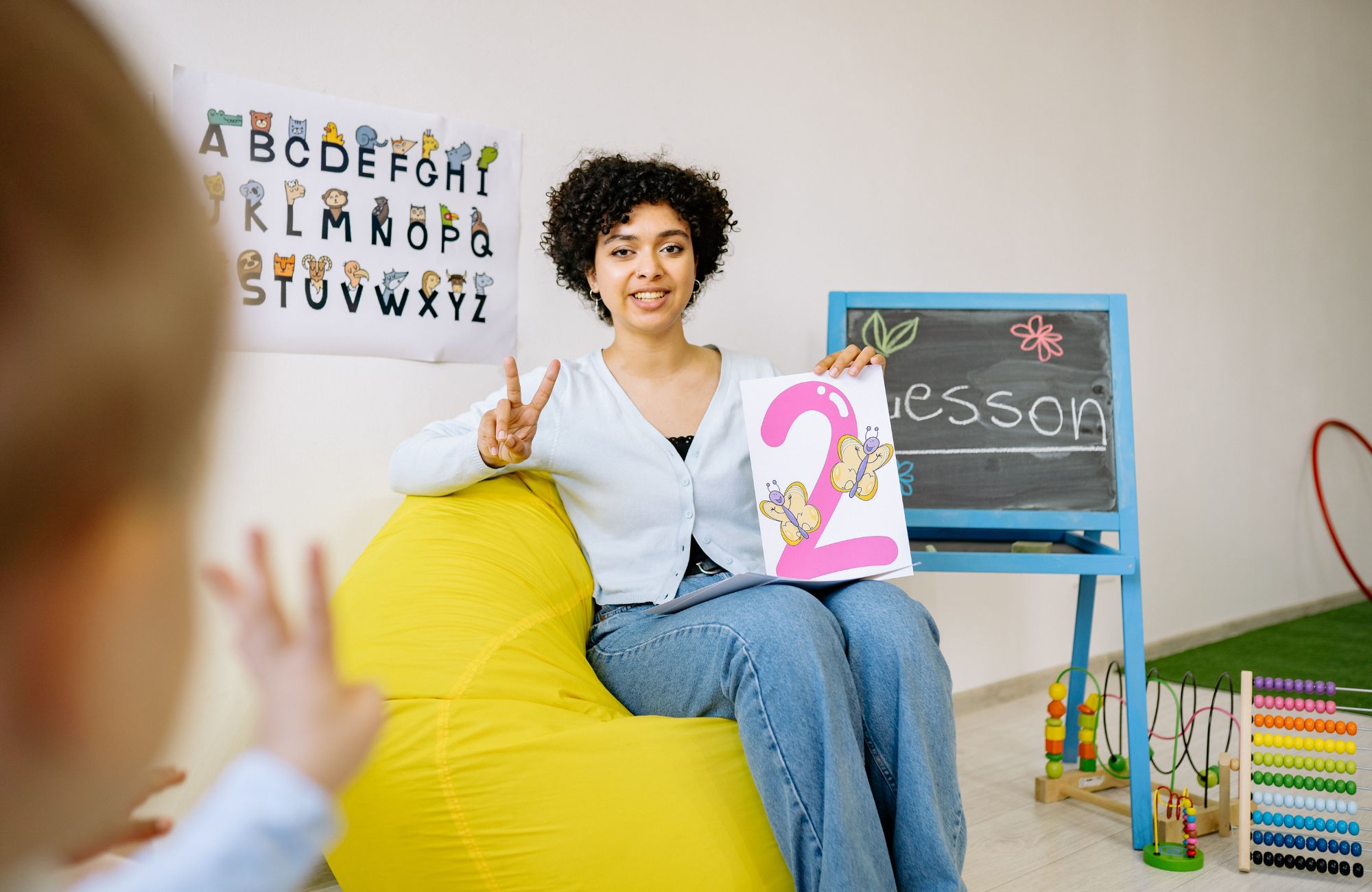
Speech therapy for autism at home is one of the most practical and effective ways families can support communication growth in daily life. Many parents want to help their child build language skills but feel unsure where to start, especially after an autism diagnosis. Long waitlists, center-based programs, and unfamiliar clinical settings can add stress during an already overwhelming time.
Home-based support allows children with autism spectrum disorder to practice communication skills in real life situations with people they trust. Daily routines, family members, and familiar environments all play an important role in speech and language development. For families in New Jersey, Apple ABA provides in-home ABA therapy that supports communication goals directly inside the home environment. This article explains how speech therapy for autism at home works, what parents can practice day to day, and when professional, in-home support may help children across Sussex County, Hampton, and nearby communities make more progress.
How Speech Therapy for Autism Works at Home
At-home support focuses on helping children learn communication skills through normal daily activities rather than isolated drills. For autistic children, language development happens best when communication is meaningful, functional, and tied to real life situations. The home environment reduces barriers often found in center based programs, such as unfamiliar surroundings and limited opportunities to generalize new skills.
Speech and language development at home targets both expressive and receptive communication skills. Expressive language includes words, gestures, signs, or devices a child uses to communicate, while receptive language reflects how well a child understands words, directions, and concepts. Practicing communication during meals, playtime, dressing, bath routines, and family interactions helps children learn in meaningful ways. When these strategies are used consistently, many children develop stronger comprehension skills, more natural speech practice, and steady language growth over time.
Key Communication Goals Parents Can Support at Home
Communication goals at home should focus on helping children communicate in ways that reduce frustration and support daily life. Many children with autism struggle not because of ability, but because communication challenges make it hard to express needs, emotions, and ideas. When parents focus on practical, functional skills, they can support progress that carries into school, family life, and social settings.
Home-based practice works best when it complements guidance from a speech therapist or speech language pathologist. Reinforcing therapy techniques during everyday routines helps address language delays, expand a child’s vocabulary, and support steady language growth. Consistent practice at home can make a meaningful difference for a child struggling with communication.
Functional Communication Comes First
Functional communication helps children express wants, needs, and preferences in any form that works for them. This may include spoken words, gestures, picture exchange, or communication devices. Developing these skills is an important step because clear communication reduces frustration, challenging behaviors, and emotional regulation difficulties. Parents can support functional communication by practicing simple, high-impact skills during daily routines, such as:
- Asking for help or more
- Requesting specific objects or activities
- Making choices between options
- Saying no or stopping an activity
These skills are often targeted in speech therapy exercises and frequently become a child’s first words or most reliable signals. Practicing them consistently helps most children feel more understood and confident.
Understanding Language vs. Speaking
Many children with autism understand more language than they can express verbally. Receptive language skills, such as following directions and recognizing words, often develop before expressive speech. Supporting comprehension helps children learn how language works, even before spoken words increase.
Parents can strengthen understanding by using clear language, repeating key words, and pairing words with actions or objects. Reading together also supports reading comprehension and early language development. Strong understanding creates a foundation that allows expressive language to grow more naturally over time.
Social Communication Skills
Social communication skills include turn taking, joint attention, facial expressions, and responding to others. These skills support social interactions, play, and learning, and they are often challenging for autistic children. Practicing them at home provides a safe, low-pressure environment with trusted family members.
Playing games, using interactive games, and singing songs encourage back-and-forth interaction and shared attention. Many speech therapists recommend these activities because they help children practice social communication in natural, motivating ways. With regular practice, these skills can support stronger relationships and more confident communication.
Simple Daily Routines That Build Speech at Home
Speech therapy activities are most effective when they are woven into daily routines instead of treated as separate lessons. Children learn language best when communication serves a real purpose in their life.
Parents often ask what routines work best for speech therapy at home. The answer depends on the individual child, but common daily activities offer consistent opportunities for speech practice and language development.
| Daily Routine | Communication Focus | Example Practice |
|---|---|---|
| Mealtime | Requesting, labeling, choices | Asking for food, naming items |
| Playtime | Turn taking, imitation, new words | Taking turns with toys, copying sounds |
| Bath time | Following directions, vocabulary | Naming body parts, actions |
| Dressing | Sequencing, comprehension | Putting clothes on in order |
Using the same words during the same routines helps children learn faster. Repetition, predictability, and positive reinforcement support language growth without overwhelming the child.
Supporting Nonverbal or Minimally Speaking Children at Home
Not all autistic children develop spoken language in the same way or at the same pace. Some children are non verbal or minimally speaking, especially in early childhood. This does not mean they cannot communicate or learn language skills.
Speech therapy for autism at home often includes alternative ways to support communication. Augmentative and alternative communication, commonly called AAC, allows children to express themselves using pictures, symbols, or devices.
Using AAC at Home
AAC tools can include picture boards, communication books, or speech-generating devices. These tools help children practice communication skills while reducing frustration. Parents can model AAC by pointing to pictures while speaking, showing the child how to use the system naturally.
AAC does not stop speech from developing. Research shows that AAC often supports language development and may help children gain spoken words over time. It gives children a voice while speech continues to develop.
Supporting Progress Without Pressure
For non verbal children, progress may look like improved eye contact, pointing, gestures, or better understanding of language. These are important steps in speech and language development. Parents should focus on celebrating communication attempts rather than pushing for specific words too early.
Echolalia and Early Language Development at Home
Echolalia is common in children with autism and involves repeating words or phrases they have heard. Many parents worry this means their child is not learning language, but for most children, echolalia is part of how language is processed and organized. Repetition can support comprehension, memory, and a growing child’s vocabulary, even when speech is not yet flexible. For a child struggling with language delays, echolalia may be an early step toward first words and meaningful communication in daily life.
Instead of trying to stop echolalia, parents can teach children by responding with clear, functional language models. When a child repeats a phrase during playing games or daily routines, parents can connect those words to real situations or interactive games. Speech therapists and speech language pathologists often use speech therapy exercises such as modeling, singing songs, and simple back-and-forth play to build understanding and reading comprehension. With consistent support and guidance, these strategies can make a big difference in a child’s life.
Common Mistakes Parents Make With At-Home Speech Practice
Parents are often eager to help, but certain approaches can slow progress if not adjusted. Speech therapy for autism at home works best when communication is encouraged naturally rather than forced.
Some common mistakes include:
- Repeating drills without context
- Correcting every sound or word
- Over prompting instead of allowing independence
- Ignoring sensory needs during speech practice
Children learn best when communication feels rewarding and safe. Short, meaningful interactions throughout the day are more effective than long repetitive activities. Positive reinforcement, patience, and flexibility support better outcomes and stronger communication skills.
When At-Home Speech Strategies Are Not Enough
While home therapy plays an important role, some children need professional support to reach their speech and language goals. Signs that extra help may be needed include limited progress over time, ongoing speech delay, or communication challenges that interfere with daily routines and family life.
Speech therapy and ABA therapy often work best together. In-home ABA therapy focuses on communication, social skills, and problem solving within real life situations, helping children practice new skills throughout the day. For families in Sussex County and Hampton, NJ, in-home ABA therapy provides consistent, personalized support without the stress of center based services.
How In-Home ABA Therapy Supports Speech Development
In-home ABA therapy plays an important role in supporting speech and language development within a child’s everyday environment. Through home-based ABA therapy, trained clinicians work with families to set clear communication goals, track progress, and adjust strategies as new skills emerge. This approach allows children to practice communication where it naturally occurs, making learning more meaningful and effective.
Support may include comprehensive assessments to identify communication strengths and language delays, followed by personalized home-based therapy plans. Concierge care provides coordinated, high-touch support that adapts to each family’s needs, while ongoing parent guidance helps reinforce skills between sessions. Together, assessment, home-based ABA therapy, and concierge-level care help children build functional communication, social skills, and confidence across daily routines.
Conclusion
Speech therapy for autism at home gives families a meaningful way to support communication growth where it matters most. By using everyday routines, clear communication strategies, and consistent practice, parents can help their child build language, social communication skills, and confidence over time. Progress may look different for each child, but when home-based strategies are paired with professional guidance, many children show steady improvements that carry into family life, school, and social interactions.
At Apple ABA, we provide compassionate, evidence-based ABA therapy tailored to each child’s developmental needs. Serving families across New Jersey, including Hampton, Sussex County, and surrounding communities, our team specializes in personalized in-home ABA programs, comprehensive assessments, and ongoing parent training. We work closely with families to support communication, social skills, and daily living skills at home, in school, and in everyday life. Contact us today to learn more about our flexible, family-centered services and schedule a consultation with a licensed in-home therapist.
FAQs
How can I do speech therapy at home for autism?
Parents can practice speech therapy at home by focusing on communication during daily routines like meals, play, and dressing. Using simple language, repetition, and positive reinforcement helps children practice communication skills naturally. Consistency and patience are key to supporting language growth over time.
How to help an autistic child with speech delay?
Helping a child with speech delay starts with understanding their communication level and using strategies that match their needs. This may include modeling words, using visual supports, or incorporating AAC tools. Working with professionals can help guide parents and ensure progress is tracked appropriately.
At what age should an autistic child speak?
Speech development varies widely among children with autism. Some children speak early, while others develop language later or use alternative communication methods. Progress should be measured by communication growth rather than age alone.
Can kids with autism be normal?
Children with autism develop in unique ways and may learn differently from neurotypical peers. Many children with autism build strong communication skills, social connections, and independence with the right support. The goal of therapy is to help each child thrive in their own life, not to change who they are.
Should speech therapy and ABA therapy be done together?
Speech therapy and ABA therapy often complement each other well. ABA therapy helps reinforce communication skills across daily routines, while speech therapy focuses on language development. In-home ABA therapy can support speech goals consistently throughout the day.