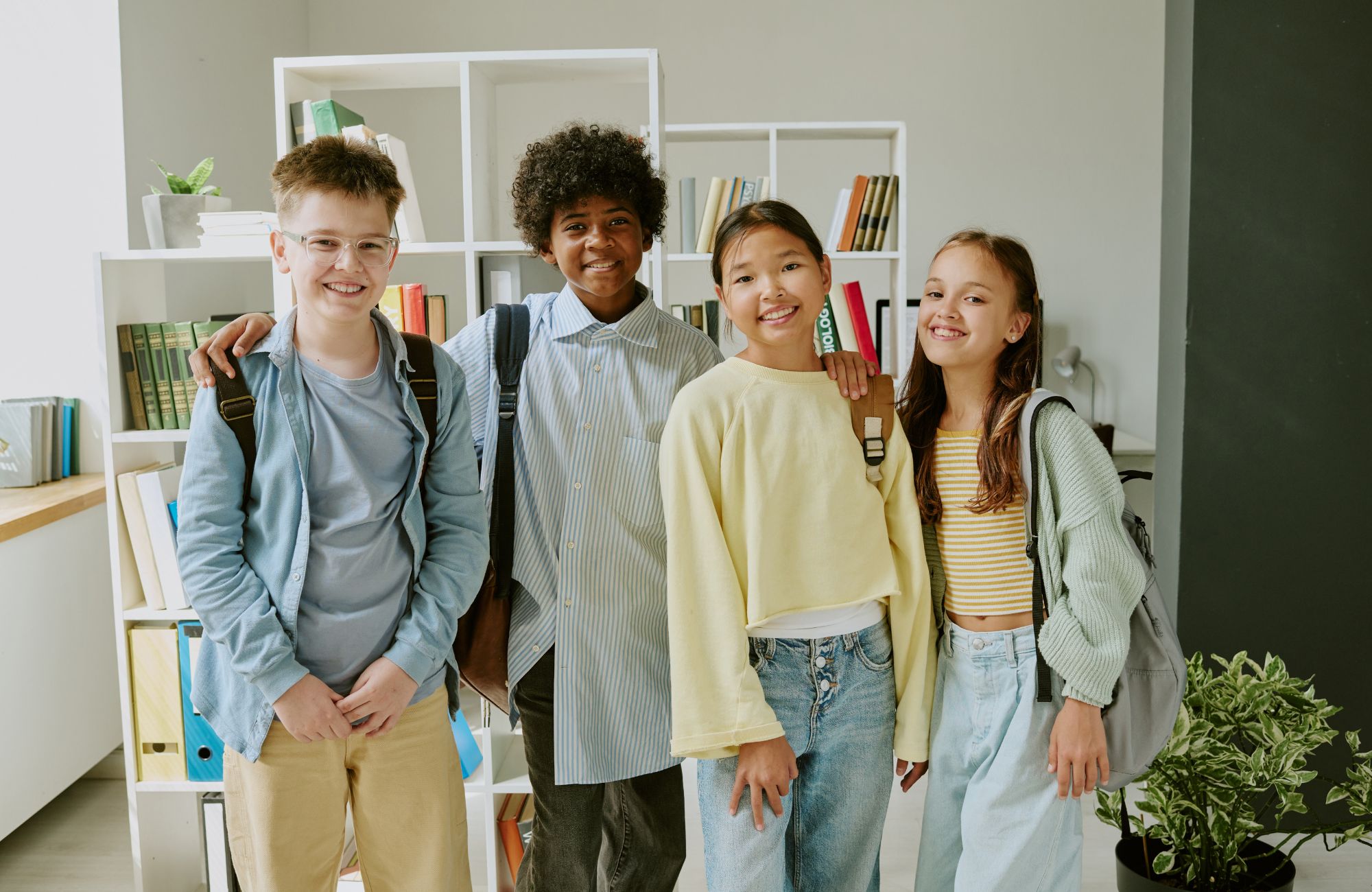
Peer mediated intervention autism strategies help children with autism spectrum disorder build social communication and interaction skills through guided practice with peers. Instead of relying only on adult-led instruction, this approach teaches children how to engage, respond, share, and interact in more natural settings like classrooms, homes, playgrounds, and community activities. Many ABA therapy programs use peer mediated intervention to help children practice targeted skills in real-world situations where communication happens naturally.
Families in Madison, Morris County, and surrounding New Jersey communities often look for ways to help children improve social confidence outside structured therapy sessions. At Apple ABA, peer interaction strategies may be incorporated into personalized in-home ABA therapy programs designed around each child’s communication goals, developmental level, and daily environment.
What Is Peer Mediated Intervention in Autism?
Peer mediated intervention is an evidence-based approach where typically developing peers help children with autism practice communication, behavioral, academic, and social skills during structured and natural interactions. These peers are guided and supported by adults, teachers, therapists, or BCBAs to encourage positive social engagement.
Unlike traditional adult-only instruction, peer mediated instruction gives children opportunities to learn through observation, modeling, prompts, and real interaction. This helps children practice skills in dynamic situations where social communication naturally occurs.
How Peer Mediated Intervention Works
Children with autism spectrum disorder often benefit from repeated practice in social settings. Peer mediated intervention creates opportunities for children to initiate interactions, respond to classmates, maintain conversations, and engage in shared activities with support from trained peers.
The process often includes:
- identifying targeted skills
- selecting appropriate peers
- modeling communication behaviors
- using prompts and reinforcement
- monitoring responses and progress
One study published through the National Library of Medicine found that peer mediated programs improved social initiations and social responses among participants with autism in school settings. Research continues to recognize PMI as an effective strategy for helping children practice communication and social engagement in natural environments.
Why Peer Interaction Matters in ABA Therapy
Many children learn social communication more effectively when interacting with peers rather than adults alone. Peer interactions feel less scripted and often create more opportunities for spontaneous communication, play, and sharing.
Within applied behavior analysis programs, peer mediated intervention may support:
- conversation skills
- turn-taking
- social cues
- cooperative play
- classroom participation
- behavioral flexibility
This approach can also help skills generalize across different places instead of remaining limited to therapy sessions.
Families searching for ABA therapy in Madison NJ often want social learning opportunities that feel practical and connected to daily life. Peer-mediated strategies can support that goal when carefully structured by experienced BCBAs.
Benefits of Peer Mediated Intervention Autism Strategies
Peer mediated intervention autism programs are widely used because they combine structured teaching with real-world interaction. Children are not only practicing communication skills. They are also learning how to respond in everyday situations with classmates, siblings, and peers.
A systematic review of peer-mediated approaches found improvements in social communication, engagement, and interaction skills across multiple age groups and school settings. While every child responds differently, research continues to support PMI as an evidence-based intervention for autism spectrum disorder.
Improves Social Communication Skills
Children with autism may struggle with initiating interactions, responding to peers, or maintaining conversations. Peer mediated instruction helps children practice these targeted skills repeatedly during meaningful interaction.
Examples include:
- asking questions
- greeting classmates
- maintaining eye contact
- taking conversational turns
- responding appropriately
- understanding social cues
These opportunities often feel more natural than direct adult instruction alone.
Encourages Friendship and Participation
Some children want to engage socially but do not always know how to join activities or respond to peers. Practicing with supportive classmates or siblings can reduce anxiety and build confidence over time.
When children experience successful interaction, they may become more willing to:
- participate in group activities
- engage during play
- respond to classmates
- interact during community programs
- develop friendships
Helps Skills Carry Into Everyday Life
One of the biggest strengths of peer mediated intervention is generalization. Skills practiced in natural settings are often easier to apply in other environments.
For example, a child practicing turn-taking with a sibling during a board game may later use those same behavioral skills during recess or classroom activities. This connection between therapy goals and daily life is one reason many ABA providers incorporate peer-mediated strategies into individualized treatment programs.
What Peer Mediated Intervention Looks Like in Real Life
Many parents understand the concept of peer mediated intervention but still wonder what it actually looks like day to day. Competitor articles often focus heavily on schools and research studies without explaining how these interactions happen in real environments.
In practice, peer mediated intervention can happen in homes, classrooms, playgrounds, playdates, and community activities. The goal is to create structured but natural opportunities for children to practice communication and social engagement.
At Home With Siblings or Family Members
Home is often one of the most comfortable learning environments for children. Siblings and family members may help reinforce communication skills through everyday interaction.
Examples may include:
- practicing turn-taking during games
- requesting items during shared activities
- responding during conversation
- following group routines
- engaging in cooperative play
These situations create opportunities for repeated practice without making interaction feel overly clinical.
During Playdates
Playdates can offer valuable social learning opportunities when properly structured. Instead of expecting children to automatically interact successfully, adults and therapists may provide prompts and guidance to support positive engagement.
During playdates, peers may help model:
- greetings
- sharing
- asking questions
- waiting turns
- maintaining interaction
- responding appropriately
Structured support can gradually fade as children become more independent socially.
In School and Classroom Settings
Schools remain one of the most common settings for peer mediated instruction. Children spend large portions of their day around classmates, making school a natural environment for practicing communication skills.
Peer-mediated strategies may support:
- lunchroom interaction
- recess participation
- classroom discussions
- group assignments
- partner activities
- transitions between activities
Research involving randomized controlled trials continues to show positive outcomes when peers are trained to support social communication and interaction.
During Community Activities in Morris County
Community settings also create important opportunities for social skill development. Children often need help practicing communication outside therapy and school environments.
Examples in Madison and Morris County may include:
| Setting | Skill Practiced | Peer Support Example |
| Library program | Conversation | Peer encourages discussion |
| Playground | Joining games | Peer invites participation |
| Sports activity | Cooperation | Peer models teamwork |
| Neighborhood activity | Greetings | Peer practices introductions |
Natural interaction in community settings may help children become more comfortable engaging across different environments.
Example of Peer-Mediated Support in Practice
Consider a child who enjoyed being around classmates but rarely joined group activities independently. During structured peer-mediated activities, the child practiced greeting peers, taking turns during games, and responding to simple questions with support from trained peers and adults. After several weeks of consistent practice, the child began participating more frequently during recess and classroom activities. While every child progresses at a different pace, examples like this illustrate how repeated opportunities for supported interaction can help build confidence and social communication skills over time.
How BCBAs Use Peer Mediated Intervention During ABA Therapy
Peer mediated intervention works best when guided by structured goals and professional oversight. While peers play an important role, the intervention itself is carefully designed and monitored by trained professionals.
Individualized ABA therapy programs are built around each child’s strengths, challenges, communication abilities, and developmental goals. Peer-mediated strategies may be incorporated when appropriate to support meaningful social growth.
Assessing Social Communication Needs
Before beginning peer-mediated activities, BCBAs assess the child’s current communication and interaction abilities. This helps identify which targeted skills need support.
Assessment areas may include:
- initiating interactions
- responding to peers
- conversational skills
- play behaviors
- emotional regulation
- understanding social cues
Goals are then designed to support measurable progress.
Selecting Appropriate Peer Activities
Not every activity works for every child. Effective peer-mediated intervention requires thoughtful planning based on the child’s comfort level, interests, and developmental needs.
Therapists may structure activities involving:
- cooperative games
- group play
- classroom participation
- shared routines
- conversation practice
The peer relationship itself is also important. Children often respond best to peers who are patient, encouraging, and socially supportive.
Tracking Progress Over Time
ABA programs rely on data collection and measurable progress tracking. Peer mediated intervention is no different.
BCBAs may monitor:
- frequency of interactions
- responses to peers
- communication attempts
- independence during activities
- reduction in prompts needed
Caregiver collaboration also plays an important role. Parents often provide valuable feedback about how children interact at home and in community settings.
Families seeking personalized in-home ABA therapy in Morris County may benefit from programs that combine structured ABA strategies with real-world social learning opportunities.
What We Often See When Families Begin Peer-Mediated Intervention
One of the most common concerns parents share is that their child wants to interact with other children but struggles to start conversations, join activities, or respond consistently during social situations. In our experience supporting families throughout Morris County, Madison, Mahwah, Totowa, and surrounding New Jersey communities, many children show the greatest progress when peer-mediated activities are introduced gradually and paired with clear ABA goals.
We often observe that children become more comfortable initiating interactions when peer-supported activities are built around their interests rather than focusing solely on social demands. For example, a child who avoids conversation during unstructured play may begin communicating more frequently when participating in a favorite game, hobby, or shared activity with a supportive peer. Over time, these small interactions can create opportunities for broader social engagement across home, school, and community settings.
Is Peer Mediated Intervention Right for Every Child?
Peer mediated intervention can be highly effective, but it is not identical for every child or situation. Some children benefit immediately from peer interaction, while others may first need additional support with communication, emotional regulation, or behavioral flexibility.
Children who may benefit most often:
- show interest in peers
- respond well to modeling
- tolerate shared activities
- engage during play
- demonstrate emerging communication skills
However, some children may initially struggle with group interaction or social anxiety. In these situations, therapists may first focus on foundational communication or behavioral goals before introducing more peer-based activities.
Families should also understand that progress is rarely immediate. Social communication develops gradually through repeated practice, structured support, and positive experiences.
Common Mistakes Families Should Avoid
Parents naturally want to encourage social interaction, but some approaches can unintentionally create stress or frustration. Peer-mediated strategies work best when interactions remain supportive, structured, and realistic.
Forcing Social Interaction
Children should not feel pressured into constant interaction. Too much pressure may increase anxiety and avoidance behaviors.
Choosing the Wrong Peer
Not every peer relationship creates a positive learning environment. Peers who are impatient, overly controlling, or socially incompatible may reduce engagement.
Expecting Immediate Progress
Social communication skills often develop slowly. Consistent practice and repetition are usually necessary before children become more independent socially.
Trying PMI Without Professional Guidance
Peer mediated intervention is most effective when guided by structured goals and evidence-based strategies. Professional oversight helps ensure activities remain supportive, developmentally appropriate, and measurable.
Conclusion
Peer mediated intervention autism strategies can help children build meaningful social communication skills through structured interaction with peers in natural settings. Whether those interactions happen at home, during playdates, in school, or throughout the community, peer-mediated support creates opportunities for children to practice conversation, cooperation, emotional regulation, and social confidence in ways that feel more realistic and engaging. When guided by experienced professionals and individualized goals, these strategies can support long-term progress that carries into everyday life.
At Apple ABA, our Board Certified Behavior Analysts (BCBAs) help families strengthen social communication and peer interaction skills through personalized in-home ABA therapy across Morris County, Passaic County, Mahwah, Totowa, West Paterson, Madison, and nearby New Jersey communities. Through caregiver collaboration, natural environment teaching, and individualized therapy plans, we support children in developing communication, behavioral, and social skills within real-world daily routines. Contact us to learn more about our family-centered ABA therapy services and schedule a consultation.
FAQs
What is tWhat is the new treatment for autism?
There is no single new treatment that works for every autistic child because autism spectrum disorder affects children differently. Current approaches continue to focus on evidence-based therapies like applied behavior analysis, speech therapy, occupational therapy, and social communication interventions. Researchers are also studying technology-assisted learning, naturalistic developmental behavioral interventions, and peer-mediated strategies to improve long-term outcomes.
What is the peer mediated approach in OT?
In occupational therapy, the peer mediated approach involves using peers to help children practice communication, play, motor, or social participation skills during structured interaction. Occupational therapists may guide activities where classmates or siblings model behaviors, encourage participation, and support engagement. This approach can help children build confidence and improve interaction skills in natural environments.
Is peer mediated intervention part of ABA therapy?
Yes, peer mediated intervention may be incorporated into ABA therapy programs when social communication and interaction are targeted goals. BCBAs often use structured peer interaction to help children practice communication, social responses, and behavioral flexibility. These opportunities may happen at home, in school settings, or during community activities.
Can peer mediated intervention happen at home?
Yes, peer-mediated strategies can be used at home with siblings, cousins, neighbors, or family friends when properly structured and supervised. Home-based interaction often feels more comfortable for children and may create more opportunities for repeated practice. In-home ABA therapy programs sometimes include parent coaching and peer-supported activities to encourage skill development naturally.
How do BCBAs measure progress during peer-mediated intervention?
BCBAs typically collect data on communication attempts, social initiations, responses, engagement, and independence during interaction. Progress tracking helps therapists identify which strategies are effective and which areas may need additional support. Consistent measurement also helps ensure intervention goals remain individualized and meaningful.