Teaching money skills to autistic children helps build financial literacy, independence, and confidence in everyday situations. Many children with autism spectrum disorder need direct instruction, visual supports, and repeated real-world practice to understand how money works and how to use it safely. With the right teaching methods, families can help children develop practical money skills that support an independent future.
For many parents, the goal is not simply teaching a child to identify coins or count dollar bills. It is helping them participate more confidently in daily life, whether that means buying a snack, making purchasing decisions, managing personal finances, or preparing for adult responsibilities. Home-based ABA therapy can help children learn these skills in familiar environments where they naturally live, play, and learn. Families in Morris County, including Mendham Township and nearby communities, often benefit from in-home ABA therapy that incorporates practical life skills into everyday routines and real-world experiences.
Why Money Skills Matter for Autistic Children
Money skills are essential life skills that support independence throughout childhood, adolescence, and adulthood. Financial literacy affects many aspects of daily life, from purchasing groceries and paying bills to managing a bank account and understanding personal finances.
In our experience providing in-home ABA therapy, many children can successfully identify coins and dollar bills during structured teaching sessions but have difficulty applying those same skills during real purchases. We frequently see challenges arise when children must combine money recognition, communication, waiting, and decision-making in busy community environments. While a child may memorize the names of coins or bills, understanding value, comparing prices, and making financial decisions often requires additional instruction and practice because money concepts can feel abstract compared to more concrete learning tasks.
Money Skills Support Daily Independence
Learning how money works helps children participate more independently in their communities. Simple tasks such as purchasing a drink, ordering food at a restaurant, or selecting an item within a budget require a combination of communication, social skills, and money management skills.
These experiences also create opportunities to practice problem-solving, waiting, decision-making, and self-advocacy. Over time, these practical daily life skills can contribute to greater financial independence and confidence. Money management also helps children prepare for adult responsibilities such as managing personal finances, paying bills, using a bank account, and making informed purchasing decisions.
When Should You Start Teaching Money Skills?
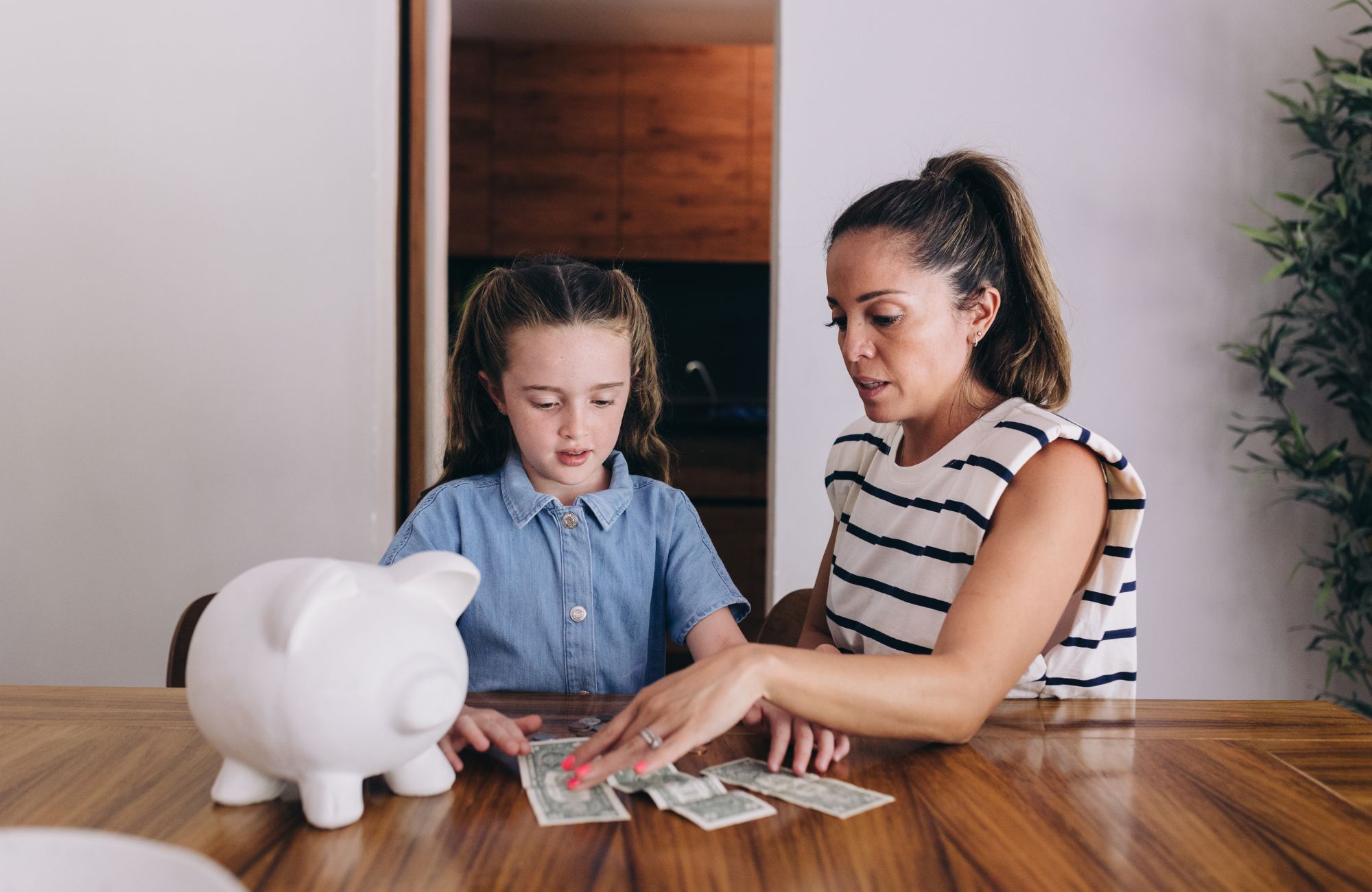
Children with autism can benefit from learning financial skills as early as age 2–3 through simple activities such as matching coins, recognizing dollar bills, using a piggy bank, and identifying price tags. These early experiences introduce basic money skills without overwhelming the child.
As children grow, families can gradually introduce counting money, savings accounts, online banking, and other more advanced skills based on developmental readiness rather than age alone. Consistent exposure to money concepts through daily routines often creates a stronger foundation for future financial success.
Step-by-Step ABA Strategies for Teaching Money Skills
Applied behavior analysis is often used to teach complex skills by breaking them into smaller, manageable steps. This approach can be especially effective when teaching money management because financial concepts often involve multiple actions and decision-making processes.
Our Progression for Teaching Money Skills
We often teach financial literacy skills through a gradual progression that moves from basic money recognition to real-world independence. While every child develops at their own pace, many families find success when money skills are introduced in a structured sequence that builds confidence over time.
| Stage | Primary Focus |
| Beginner | Recognizing coins and dollar bills |
| Developing | Counting money and understanding value |
| Functional | Making simple purchases and handling change |
| Community | Using money during shopping trips and community outings |
| Independent | Budgeting, saving, and making informed purchasing decisions |
| Advanced | Debit cards, digital payments, and personal finance skills |
This progression helps children develop practical money skills while gradually increasing independence across home, school, and community environments.
Use Task Analysis to Break Down Complex Skills
Task analysis involves dividing a larger skill into smaller teachable steps. Instead of expecting a child to complete an entire transaction independently, parents and therapists can teach one step at a time.
For example, purchasing an item may involve recognizing the price, finding the correct money, waiting in line, handing money to the cashier, collecting change, and putting money away afterward. Teaching each step separately can make the learning process more manageable and less overwhelming.
Use Visual Supports and Real Money
Visual supports often make money concepts easier to understand. Many families use visual aids such as picture schedules, labeled money jars, visual budgeting apps, and color-coded budgeting systems to help children understand spending money, saving, and financial goals. Color-coded budgeting aids can be especially helpful for children who benefit from visual representations of financial concepts.
Practicing with real coins and actual dollar bills can strengthen money recognition and improve real world practice. Some families also find that using visual checklists can simplify the checkout process for autistic children by providing a step-by-step guide for completing purchases.
Practice Through Role-Playing
Role-playing allows children to practice basic transactions before entering real life scenarios. Parents can create simple stores at home where children practice counting money, identifying dollar bills, making purchases, and interacting with cashiers.
These practice sessions help strengthen communication, social interaction, and practical money skills. They also create opportunities to practice flexibility and problem-solving in a supportive environment.
Reinforce Real-World Success
Positive reinforcement can help maintain motivation during the learning process. When children complete a purchase, count money correctly, or make a financial decision independently, immediate praise and natural rewards can strengthen the skill.
Many therapists encourage reinforcement that directly relates to the activity itself. For example, successfully purchasing a preferred snack or saving money for a desired item creates a meaningful connection between effort and outcome.
Generalize Skills Across Different Environments
One challenge many children with autism face is generalization. A child may demonstrate money recognition skills at home but struggle to use those same skills in a busy grocery store.
Learning a skill in one setting does not automatically mean a child can use it somewhere else. This is common among children with autism and does not mean learning is unsuccessful.
Community-based instruction provides opportunities to practice financial skills in real-world settings. Grocery stores, restaurants, school events, and local businesses allow children to use money skills where they naturally occur.
One challenge we frequently observe during in-home ABA sessions is that a child may independently count money during therapy activities but need additional support when purchasing a snack at a busy convenience store. The added demands of communication, waiting, and environmental distractions can make financial tasks more complex.
Natural environment teaching helps bridge this gap between structured learning and real-world performance. Repeated community practice often improves confidence and supports stronger long-term retention of money skills.
Families looking for local support can learn more about ABA Therapy in Mendham Township, NJ and how in-home ABA therapy can help children practice real-world skills within their own communities.
Common Challenges Parents Face When Teaching Money Skills
Teaching money skills can sometimes feel frustrating because progress may not always be consistent. It is common for children to demonstrate strong understanding one day and struggle the next.
Difficulty Generalizing Skills
Many children learn money concepts successfully in structured settings but struggle when those skills are required elsewhere. This challenge often appears when transitioning from home practice to community environments.
Repeated exposure across multiple settings can help children develop greater flexibility and confidence using money skills in different situations.
Sensory Overload During Shopping Trips
Busy stores can introduce challenges that have little to do with money itself. Bright lights, loud noises, crowded aisles, and long checkout lines may increase stress and make it harder for a child to focus on basic transactions.
Starting with shorter shopping trips and quieter environments can help children gradually build tolerance and confidence.
Frustration With Slow Progress
Some money management skills take months or years to develop. Parents may feel discouraged when progress appears slow, especially when comparing their child to peers.
It is important to remember that financial literacy develops gradually. Small improvements often become the foundation for more advanced skills later on.
Practical Ways Parents Can Teach Money Skills at Home
Many of the best opportunities for teaching money management occur naturally during daily life. Consistent exposure often has a greater impact than occasional formal lessons because children repeatedly encounter money concepts in meaningful situations.
Use Everyday Activities to Teach Money Skills
Grocery shopping, restaurant visits, and community outings provide opportunities to discuss price tags, compare products, identify dollar bills, and practice spending money. Children can participate at their own level, whether that means helping locate items, estimating costs, or completing purchases.
A simple chore chart can also help teach earning money through completed tasks while reinforcing responsibility and financial planning. Families often use allowances, savings goals, or piggy banks to introduce financial decisions in ways that feel practical and age-appropriate.
As children become teenagers and young adults, financial literacy becomes increasingly important for managing personal finances and adult responsibilities. Older children may gradually learn about savings accounts, debit cards, online banking, and other more complex financial concepts that support an independent future.
How In-Home ABA Therapy Can Support Financial Life Skills
In-home ABA therapy allows financial skills to be taught within the environments where children naturally use them. Rather than practicing isolated exercises, children can learn during real routines and everyday experiences.
Therapists may incorporate money concepts into grocery shopping, snack purchases, community outings, and household activities. This approach helps children understand how financial skills apply to daily life while supporting communication, social skills, and other essential life skills.
Personalized therapy plans allow instruction to match each child’s strengths, goals, and developmental needs. Financial literacy can be taught alongside emotional regulation, daily living skills, and meaningful participation in community activities.
Families in Mendham Township, Morris County, and surrounding New Jersey communities often seek autism services that support long-term independence. Real-world practice and caregiver collaboration can help children apply financial concepts more successfully across different environments.
Common Mistakes to Avoid When Teaching Money Skills
Parents often put significant effort into teaching money management, but certain approaches can unintentionally make learning more difficult.
One common mistake is introducing too many money concepts at once. Children often benefit from mastering one skill before moving to the next. Another challenge is relying exclusively on worksheets without providing opportunities for real world practice.
Some families also focus heavily on memorization while spending less time on understanding. While memorizing coin values may be useful, children also need opportunities to learn how money works in daily life. Consistent practice, meaningful experiences, and gradual progression tend to produce stronger long-term results.
Conclusion
Teaching money skills to autistic children is a gradual learning process that combines financial education, communication, problem-solving, and real-world independence. While some children may learn basic money skills quickly, others may need additional repetition, visual supports, and structured guidance to understand more advanced skills and financial concepts. Consistent practice through daily routines, community experiences, and supportive teaching methods can help children build confidence and develop practical life skills that support an independent future.
At Apple ABA, we provide personalized in-home ABA therapy designed to help children build independence in the environments where they live, play, and learn every day. Our team supports families across New Jersey, including Morris County, Passaic County, West Paterson, Mahwah, Totowa, and nearby communities with flexible scheduling, caregiver collaboration, and no-waitlist access to care. Through customized therapy plans, assessments, natural environment teaching, and ongoing parent support, we help children strengthen communication, social, and emotional regulation, and daily living skills in real-world settings that promote long-term maintenance and generalization. Contact us today to learn more about our family-centered ABA services and schedule a consultation.
FAQ
How to reduce stubbornness in autistic children?
Behavior that appears stubborn may actually reflect anxiety, communication challenges, sensory discomfort, or difficulty understanding expectations. Clear routines, visual supports, positive reinforcement, and consistent teaching strategies are often more effective than punishment. Understanding the reason behind the behavior is usually the first step toward addressing it.
How do autistic people deal with money?
Autistic people manage money in many different ways depending on their abilities, experiences, and support needs. Some independently manage personal bank accounts, savings accounts, budgeting, and financial planning, while others benefit from reminders, visual supports, or caregiver assistance. Financial education can help improve confidence and support long-term financial independence.
How to teach money skills to kids?
Teaching money skills often begins with simple concepts such as identifying coins, recognizing dollar bills, and understanding purchasing. Visual aids, role-playing, real world practice, and repetition can help children develop stronger financial skills. The most effective teaching methods connect money concepts to everyday experiences.
Can ABA therapy help autistic teens build financial independence?
Yes. Applied behavior analysis can support financial literacy by teaching budgeting, spending money safely, managing personal finances, and making informed purchasing decisions. Through task analysis, natural environment teaching, and individualized instruction, therapists can help teens develop practical life skills that support future independence.