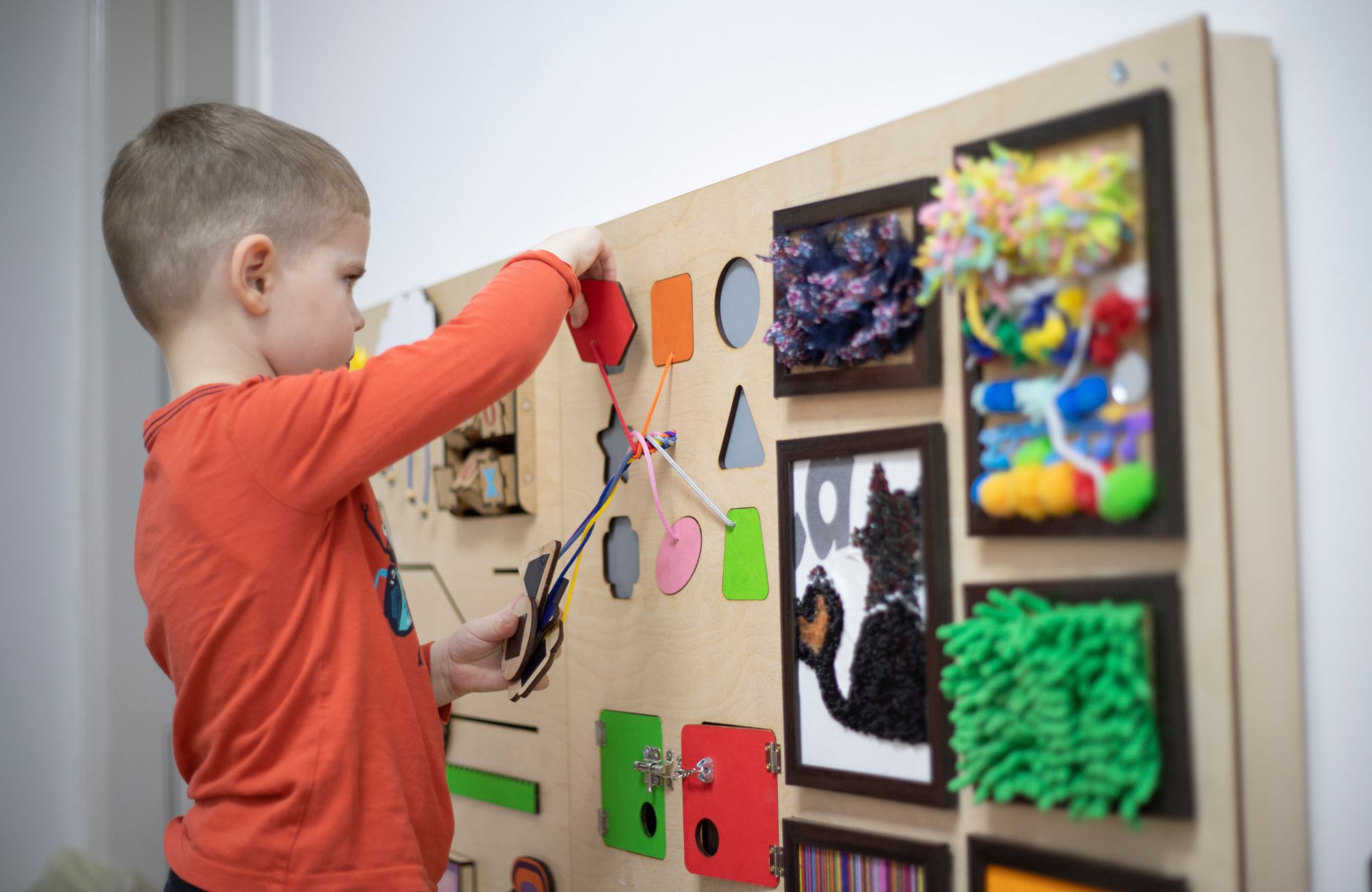
Teaching answering questions in autism begins with helping children understand what a question means before expecting them to respond independently. Many ABA programs introduce one question type at a time before progressing to more complex language, allowing children to build understanding before tackling more advanced conversations. Because every child develops communication skills differently, the teaching sequence should always be based on an individualized assessment rather than a fixed order.
Many parents notice that their child can name familiar objects or request favorite items but has difficulty responding appropriately during everyday conversations. If your child has recently started learning communication skills, you’re not alone. Learning to answer questions supports communication at home, at school, and in social situations while also helping kids participate more confidently in play, academics, and daily routines. Families looking for ABA therapy in East Orange, NJ, and throughout New Jersey can benefit from individualized support that helps children build these communication skills in familiar home environments. Through personalized in-home ABA therapy, Apple ABA helps children develop meaningful question-answering skills using evidence-informed strategies tailored to each child’s communication strengths, learning style, and goals. If you’re looking for guidance, our team can help your family create a personalized plan that supports meaningful progress.
Why Do Many Autistic Children Have Difficulty Answering Questions?
Many autistic children find answering questions difficult because the task requires them to understand the question, recognize that a response is expected, organize their thoughts, and communicate an appropriate answer. Since several language and processing skills must work together, answering questions can be more challenging than naming visible objects or requesting preferred items.
Parents sometimes wonder why their child can identify every animal in a picture book but cannot answer, “What animal is barking?” Although these tasks seem similar, they require different language skills. Labeling an object involves naming something that is already visible, while answering a question requires understanding another person’s words, recalling information, and producing an appropriate response.
Several factors can affect a child’s ability to answer questions, including:
- Processing delays that require additional response time
- Limited receptive language skills
- Difficulty organizing expressive language
- Echolalia, where a child repeats the question instead of answering
- Challenges in understanding abstract or inferential language
- Limited opportunities to practice conversation across different settings
For example, a child may correctly point to a picture of a dog every time but still struggle to answer, “Which animal says woof?” The difficulty is not necessarily vocabulary. Instead, the child may still be learning how questions work and what type of response each question requires.
Communication development also varies widely among autistic children. Some children answer “what” questions before mastering yes/no responses, while others may use an AAC device or visual supports as they develop spoken language. Because every learner follows a different path, therapists begin by assessing each child’s current communication skills instead of assuming every child should follow the same sequence.
How Do You Teach an Autistic Child to Answer Questions?
Teaching question-answering skills starts with identifying a child’s current communication abilities and introducing one question type at a time. Therapists use prompting, positive reinforcement, repeated practice, and gradual prompt fading to help children understand the purpose of questions and respond more independently across everyday situations.
Rather than asking dozens of questions and hoping children learn through repetition, experienced BCBAs build these skills systematically. The goal is not simply to produce the correct answer once but to help children answer different people, in different places, and without relying on prompts.
Step 1: Assess Communication Readiness
Before beginning question-answering instruction, a BCBA evaluates several prerequisite skills.
The assessment may include:
- Receptive language abilities
- Expressive communication skills
- Ability to follow simple directions
- Joint attention
- Motivation to communicate
- Current use of gestures, speech, or AAC
- Ability to imitate words or actions
This evaluation helps the BCBA identify an appropriate starting point and establish realistic communication goals based on the child’s current abilities.
Step 2: Teach One Question Type at a Time
Many communication programs begin with one question type before introducing additional question forms. Focusing on a single question type at a time helps children understand what each question is asking before they are expected to respond in more varied conversations.
A common teaching progression may look like this, although every child progresses differently:
| Question Type | Typical Purpose | Example |
| Yes/No | Making choices or confirming information | “Do you want juice?” |
| What | Identifying objects or actions | “What is this?” |
| Where | Describing location | “Where are your shoes?” |
| Who | Identifying people | “Who is cooking?” |
| When | Understanding time concepts | “When do we brush our teeth?” |
| Why | Explaining reasons | “Why do we wear coats?” |
| How | Describing steps or processes | “How do we wash our hands?” |
This progression is only a guide. Some children answer “where” questions more easily than yes/no questions, while others master “who” questions before “what.” Therapists continually adjust instruction based on each child’s learning history and progress.
Step 3: Prompt the Correct Response
Prompting gives children the support they need while they are learning a new skill. The goal is to provide enough assistance for success without creating long-term dependence.
A BCBA may choose different prompting strategies depending on the child’s communication abilities, learning history, and treatment goals. One commonly used approach is to gradually reduce prompting as independent responses increase.
For example, if a therapist asks, “What are you drinking?” and the child does not respond, they might briefly show a picture of the drink or model the first word before allowing the child to complete the answer. As the child becomes more successful, these prompts are gradually reduced until the child responds independently.
Step 4: Reinforce Successful Attempts
Positive reinforcement encourages children to continue communicating by showing that their responses have meaningful outcomes. Reinforcement may include praise, access to a preferred activity, or naturally receiving the requested item after an appropriate response.
Step 5: Practice Beyond Therapy Sessions
Learning a skill during therapy does not automatically mean a child can use it in everyday situations. Consistent practice with parents, teachers, siblings, and other caregivers helps children generalize communication skills across different environments.
Teaching Yes and No Questions the Right Way
Teach yes-and-no questions by helping the child understand what each response means through clear, meaningful choices and immediate outcomes. Avoid teaching the words as memorized answers, since some children may say “yes” every time, repeat the question, or guess without understanding.
Many ABA programs incorporate meaningful choices during early communication instruction because they create naturally motivating opportunities for children to practice answering questions in everyday situations. Asking, “Do you want bubbles?” or “Is this your favorite car?” allows them to connect their answer with an immediate outcome. As their understanding improves, therapists gradually introduce factual questions, personal preference questions, and more complex conversations while monitoring accuracy across different settings and communication partners.
Teaching WH Questions One Step at a Time
WH questions help children participate in conversations, follow classroom instructions, share experiences, and develop stronger problem-solving skills. As children begin to answer WH questions, they also improve their ability to express ideas, understand directions, and participate more actively in classroom discussions, social activities, and everyday talking with family members. Instead of introducing every question word at once, therapists typically teach one question type at a time while providing repeated opportunities to practice in meaningful situations. As children become more successful, they learn to respond accurately across different people, environments, and conversations.
Although many early learners begin with “what” questions, there is no universal order that works for every child. A BCBA considers the child’s receptive language, expressive language, attention skills, and communication goals before deciding which question type to introduce next. The focus remains on helping the child understand each question rather than memorizing a response.
“What” Questions
“What” questions usually involve identifying familiar objects, actions, or people. Because they focus on concrete concepts that children can often see or experience directly, they are frequently one of the first WH question types introduced during communication instruction.
“Where” Questions
Once children understand simple identification questions, many begin learning location-based questions.
Practice opportunities include:
- Where are your shoes?
- Where is the ball?
- Where does the spoon go?
- Where is your backpack?
Rather than using the same pictures repeatedly, therapists change locations and environments to help children generalize the skill. For example, the answer to “Where are your shoes?” may change throughout the day depending on where the child leaves them.
“Who,” “When,” “Why,” and “How”
These question types gradually become more abstract because they involve people, time concepts, reasoning, and sequencing.
Examples include:
- Who is driving the car?
- When do we brush our teeth?
- Why do we wear a raincoat?
- How do we wash our hands?
Many communication programs introduce more complex WH questions after children demonstrate consistent understanding of simpler question types. The pace of instruction varies based on each child’s language development, communication goals, and ongoing assessment. For example, “How do we wash our hands?” can be taught by practicing each step while completing the routine instead of expecting the child to explain the entire sequence independently.
Teach Mixed Questions to Build Flexible Thinking
After children answer individual question types consistently, therapists begin mixing different questions during natural conversations.
Instead of asking only “what” questions for an entire activity, they may alternate between:
- What are we making?
- Where is the spoon?
- Who is helping?
- Why are we stirring the batter?
Mixing question types helps children pay attention to the question itself instead of predicting the answer based on a repetitive pattern. This builds more flexible communication skills that transfer to school, community activities, and conversations with unfamiliar people.
How Concierge ABA Therapy Supports Question-Answering Skills
Concierge in-home ABA therapy allows BCBAs to teach communication skills during everyday family routines while tailoring instruction to each child’s individual strengths, communication needs, and goals.
What an Initial Assessment Looks At
Every child begins therapy with a comprehensive assessment that helps the BCBA identify which question types, prompting strategies, and communication goals are most appropriate. The assessment also considers family priorities so therapy reflects the child’s everyday routines and communication needs.
Parent Coaching Is Part of the Learning Process
Parents spend far more time with their children than therapists do. Because of this, caregiver coaching is an important part of helping communication skills grow beyond scheduled therapy sessions.
A BCBA may demonstrate how to:
- Ask questions naturally during play
- Allow appropriate processing time
- Provide simple prompts when needed
- Reinforce successful responses
- Recognize when a child is becoming frustrated
- Practice without turning every interaction into a lesson
This collaborative approach helps families feel more confident while creating consistent learning opportunities throughout the day.
Progress Is Reviewed and Adjusted
Communication goals should change as children develop new skills.
Throughout therapy, BCBAs collect data on areas such as:
| Progress Measure | What Therapists Monitor |
| Independent responses | How often the child answers without prompts |
| Prompt level | Whether prompts are becoming less necessary |
| Response time | How long the child takes to answer |
| Generalization | Whether the child answers different people in different settings |
| Maintenance | Whether skills remain consistent over time |
If progress slows, therapists may modify prompts, reinforcement strategies, teaching materials, or practice environments rather than continuing with the same approach. This ongoing review helps ensure therapy remains individualized and responsive to the child’s changing needs.
Concierge in-home ABA therapy gives families regular opportunities to practice communication skills in familiar environments while receiving ongoing guidance from their BCBA.
Practical Strategies Parents Can Use at Home
Practicing communication during meaningful daily routines gives many children more opportunities to apply new skills in natural settings. A BCBA can help families identify routines that best support each child’s learning. Short, enjoyable interactions throughout the day provide more opportunities to practice than long teaching sessions. These natural conversations also help children understand that answering questions is part of daily communication rather than something that only happens during therapy.
Simple household routines create valuable opportunities to practice different question types.
| Daily Routine | Question Examples |
| Breakfast | What would you like to eat? Do you want more milk? |
| Getting dressed | Where are your shoes? What color is your shirt? |
| Playtime | Who is driving the train? What should we build next? |
| Reading books | Why is the character smiling? Who found the treasure? |
| Grocery shopping | Where are the bananas? What do we need next? |
Keep practice sessions brief, especially if your child becomes frustrated. Many therapists recommend ending on a successful response rather than continuing until the child loses interest. It is equally important to preserve spontaneous conversations instead of turning every interaction into a series of questions.
Parents should also remember that pauses are productive. Allowing additional processing time before providing a prompt is a commonly used communication support in autism intervention. The appropriate wait time varies based on the child’s communication abilities, processing speed, and individualized treatment plan. Over time, these small moments of patience can make everyday conversations feel more successful for both children and caregivers.
Common Challenges When Teaching Children to Answer Questions
Children often encounter challenges while learning to answer questions, even when they have a growing vocabulary or can communicate their wants and needs. These difficulties are a normal part of language development and can improve with individualized instruction, consistent practice, and the right level of support. Understanding why a child responds a certain way allows parents and therapists to choose strategies that encourage learning rather than increase frustration.
Echolalia
Some children repeat the entire question instead of answering it.
For example:
Parent: “What do you want to drink?”
Child: “What do you want to drink?”
This response, known as echolalia, does not always mean the child failed to understand the question. In many cases, it reflects language processing, an attempt to participate in the conversation, or uncertainty about the expected response.
Rather than correcting the child immediately, therapists typically allow processing time, provide an appropriate prompt if needed, reinforce successful responses, and gradually reduce support as independence improves.
When Children Give the Same Answer Every Time
Some children answer “yes” to every yes-or-no question or repeat the same response regardless of what is being asked. This often happens because they have memorized a response rather than understanding the purpose of the question.
Therapists address this by varying examples, changing who asks the questions, and presenting questions in different environments. This helps children discriminate between different question types and understand that the correct answer depends on the situation.
Difficulty With More Complex Questions
Questions involving opinions, problem-solving, or explanations naturally require more advanced language skills.
For example:
- Why did the ice cream melt?
- How do we make a sandwich?
- What should we do if it starts raining?
Rather than expecting complete answers immediately, therapists break these questions into smaller steps, use visual supports when appropriate, and provide enough processing time before prompting. As children become more confident, they begin answering these questions more independently.
Working With Speech-Language Pathologists and AAC Users
Some children benefit from support from both a Board Certified Behavior Analyst (BCBA) and a speech-language pathologist (SLP). While ABA therapy focuses on teaching functional communication and increasing independence through evidence-based behavioral strategies, SLPs assess and treat speech, language, and social communication skills. Working together allows professionals to develop complementary goals that reflect each child’s communication needs.
Children who use Augmentative and Alternative Communication (AAC), including speech-generating devices, picture exchange systems, or communication boards, can also learn to answer questions successfully. Therapists simply adapt teaching methods to match the child’s communication system. Whether a child responds verbally, points to pictures, or uses an AAC device, the goal remains the same: helping them understand questions and communicate meaningful answers across home, school, and community settings.
How to Measure Progress
Families often notice progress when children begin answering more questions independently, need fewer prompts, and use these skills naturally during conversations at home, school, and in the community. BCBAs monitor these changes over time to determine when children are ready for more advanced communication goals.
Parents can also look for encouraging signs between therapy sessions.
| Signs of Progress | What It May Look Like |
| Increased independent responses | Answers familiar questions without prompts |
| Shorter response time | Needs less time to process simple questions |
| Better generalization | Answers parents, teachers, and siblings consistently |
| Reduced prompt dependence | Requires fewer visual or verbal cues |
| Stronger conversations | Begins asking or answering questions naturally during play and routines |
Regular collaboration between families and therapists helps ensure goals remain realistic and individualized.
Conclusion
Teaching children with autism to answer questions is a gradual process that builds stronger communication, social interaction, and everyday independence. By introducing one question type at a time, practicing during daily routines, using visual supports when appropriate, and allowing enough processing time, parents and caregivers can help children develop meaningful conversation skills instead of memorized responses. Every child learns at their own pace, and individualized instruction that matches their strengths and needs provides the best foundation for long-term success at home, at school, and in the community.
At Apple ABA, our Board Certified Behavior Analysts (BCBAs) provide personalized in-home ABA therapy that helps children strengthen communication, social interaction, and daily living skills through individualized treatment plans. Serving families throughout Morris County, Passaic County, Mahwah, Totowa, Madison, Kinnelon, and nearby New Jersey communities, we partner closely with caregivers to build meaningful communication skills in everyday environments. Contact us to learn how our concierge ABA services can support your child’s growth.
FAQs
How do you teach an autistic child to answer questions?
Start with simple, meaningful questions that relate to your child’s daily life. Introduce one question type at a time, provide visual supports or prompts when needed, and reinforce successful responses. As your child’s confidence grows, gradually introduce more complex questions and practice across different settings to encourage generalization.
Why does my child repeat a question instead of answering?
Some autistic children repeat a question while processing language or because they are unsure what response is expected. This pattern, known as echolalia, does not necessarily mean the child does not understand the question. A BCBA or speech-language pathologist can determine whether additional supports, visual cues, or alternative prompting strategies may help improve independent responses.
Why does my child say “yes” to every question?
Some children are still learning what “yes” and “no” mean in different situations. Rather than guessing, therapists often teach these responses using meaningful choices, multiple examples, and repeated practice across everyday routines. This helps children understand when each response is appropriate instead of memorizing one answer.
Can children who use AAC learn to answer questions?
Yes. Children who use augmentative and alternative communication (AAC), including speech-generating devices or picture-based systems, can learn to answer questions using individualized teaching strategies. Therapists adapt prompting, vocabulary selection, and practice activities to match each child’s communication method.