Starting kindergarten is a big milestone, but knowing letters and numbers is only part of getting ready. Children also need school readiness skills that help them communicate, manage feelings, follow routines, and take part in everyday classroom activities. For parents, especially those raising children with autism, it can be hard to know which skills to focus on and how much progress to expect before the first day of school.
The good news is that many of these skills can grow through play and simple daily routines. This school readiness checklist will help New Jersey families understand what matters most and find practical ways to support their child’s development. At Apple ABA, we help children build meaningful everyday skills through personalized in-home ABA therapy.
What Are School Readiness Skills?
School readiness skills are the abilities children use to learn, communicate, build relationships, and manage daily activities in kindergarten. They include language, social and emotional development, independence, thinking skills, and physical development. These skills help children participate in classroom routines, but children do not need to master every ability before starting school.
Learning to recognize letters and numbers is helpful, but kindergarten readiness involves much more. A child who can ask for help, communicate discomfort, or follow a familiar routine has important skills that support learning throughout the school day.
Why School Readiness Matters Beyond ABCs and 123s
A strong foundation for kindergarten includes cognitive skills, social skills, emotional learning, and self-help abilities. These areas work together as children explore their surroundings, build positive relationships, and learn new things.
For example, a child may recognize basic shapes but still need help managing frustration when a classroom task feels difficult. Another child may enjoy stories and counting games but need visual instructions to complete an activity.
The CDC’s developmental milestones for 5-year-olds include language, thinking, movement, and social-emotional skills. These milestones help parents understand development, but they are not a pass-or-fail test for kindergarten.
Essential School Readiness Skills Before Kindergarten
The most important kindergarten readiness skills include communication, social interaction, emotional regulation, independence, attention, motor development, and early thinking skills. Children use these abilities throughout the school day, from joining games to completing classroom tasks. Parents can support each area through everyday activities while respecting their child’s developmental pace.
Communication and Listening Skills
Children need ways to share their needs, understand others, and take part in conversations. Strong language skills also support cognitive development, early literacy, and positive relationships with teachers and other children.
Useful communication abilities include:
- Expressing needs, preferences, and feelings.
- Understanding simple one- or two-step instructions with support.
- Asking questions or requesting help.
- Listening to stories and responding in a comfortable way.
- Sharing ideas through speech, gestures, pictures, or communication devices.
Some children may use complete sentences, while others communicate through single words, signs, or augmentative and alternative communication (AAC). All these methods can support meaningful participation.
Reading together each day creates opportunities to develop vocabulary and language comprehension. Ask open questions about pictures, encourage your child to describe what they notice in their own words, or invite them to point to familiar objects.
Social and Play Skills
Social skills help children interact with classmates, participate in group activities, and form friendships. Kindergarten offers many chances to practice taking turns, playing together, and understanding other people’s feelings.
Parents can encourage social development by playing simple games, arranging comfortable play opportunities, and modeling respectful communication. For example, a matching game allows children to practice waiting for a turn while enjoying a shared activity.
Not every child enjoys large groups or the same types of social interaction. Parallel play, small-group activities, and shared interests can also help children build connections.
Emotional Regulation and Coping Skills
Starting school brings new people, rules, and routines. Social and emotional learning helps children recognize feelings, communicate needs, and manage frustration with appropriate support.
A child might feel upset when playtime ends or nervous about entering an unfamiliar classroom. Rather than expecting children to handle every emotion independently, parents can teach coping skills and provide comfort when needed.
Try naming feelings during everyday situations, using picture cards, and practicing simple calming activities. Some children benefit from movement, quiet spaces, deep pressure they enjoy, or a familiar adult’s reassurance.
Independence and Self-Help Skills
Daily living skills help children take part in school routines with growing confidence. These abilities may include managing belongings, opening food containers, washing hands, and participating in dressing or toileting tasks.
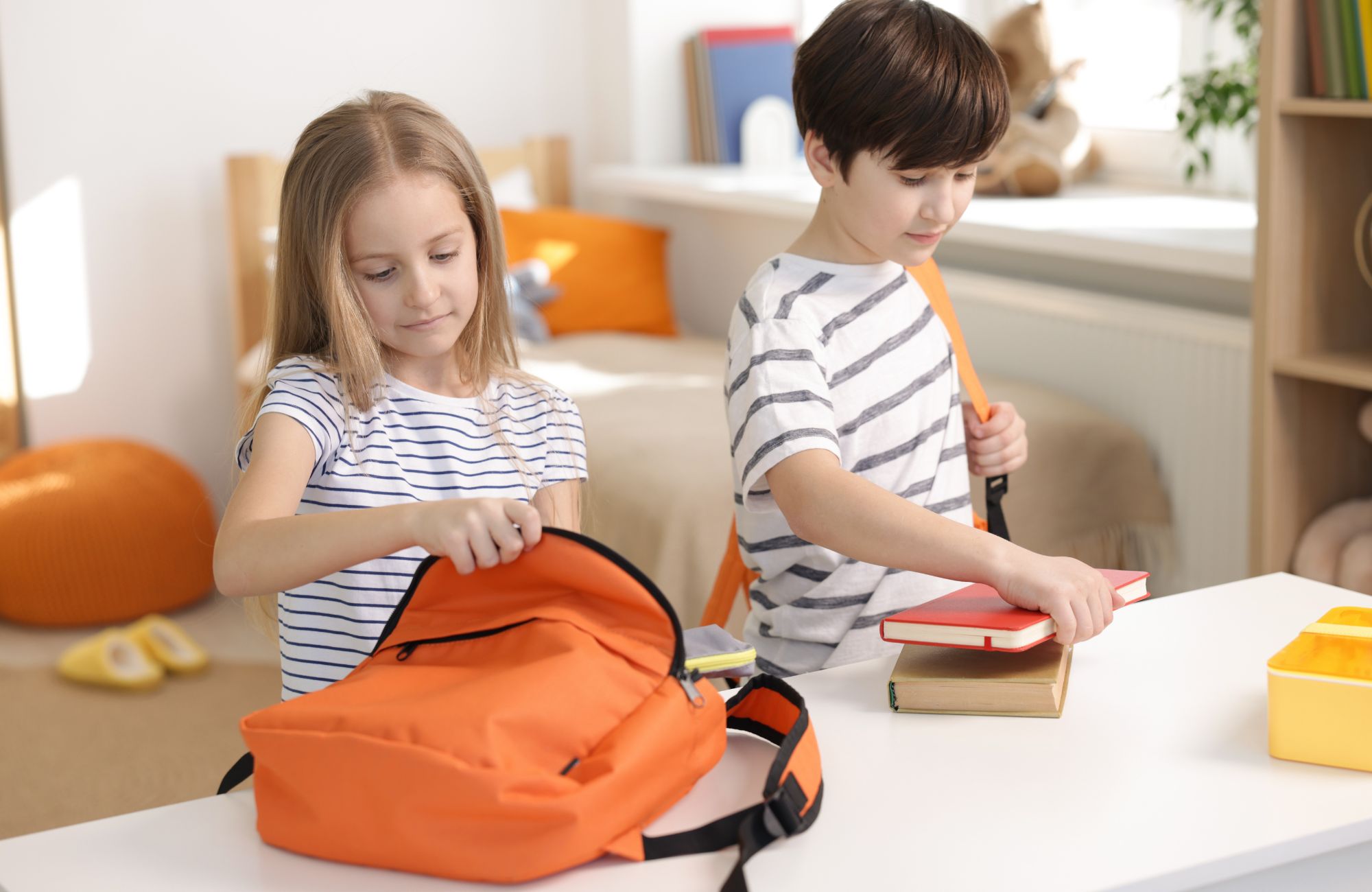
Practice self-help skills during normal family activities. Let your child help pack a backpack, put shoes away, or prepare items for the next morning.
Offer assistance when necessary and gradually reduce it as your child becomes more comfortable. Independence does not mean completing every task without help. It also includes knowing when and how to ask for support.
Attention and Following Classroom Routines
Kindergarten involves moving between different activities, listening to directions, and participating in group learning. Predictable routines can help children understand what happens next and feel more secure.
Parents can practice these skills with simple instructions during play. For example, ask your child to put a toy in a basket and then choose a book.
Visual schedules, pictures, and short reminders can make instructions easier to understand. Children who find transitions difficult may benefit from advance notice and extra time.
Fine and Gross Motor Skills
Physical development supports everyday classroom participation. Fine motor skills involve small movements of the hands and fingers, while gross motor skills involve larger movements used for running, jumping, balancing, and climbing.
Fine motor activities include:
- Drawing with crayons or pencils.
- Building with blocks.
- Using child-safe scissors with supervision.
- Handling buttons, zippers, and containers.
- Tracing a straight line or making simple shapes.
Gross motor activities might include dancing, balancing, playing catch, or exploring a playground.
Children develop motor skills at different rates. Some may need adapted classroom tools, movement supports, or help from an occupational or physical therapist to participate comfortably.
Early Learning and Problem-Solving Skills
Cognitive development includes building thinking skills, reasoning skills, memory, and the ability to solve everyday problems. These abilities help children explore new ideas, make choices, and develop curiosity about learning.
Early learning activities can involve recognizing letters, identifying basic shapes, counting objects, matching patterns, and completing simple puzzles.
Reading stories, singing nursery rhymes, and playing games also support language, memory, and early literacy. For example, asking what might happen next in a story encourages thinking and reasoning.
The CDC lists naming some letters, counting to ten, and writing some letters in one’s name among common developmental milestones by age five. However, children do not need to write their full name, know a telephone number, or complete every academic task to qualify for kindergarten.
School Readiness Checklist for Parents
A school readiness checklist helps parents notice their child’s current abilities and identify areas where extra practice or support may help. It should guide daily learning rather than determine whether a child is ready to attend kindergarten. Children may demonstrate skills independently, with assistance, or through adapted communication and learning tools.
Use the checklist below to observe how your child participates in everyday activities. Consider whether each ability is already familiar, still developing, or easier with support. This can help you choose realistic goals without comparing your child to other children.
| Readiness Area | Skills to Look For |
| Communication | Expresses needs, responds to communication, or asks for help |
| Social skills | Participates in play or shared activities with others |
| Emotional regulation | Recognizes discomfort and uses or accepts support |
| Independence | Participates in dressing, hygiene, or managing belongings |
| Classroom routines | Follows familiar activities with appropriate guidance |
| Fine motor skills | Uses crayons, blocks, or other learning materials |
| Gross motor skills | Participates in movement and active play |
| Cognitive skills | Explores puzzles, patterns, counting, or basic shapes |
| Early literacy | Enjoys books, stories, songs, or letter activities |
Children do not need to complete every item independently. For example, a child who uses pictures to ask for help already has a useful communication skill. A child who follows a visual routine with reminders is also building readiness.
Parents can track progress by noting which supports help, what their child enjoys, and which activities become easier over time. This information can also help teachers and therapists understand the child’s strengths.
School Readiness Skills for Children With Autism
Children with autism may need different types of support when developing school readiness skills. Communication differences, sensory needs, and changes in routine can affect how they participate in school activities. Individualized strategies can help children feel comfortable, express themselves, build independence, and access learning opportunities that match their strengths.
Autism spectrum disorder affects children in different ways. Some children may communicate easily but find busy classrooms overwhelming. Others may enjoy structured learning activities while needing support with language, play, or daily routines.
The goal is not to make every child behave or learn in the same way. It is to help each child participate meaningfully while respecting their preferences and needs. For a closer look at autism-specific preparation, explore these autism school readiness skills and how they relate to classroom routines, communication, and independence.
Communication and Sensory Support
A child who uses few spoken words may communicate through gestures, pictures, or an AAC device. These tools can help children request assistance, share preferences, and express feelings throughout the school day.
The American Speech-Language-Hearing Association explains that AAC can support communication through methods ranging from gestures and picture boards to electronic speech-generating devices.
Sensory needs also deserve attention. Loud bells, crowded hallways, bright lights, and unfamiliar sounds may make some activities difficult. Quiet spaces, sensory breaks, and changes to the classroom environment can improve comfort and participation.
Preparing for Changes in Routine
Children who find changes difficult may benefit from structured routines and clear information about upcoming activities.
For example, parents can create a picture schedule showing breakfast, getting dressed, putting on shoes, and leaving for school. Practicing the same sequence can make the morning more familiar.
Visits to the school, photos of the classroom, and simple stories about the first day may also help. Teachers and caregivers can work together to maintain helpful supports across settings.
Individualized assessments and home-based therapy may also help identify functional communication, daily routine, and developmental goals that are meaningful to the child and family.
How to Build School Readiness Skills at Home
Parents can develop school readiness skills through simple activities built into daily family life. Getting dressed, preparing snacks, reading books, and playing games provide opportunities to practice communication, independence, and problem-solving. Regular practice in familiar settings helps children learn useful skills without adding unnecessary pressure to their day.
The key is to choose manageable tasks, provide opportunities to participate, and adjust the activity to your child’s needs.
Simple School Readiness Activities for Everyday Routines
| Home Activity | Skills Developed | How It Helps at School |
| Packing a backpack | Independence and organization | Managing personal belongings |
| Opening snack containers | Fine motor and self-help skills | Participating in lunch routines |
| Playing turn-taking games | Social interaction and attention | Joining group activities |
| Reading picture books | Language and early literacy | Participating in story time |
| Following a visual schedule | Routine awareness and transitions | Moving between classroom activities |
| Sorting toys or objects | Cognitive and reasoning skills | Completing early learning tasks |
| Singing familiar songs | Listening and language memory | Participating in music activities |
| Building with blocks | Fine motor control and problem-solving | Exploring classroom materials |
These activities can fit into short periods throughout the day. A child might practice requesting a snack during lunch, identify colors while sorting laundry, or explore counting while putting away toys.
How to Practice Skills Without Pressure
Choose activities that match your child’s interests and current abilities. If your child enjoys toy cars, for example, use them for sorting, counting, taking turns, or practicing requests.
A simple approach includes five steps:
- Choose one skill. Focus on a meaningful task, such as asking for help or managing a backpack.
- Start with a familiar activity. Practice during play, mealtime, or a daily routine.
- Offer appropriate support. Use pictures, demonstrations, reminders, or other tools.
- Recognize progress. Notice attempts, increased participation, and growing confidence.
- Adjust as needed. Change the activity when your child becomes tired, frustrated, or overwhelmed.
Family engagement plays an important role because parents know which routines matter most in their child’s life. Sharing successful strategies with caregivers and teachers can also support learning across settings.
Home-based ABA therapy provides opportunities to practice everyday skills in the environment where children use them. Families can work with therapists to select meaningful goals and build learning opportunities into familiar routines.
How ABA Therapy Can Support School Readiness
Applied Behavior Analysis (ABA) therapy can help children develop functional skills that support participation in kindergarten. Individualized programs may focus on communication, self-help abilities, transitions, social participation, and daily routines. Therapists use structured teaching and natural learning opportunities while working with caregivers to monitor progress and adjust goals.
A child preparing for school may need support with several skills at once. Rather than teaching every skill through the same method, a Board Certified Behavior Analyst (BCBA) can assess the child’s strengths, needs, and family priorities.
Individualized School Readiness Goals
A personalized plan may focus on skills such as communicating discomfort, requesting assistance, following a picture schedule, or participating in a daily routine.
For example, a child who has difficulty packing a backpack might first practice identifying school items. Next, they can practice placing those items into the bag with support. Over time, the therapist and family can adjust the amount of assistance based on the child’s progress.
Therapists can track progress through observations and session data while discussing changes with caregivers. Meaningful goals should support communication, well-being, independence, and access to learning.
Benefits of Practicing Skills in a Familiar Environment
Home-based ABA therapy allows children to practice skills during real activities, such as washing hands, getting dressed, playing, or preparing a snack.
This creates opportunities to connect learning with everyday situations. However, skills learned at home may still need practice in other environments before children can use them consistently at school.
Parents can share successful communication strategies, visual supports, and daily routines with their child’s teachers or school support team. School-based accommodations and related services may complement skills practiced through home-based ABA therapy. The most useful combination of supports depends on the child’s individual needs.
Home-based services can offer opportunities for caregiver collaboration and ongoing progress tracking, with goals that reflect each child’s developmental needs and the routines that matter to the family.
When Should Parents Seek Extra School Readiness Support?
Parents should consider additional support when communication, developmental concerns, emotional regulation, or daily routines make participation difficult for their child. Seeking guidance early can help families understand their child’s needs and identify useful accommodations. A developmental concern does not automatically mean a child should delay kindergarten or wait until every skill improves.
Some children may have trouble communicating basic needs, handling transitions, participating in daily routines, or using classroom materials. If these challenges cause ongoing distress or limit participation, a pediatrician or developmental specialist can help families decide what to explore next.
Finding School Readiness Support in New Jersey
For New Jersey families, kindergarten preparation may involve both home-based learning and communication with the local school district.
Parents in communities such as Mahwah can contact their school district to ask about kindergarten registration, classroom accommodations, evaluations, and transition planning. Children with disabilities may qualify for school-based supports, depending on their individual needs and eligibility.
If you have concerns about your child’s learning or participation at school, contact your local school district and ask how to request an evaluation through its Child Study Team. The district can explain the evaluation process and whether your child may be eligible for special education or related services. Parents can also ask about classroom accommodations and transition planning.
The New Jersey Department of Education explains that the state does not require every child to pass a kindergarten entrance test. Schools may use assessments to understand children’s learning needs and plan instruction.
Families seeking individualized behavioral support can also explore professional assessments and enrollment options. An intake consultation may help parents understand available services, insurance requirements, and potential therapy goals.
Conclusion
Preparing for kindergarten means helping children develop communication, independence, social, emotional, and learning skills. A school readiness checklist helps parents recognize strengths, identify goals, and practice important skills through daily routines. Every child develops at their own pace and deserves support that meets their unique needs.
At Apple ABA, we provide personalized in-home ABA therapy for children with autism in New Jersey. Our team works closely with families to build school readiness skills, set meaningful goals, and track progress. Contact us today to learn how our ABA assessment services can support your child’s development and kindergarten preparation.
FAQs
What are the most important school readiness skills?
The most important school readiness skills include communication, emotional regulation, social interaction, independence, attention, and early learning abilities. Fine and gross motor development also supports everyday classroom activities. Children develop these skills at different rates and may use accommodations or assistance to participate successfully.
How do I know if my child is ready for kindergarten?
Consider how your child communicates, joins activities, follows familiar routines, and manages everyday tasks with available support. Kindergarten readiness involves more than reading, writing, or counting. Teachers and developmental professionals can help identify strengths and accommodations without expecting every child to meet the same checklist.
What school readiness skills are important for children with autism?
Children with autism may benefit from support with functional communication, transitions, emotional regulation, daily living skills, and social participation. Visual schedules, sensory accommodations, and AAC can help make school activities more accessible. The most useful goals depend on each child’s strengths, preferences, and individual needs.
Can ABA therapy help children prepare for kindergarten?
ABA therapy can support functional skills such as requesting help, participating in routines, and managing everyday tasks. A BCBA can work with caregivers to develop individualized goals and monitor progress. Therapy should support the child’s well-being, communication, independence, and meaningful participation rather than focus only on following instructions.